A Black Veteran on Service, Racism, and Belief with 1st Sgt. (Ret) Leround Mitchell
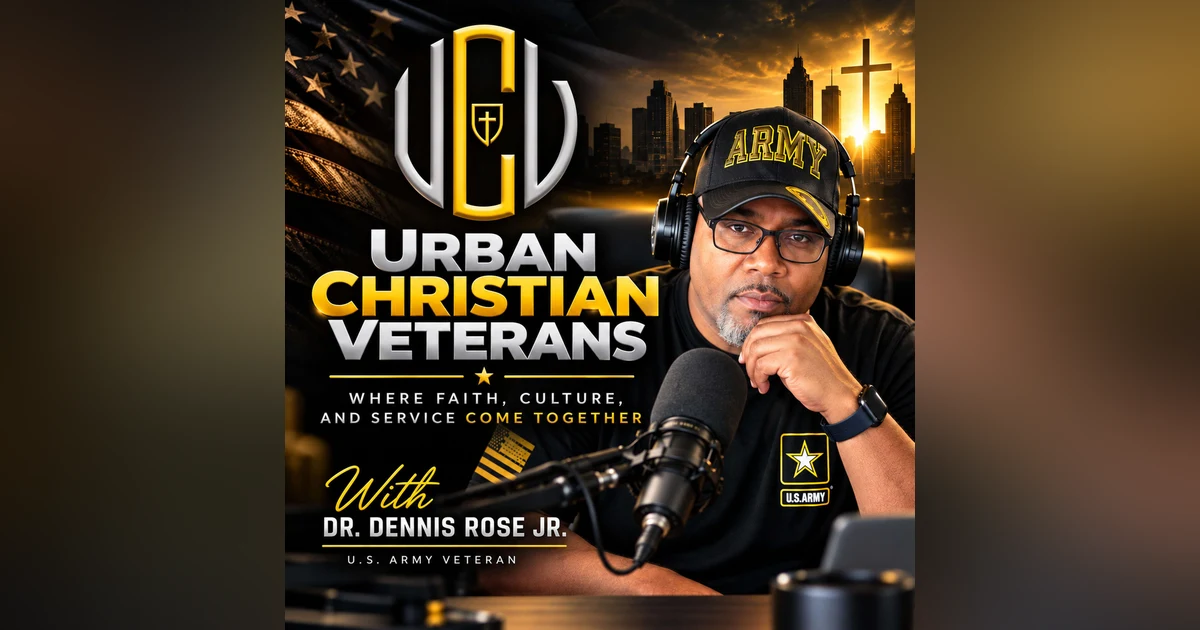


A veteran’s origin story rarely starts where you expect. Ours opens with Gomer Pyle, a folded flag at a funeral, and a seventeen-year-old who thought honor was simple—until basic training taught him what that flag really costs. From there, we ride with a retired Black first sergeant through three decades of infantry life, where discipline arrives early, identity gets tested often, and promotions can hinge on more than performance.
We dig into the questions many whisper but few put on tape: What happens when bias shadows your career? How do you counsel a young person weighing service against the claim that the military is a “white man’s Army”? He shares a raw story from Korea about a promotion penciled over for someone who’d already left, then contrasts that with a counterexample from our host—two truths coexisting inside one institution. The tension sets the stage for a wider look at race, merit, and the uneven progress from the Vietnam era to now.
Faith threads through the conversation with real vulnerability. Dragged to church as a boy, he found his way back as a soldier in Korea—after twice failing to walk through the door. That return sparked a habit of reading, testing, and refusing easy answers. We wrestle with a big claim—“Christianity is a white man’s religion”—by separating origins from empires, belief from weaponization, and spirituality from labels. He argues for character and conscience over tribe, and for reading widely so your convictions grow roots instead of slogans.
We close on the government shutdown with a ground-level view: TSA and air traffic controllers working without pay, military towns bracing, safety margins thinning, and leaders insulated from the fallout. It’s not politics for sport when your mortgage, medical care, and flight paths depend on it. Along the way you’ll hear humor, candor, and a hard-won takeaway: know who you are in and out of uniform, question what doesn’t add up, and keep learning long after you hang up the boots.
If the story moved you or made you think, tap follow, share this with a friend, and leave a review with the moment that hit you hardest. Your notes shape future episodes and the tough conversations we take on next.
#BlackVeteran
#USArmyVet
#UrbanChristianVeteran
00:00 - Meet First Sergeant Mitchell
02:50 - Why I Joined: Gomer Pyle and a Flag
06:20 - Would I Do It Again? Growing Up Fast
09:40 - Advising Today’s Youth on Service
12:35 - “White Man’s Army?” Diversity and Power
15:20 - Racism in Uniform: Promotions and Pushback
22:00 - Different Times: Vietnam Era Influence
24:20 - Life After Service: VA, Atlanta, and Care
28:10 - Blackness, Identity, and Navigating Society
31:40 - Faith Lost and Found: Korea to Church
37:10 - Belief, War, and Conscience
41:10 - “White Man’s Religion?” History and Debate
47:40 - Spirituality Beyond Religion
52:00 - Current Events: Government Shutdown Stakes
58:10 - Final Reflections and Read More
0:06 U.S. Army veteran, retired, first sergeant, infantry, the round Mitchell. Brother Mitchell, are you ready? Christian veterans provide face to face place for Christian veterans of color to discuss the challenges you face in your daily lives.
1:08 Well, let me just say thank you so much for taking the time today. But let's jump right into it. First and foremost, can you tell the audience a little bit about yourself? Yes, I can. Well, I am a veteran. I am a black man. I am the man. Yes, you are, brother. But uh, yes, I have uh I I did right at 30 years military, okay, army, infantry, all the way, airborne, aerossault, all that good stuff.
2:04 Uh I got three kids, three grandkids. Um, and you know, right now I'm a hundred percent retired. So I do what retired people do and what some of them would like to do. Okay, what's that? Enjoy. All right, right off with no worries, no bills to worry about, no bad kids to worry about, just enjoy stress-free. Yeah, all right, I appreciate that.
2:44 So, when you joined the meet the military, why why did you join? What was your reason for joining? Okay, um, I joined the military because of Gomer Powell. What? I used to watch Gomer Powell all the time. Okay, okay. And I said, hell, if Garma Powell can make it, anybody can make it. Goma Powell.
3:25 I was 17, I believe. Okay. Yes, because my mom had to sign for me. So I had to be 17. So uh, yeah, Gomorpowell made me join the military. Watching Gomapell. And after that, uh, you know, I will I was already in the process of joining, but to like say, uh put the icing on the cake. Uh I went to a funeral, a relative funeral, and you know, just to see that flag, right? Okay. And how they took the flag off the coffin and they folded it and presented it uh to the spouse.
4:12 And I said to myself, I want that flag. You know, and that that was the icing on the cake to go ahead on and join. But I never thought about to get that flag, you had to be dead. That did not cross my mind until after I was in basic training, and I said, I be damned. Okay, well, first of all, uh shout out to Goma Powell for his contribution to your decision. Um But yeah, you're right.
4:52 I think a lot of us who join don't don't think about uh the other side, like once you get in and the sacrifice that comes with it. Um so I totally understand that. Um knowing what you know now, if you had a chance to do it again, would you? Yes. Okay. Uh hell, if I had a chance to do it again, I'd try to do it when I'm 15. Okay, why? Why 15? Man, being a soldier, you ain't gotta worry about this age thing to go in the club and just party.
5:39 You know, that's the advantage a soldier has. You know what I'm saying? They don't have to wait till they're 21 to drink. You know what I'm saying? Man, I'd be 15. I'd be like, party. Okay, okay, you know. Hey, you know, you got a point there. You you you definitely have a point. Um partying and whatnot. 15. Dragon, right? You know, hey, whatever's clever, brother. Um outside of that, is there any other reason why you would join or or not join? Well, um, yeah.
6:24 Um outside of the the party being in the army, now it wasn't all good, but they had some good elements. It like made me think a little more mature at an early age. You know, it made me be more responsible at an early age. So being able to really, you know, think maturely, being responsible, uh it you know, helped me to to uh be able to prepare myself in life as it came along, you know.
7:28 Uh I wasn't struggling to do certain things because of being in the military. Uh I didn't make all those kind of bone head decisions that I probably would have made, like my friends that didn't go in made, you know. And when you make those bone head decisions, you know, it's it's it's uh repercussion for that, you know. So yeah, uh going in the military made me grow up and grow up fast and take life uh a lot more serious.
8:13 Okay, yeah. Okay. So just along those lines, um if you were to come across a young person today who was thinking about it, would you advise them to go into the military? Yes, I would. In fact, I had uh I think earlier this year, or maybe last year, I can't quite remember. Late last year, if it wasn't earlier this year. Uh no, it was this year. I talked to two guys. Uh one went into the Air Force, and the other one I talked to, he was like, uh nah, the army or the military, man, that's that's the white man army.
9:12 And I was like, okay, you would make a good, good coon for the orange man. And he looked at me, I said, because that's what the orange man want, an all-white army. I say, now, think about this. What would this country be like if the military was all white? Hmm. Now you you well, what are your thoughts on that?
9:55 What do you what do you think? How do you think it would be? How how I think it would be? Yeah. Well, number one, you wouldn't be doing this podcast. You be out there in somebody's field. So if the military was all white, you don't think I'd be I'd be uh interviewing you today. Sir, you be in a field saying, yes a master. Yes um. Okay. Okay. All right. Well, that's interesting. Um so that that individual said no because it's the the white man's army and pretty much decided they weren't gonna go um into that.
10:47 Well, that leads me to my next question. So while you were in uh during your military career, did you experience any negativity due to you being a service member of color? Yes. Hey, you know, a question like that, I would be like, man, do a chicken have lips? Doesn't you you tell me you know, yes, uh, you know, well, I'ma put it like this negativity, you know, it's it's an old saying for somebody to win, somebody gotta lose.
11:37 So where there's positivity, I guess there's negativity, you know. Some they say that some white man that's supposed to be smart said that, but I think it was an African that said it first. Positivity and negativity, you know. But uh, yeah, as for the the negativity, you know, negativity for me, the main thing, racism. I mean, uh, it was there when I was born, and it'll be there when I die.
12:19 You know, I mean it is what it is, and uh it's sad, but you know, not to get off base, but uh you know, I mean I assume there was a time where there was no racism, but now and during our time, it is and it will be for some time to come.
13:04 But uh yeah, I I face racism was the biggest thing. But uh and and and it you know set you back just a little bit, but not enough to be in it, you know, to like destroy you or anything like that, you know, because I always overcame it, uh defeated it, you know, stuff like that. So yeah. So what year, what year did you go in to give people an idea of what times were like? 1976.
13:47 76, okay. All right, so when you went in, what just one instance of negativity you faced due to your your color um that you can remember? Just one uh yeah, you I can say like uh promotion, you know. Okay, uh you know, all the from E1, private, to E2, private, so from private to private, that promotion was automatic.
14:27 But from private to PFC, private first class, that wasn't automatic. They had to like you know, choose who they wanted to become, you know, to get promoted to private first class. And they came down with a list, like we would call it like a dream sheet, and you put a check mark, you know, each each company in the battalion would get X amount of slots. You know, if your company got three slots, you had three people you can promote to private first class.
15:08 Well, anyway, I I just knew I was gonna get one of those, and then when I learned that my uh section leader or section sergeant, a staff sergeant, uh a white guy, instead of putting a check mark by my name, he pencil in a white guy name, and this white guy had PCS the unit. He left the unit maybe two months earlier. So two months earlier, that's mean he already in his new unit, and he penciled in his name.
15:55 So, yeah, that's devastated. Man, I want to peel that dude's head. I did. I mean, I was in Korea, and I thought about it long and hard, long and hard. Because in Korea at that time, you can peel some heads, and every now and then, every now and then you get locked up, but not all the time. You know, I mean, it was a totally different army then. I got you. I got you. Well, let me ask you this.
16:38 So just playing devil's advocate. You said something that made me think about something. Do you think it was possible that uh he had, you know, I don't know the exact situation, but had made his decision long before the guy left. And perhaps it just took a while for it to catch up to him, even though he had PCS'd already. Is it possible, or do you feel like it's no, that was straight racism? Well, I'm just by at the time by me knowing how a little bit about just a little bit how the military worked, to me, logic would tell me you don't try to promote a soldier that is not in your unit, and that is not in your understanding, platoon, not in your squad.
17:41 If you could promote somebody, it should be the one that is in your squad, which was me, me yeah. You know, so when he chose not to promote me why, I'm like, okay, maybe I need to be a dirt bag, you know. I feel you. I feel you. Well, let me just toss this out to you, you know, chew on this for a little bit. I I bring it up because you just reminded me of something. Because I was stationed in Korea as well, as an E2, right? That was an E2. Um, it was my first duty station.
18:23 So you know how you come out of basic, you get your E2 right away, right? So yeah, so I I got my my E2 while I was over there, did a year, came back, went straight to Desert Storm. Um maybe after 30 days, right? Came back, 30 days, kicked it for a while, and all of a sudden we on a plane to the desert. I didn't have time to, you know, think about anything. But two so that would have been two months, right? So two months after I left Korea, we're in Saudi Arabia. In formation, they call me up and they pin PFC on me, E3.
19:07 Come to find out the orders were signed by my lieutenant back in Korea, a white guy. So it went like what you just said in reverse. A white guy did it for me. I don't think it had anything to do with race or anything, but I think what happened was right before I left, I got really into um PT. And this lieutenant happened to be an avid runner. And so when we would do P.T., he would just take off running. And one day, me and this other guy decided to keep up with him. And he, boy, he tried to bust our heart. I mean, this this white dude was running. And when we were done, we made it with him.
19:48 I didn't make it in front of him, but I made it with him. And from that point forward, like I he never even spoke to me again. But I think that had something to do with you know, him promoting me and the other guy who went to a different place. So I'm just saying it could be. No. I mean No, no, it could not be. No, okay. Oh, okay. Okay, right on too much. I'm just telling you my experience. That's what happened. I mean, which is which was good, which was good, which was good, and and and that's fine.
20:29 But again, the guy been gone for two months, and you got you, soldiers under you, and you know that they you know, they're trying to be good soldiers because they want to get promoted and move up like everybody else. You know, I mean, you know, if if he couldn't get that guy promoted before he left, then that's a lick on him. Yeah, you know, I mean, at that time, promotion came around.
21:14 I I mean, I don't remember how often promotion came around, but it did come around. And uh, so you know, nah, I mean, nah. I got you. I got you. It just, you know, for me, it's I guess I just looked up. I looked at it. You know, you you just then you know the the climate was probably different, you know. I'm sure. Because for me, yeah, when I first went in, we had a lot of a lot of Vietnam veterans. A lot of okay, you know. So, you know, I went in 76, Vietnam, what they pulled the last people out in 74, I believe.
21:59 So you had, and you know, I mean, in the 70s, you know, the the racial tension was different than Western. So yeah, it's it's slightly different. I get it. He knew what Red. I totally get it. I I he knew, he knew. I think I got you, man. I don't discount that at all. That was a different uh time. Um, so I get that. So looking back to the day you left the military now, after doing all those years, um, and now you're a veteran of color, what advice would you give your younger self about how society is going to treat you as a Christian veteran of color?
22:47 Well, advice I give myself, my younger self. Younger. You are black now. You go be black later. You have that military uniform on, you're a black man. You have the uniform off, you're a black man. So you go be black.
23:27 Period. So as as long as you are aware of your blackness, then you can navigate through society, through life, and all that, you know. Uh you runs into difficulty or heartbreak when you forget about your blackness. Sometimes, an example, you can do that interracial marriages. And you say, Okay, man, I'm marrying to the white.
24:14 No more. Tell you F up. Then you find out, oh yeah, you black. Okay. Okay. Oh yeah. So, you know, I mean, and that's what I tell my younger self, you know. I mean, there's there's gonna be time even in jobs in the civilian world, sometimes in the military too. Sometimes you will feel that you gotta do just a little bit more than that gray man, you know. Just a little bit more. It shouldn't be like that, but it is what it is.
24:58 I got you. I got you. So let me ask you this along those same lines that you're talking about, being a veteran of color, a black man, but also being a believer, has that caused you any difficulty? Right? It's it's one thing to navigate having, you know, just based on your race, but also being a believer sometimes can bring negativity. People like to, you know, those who don't believe. So you don't want to go there. You don't want me to go there.
25:38 Go there, brother. Go there. I just curious. Being a believer, I'm gonna tell you the truth. Tell me the truth. When I was a young boy, I I used to be in be drugged to church. Come here, boy. He used to pull me by my ear. Come here. And I got older, they gave me the opportunity whether I want to go or not. You know, when you're 13, they don't drag you. They say, I'm going to church. Well, I I'd rather go outside and play marbles and stuff, you know. So I I stopped going to church for a while.
26:24 Uh in fact, it was when I was in career when I decided to start going back to church. Okay, it hit me because I I mean I always had some type of spirit, man, you know. Right. Uh but you know, I felt I was missing something. So I decided I'll go to church, and you've been in Korea, so you know how it is. You can either go to church or you can go in the village.
27:04 Right. So I tried to go to church. Okay. I went to church, but didn't make it in. I turned around. Really? And went to the bus stop, got on the bus, and went to the village. The next Sunday I said, I'm gone. I'm gone. Went to church, touched the door handle at the church to open the door. I could not pull that door open.
27:47 I let the door handle go. I turned around, I left. Went to the bus stop, went to the village. Okay. So it took three tries. The third try I I went, you know, because what my fear was, I'm a believer, but I say when I go in church, you walk in, everybody gonna look at you, then they can start talking about you. And and that brought fear in me. I said people gonna be looking at you all crazy and talking about you. So I wouldn't go in. But anyway, that third try, I did it and I went in. And I was shocked.
28:29 Ain't no damn body look at me. It did as if I didn't even exist, you know. But anyway, that was my first step to going back. And and ever ever since that, I was until this day, I I'm almost uh uh uh uh every Sunday going, unless I'm sick or I'm out of town somewhere on on the road, but other than that, you know, I'm in somebody church, okay, from being a believer. Okay. So but to your question, yeah, uh being a believer made me notice some things and made me question some things.
29:20 You know, okay. So well, I I question, okay, why we gotta go fight over there when nobody came here and do us anything. For instance like Vietnam. And when you question that, and you in the military You know.
30:01 You know, hey, hey, you know, uh uh uh you know it's it's almost as if, you know, what are you a communist? You know, you're not one of us, you know. I mean, I gotta agree with everything you agree with for me to be one of y'all. You know what I'm saying? So let me ask you this. Is it that your belief caused you to question that? Or like what what how does your belief tie into you questioning?
30:44 Yeah, I mean, my belief uh gave me something that I didn't think I had. Common sense. Okay, you know, I mean, coming up, you know, them old folks used to say, boy, you ain't got no sense. So I thought I had no sense. You know, but but really, you know, uh, yeah, my belief gave me common sense, and well, you know, when you're a believer and you seeking something, you you seeking uh, you know, and and and and I can back up back to career when I decided to go okay to start going back to church after having a hiatus for I don't know how how many years.
31:41 I think I was 13 when I stopped going. I was about 20 when I started going back. So but before I even went, you know, I had my little Bible I would read, and I would pray, you know, maybe a couple of weeks before I start going, or I attempt to go, I would pray that you know, I would learn as much of the truth as I possibly can, and that my spirit would not let nobody of the cloth, whether it's a preacher, a priest, a rabbi, whatever, deceive me.
32:37 You know, let my spirit reject what it should reject and let it accept what it should accept. So that was my prayer, and I pray that prayer several times before I start going back to church. So uh uh, so I've I've been steady trying to, you know, learn here, learn there, and boom, boom, boom, boom. Then you develop this belief system. Okay, yeah, mm, yeah, mm, mmm. Okay, so this is how we treat people, uh this is what these several different types of love or whatever, boom, boom, okay, yeah, and uh so yeah, uh.
33:28 So when you made that comment earlier about how the young person said that they wouldn't join the military because it was the white man's army or whatever, did you ever run across anything like that when it came to being a Christian? Meaning, you know, okay. Tell me about it. I mean, man, I used to run across some little young Muslim wannabe, and and they be trying to talk me into, you know, converting, whatever.
34:11 You quit. Man, that Christianity, that white man, religion. And I'm like, Okay, you damn skippy, it is. Wait a minute. What? Yeah, you say it is and then I then I school him a little bit. I said, yeah. Oh it was the Christians that put some of your ancestors into slavery.
34:55 Yeah. I said, but also the Muslims put some of your ancestors into slavery. I said, if if if you read a little bit, you would know that the two religions that did the most killing in the name of religion, Christianity and Islam. So you know what religion is Muslim? I see the white man religion.
35:35 Hmm. Okay. Brother Man, okay, is that a black man religion? You know, and hey, oh well uh, and this fool didn't even know that they had white Muslims. I said, you want to join something that you don't even know nothing about. You know, so I'd school him a little bit. Well, my my hope is that moving forward, that were to ever happen again, we know to not agree that it is that Christianity is a white man's religion.
36:24 And when it comes to slavery um in terms of the age of Christianity, Christianity was long was around long before slavery started. So and and why by slavery, I'm assuming you're talking about the antebellum slavery here in America, and it just so happens that evil men used the Bible to enslave Africans. But I wouldn't call them Christian. Right? The Christian religion was around long before that. Yeah.
37:04 So yeah, long before that. So um, long before it it reached the shores of what we call America today, Christianity was was around long before that. So anyway, um, so so when you know, I I I say that because if someone says to me, why are you joining that white man's religion again it's not but like you said, you have to school and and talk about history and you know this country is not that old. But Christianity is is much older. So so with that, anyway, um so now that you're a veteran, right?
37:53 You're a veteran, you've gone through all those trials, tribulations, all that good stuff, um and you're a veteran of color, a black man, just in your everyday life are there challenges you face out on the street today due to you being a veteran of color, as as opposed to or in comparison to perhaps white brothers and sisters who are veterans, perhaps they don't have the same challenges that you face. Is that the case? You know, since I uh I I really can't.
38:44 I mean, since I retire, it's almost like things start falling in place. You know, it was like Okay, I won't lie to you. The whole time I was in for all those years, you know, you had this, although they try to hide it sometimes, but it's it's it's it's they didn't just see green, you know, the uniform or whatever. They they they seen color of skin. But once I retired, and when it came time for me to get things done for me, or get you know me taken care of, or you know, getting what the military owe me, I I didn't really have no real issues that would would make me feel that one race would get this and the other one don't.
39:54 I mean not me per se, you know, because things start that's good falling in place. But what I did notice and maybe that's just because it's Atlanta, I would see more people of color in the VA uh clinics than I would see the gray folks. So, you know, when if they had to go to the doctor to get something done so they can file a claim if if you want to use if I can say claims, then they would do the do it mostly do it on the civilian side.
40:46 But us people of color, we just go straight to the VA and do it on the VA side. But that's really I don't think that's have that much significance. I don't I I don't know. But as for me, nah, you know, I mean I I I think I was things that just fell in place, you know, as for all that crap I had to put up with all them years. You get out and things fall in place, like you get your bonus. Boom! No, that's good. That's good, that's good, man. Um I asked a question because many have many veterans of color have expressed that VA health care treatment doesn't seem to be equal a lot of times.
41:40 But if you have not experienced that, then that's fine. That's great. Health care treatment. Yes, like um for instance, if um you go to the VA hospital um in terms of the the the demeanor of the healthcare professionals towards you versus towards perhaps um a white counterpart, um, a lot of times veterans of color feel like it's a little different. I guess they not in Atlanta. You know, I mean, and I say that because you know, I had several VA doctors, all of them were black.
42:34 Oh you know what I'm saying? Well, okay, yeah, so even the specialist that I would go to if I had to go to specialists, except for one, my my heart specialist was white. But I guess she was okay because she said, why why in the world they got him on aspirin? Put him on blood thinner, boom. I said, maybe I said maybe she liked me. You know, but yeah, so uh, I mean I I like I said I I I hadn't experienced that because you know, I mean, if you know, we uh you know people of color, we gonna we gotta treat people like depends on how we wake up in the morning.
43:27 You know how y'all folks are, you know. Okay, okay. Well, so let me ask you this question. What is the one thing people get wrong about you the most? Uh something that you you did not that long ago. Oh Lord, what did I do, man? They assume that I'm unlearned. I assumed you were unlearned. Okay, we I I don't want to go there because you know this is your podcast, but uh do do it.
44:11 Go in, brother, go in, correct? We talk about Christianity and how long it been. Well, yes, it uh been there long before the ancestors came to the United States with chains on, but still it was them that put you put those chains on you. Uh Christianity. Those those Christian folks, those those spies they sent were so-called missionaries.
45:00 So after the missionaries hug you and greet you with brotherly love, and when they leave, then here come the army. Okay, so but we don't even have to go there, we can go further than that. Remember the crusade. Okay, you know, I mean, who knows how many the actual amount of people that the crusaders kill? Innocent people. True. So, you know, I mean, nothing wrong with being a you know, you can't be ashamed to be a Christian, but you can't say that everything was always beautiful, hookedury, you know, everything was just sweet as roses.
45:53 Nah, we, me, you, or our ancestors that are Baptists, Methodists, Catholics, whatever, we we and it's trickled down to us because our ancestors was forced to be Christian. Same way a lot of them was forced to be Muslim. You either be a Christian or you die. You either be a Muslim or you die. That's how it was back then. I mean, let's keep it real. That's it. You know what I mean? We was forced. But I will say this, and but this is just me.
46:38 Okay. And I told my pastor this a while back. Bless her heart. She wants me to give a speech. Nah. But uh I said, look, by me learning and reading, and and I take this from now what I just told you, crusaders and all that, I'm not gonna lie to you. There was a time I knew nothing. But twice in my life, and both times was what doing me being in the military, when the gray man told me that y'all don't read.
47:23 And the last gray man told me that was my my colonel, you know. I was the NCOIC uh of a team in Iraq. He was the OIC. And he told me in, you know, uh, when we he was back in the States, he was an assistant pastor to a church, right? So me and him, we would talk. You know, we would talk about religion, and that's me. I always talk about religion when I'm in another country. You know, even with the Iraqis, my interpreters, we would talk religion.
48:09 So me and him was talking, and we talked about certain things, and certain things he threw at me, and I didn't know nothing about it. I'm like, and he looked at me and he said, Y'all don't read. And I tell you, when that gray man told me y'all don't read, I said to myself, this is the second time I'm told that black people don't read. And I didn't know that. So I come back to the States and I'm telling people about it, and they say it's true.
48:51 So now, black people telling me, yeah, we black people, we don't read. I'm like, wow. So that made me start reading. I start reading, I start doing research, I start listening to lectures, digging some old ones up, start finding some good historical or good historian. You know, all that. Now, don't get me wrong. I don't take something that one person wrote, take it and run with it. I don't do somebody writes something, I just leave it there, and eventually when I come across something else that somebody wrote at a different time that kind of validate or confirm what that other person wrote, then I'd be like, okay, yeah, okay, okay, yeah.
49:51 But anyway, so that that made me read and read and read. And that's when I, you know, I learn about the crusaders and all that stuff, and I learned about how you know the Muslim ran across Africa and just you either become Islam or you die and all that, boom, boom, boom. But, you know, and I used to think Muslims was older than Christianity, then I learned, wait a minute, the Muslim came after Christianity. You know, in fact, they established because they didn't like how Christianity was treating certain people, and a lot of people don't know that.
50:41 You know, same way a lot of people don't know that Muhammad was a black man, African. But anyway, this brother. Uh well, I I I got a question on that note. I think this started with you saying well, me bringing up the fact that you know the young person said Christianity is the white man's religion, and you said yes, it is. And so my question then would be and and I apologize.
51:22 I didn't mean to assume that you were. What did you call it? Unread? I don't know what you called it. But but but here's but here's here's what here's my point. Jesus and his disciples were they of white European descent? From from my knowledge, from my reading, uh Jesus and his disciple was of black people descent.
52:03 Uh stop right there. And I can tell you why I say that. Stop right there, stop right there. Oh, well, before you tell me why, right, before you tell me why, my point was Christianity is not a white man's religion, can't be, because Jesus, Christ, and his disciples were not your of European descent, period. That's all I was trying to say. So the crusades and the antebellum slavery and all that came centuries after Christianity was established. That was my point. That's my point. So anyway, go ahead, go ahead.
52:43 Okay. You know, I I I don't want, you know, I I I I just want to keep things where you want it, but I'ma say this. Um I'ma say this. Now, this is just me. Say it, brother. It's just you. Say it, brother. For me, and I teach my kids this and my grandkids. I teach them that my creator didn't create religion. Man created religion.
53:25 My creator would have created religion, my creator would have just had to create one. Not all these, I think it's ten different religions, and uh, you know, a whole bunch of denominations within the religion. But and and they so contrast with each other. I don't, I don't think, and that's just me. I don't think that is of the creator. I think if he would have created religion, it would have been one. Uh but and so I'd say that to say uh yes, in a sense, some of uh some of Christianity, some of it, came out of Africa, the rest came out of Europe.
54:20 Because keep in mind, ain't no king nowhere in Europe, Greek, whatever, Roman, go let somebody bring a new religion to their country when most of their people got their own little what you call that pagan stuff. You know, because if he do that, those pagan people assassinate him by the time he blink his eye. Keep it real, right? Yeah, okay. So so so that's why, and most people try to deny it, but when they be honest, that's why uh Christianity got some pagan in it.
55:16 Because the kings had to satisfy both. Okay, but don't, I mean, it's okay, don't worry about it, because me and you, we do not celebrate Halloween. Okay, we don't celebrate no Halloween. Okay, so we know the deal. Now, uh but uh but you know, just just through it's it's an old saying, and now don't don't get me wrong. Uh I want the audience to know I am not a racist, but I have a right to be.
56:01 Right up. I have a right to be. Okay, you do, you do. You could you can be whatever. I mean, I mean, they killed my grandmother and three of my aunts and one uncle just so they can get my and and took my grandfather land. And my mom was just one week old, so she survived. So yeah, I I have a right to be racist, but I'm not. Okay. But I will say this. You know, I read a book not that uh earlier this year about the 100 things that the black man invented, but it was stolen from him.
56:46 So in in record, okay, they won't say that he invented it. You know, something as simple as the red light, the stoplight, whatever you want to call it. Okay. So that's how it was with uh worship. Worship was stolen. They seen how the black man worship, they took that with them. You know what I'm saying? And that's how you form so when they say that Christianity started in Africa, it did, because they seen how they worship than when they took it to Europe, they add some of that pagan to it.
57:32 Okay. I mean, it is what it is. Uh but but yeah, but me, uh, I'm I'm more of a in the spirituality. I focus on that more than religion, because I don't care if you Christian, Muslim, Hindu, whatever, you all got the same chance to make it where you want to go. Okay? If you indulge in that spirituality, so I'm all about spirituality. Okay, you know, like back in the old days with our ancestors, spirituality.
58:14 Okay, yeah, yeah. Oh yeah. Well, that's fine. I so I would love to one day do this again, and that be the focus. We should have that conversation. I would love to. Yeah, we can have that conversation. No, no. We can't have that conversation. Yeah, I mean, I'm I'm okay with it, but you know what I try not to do is you know, just throw my views on people. I I can just, you know, I can tell them in a nice way what I read, what I learned, and not what I read in just one area.
58:58 Like I say, I always find something else to validate or confirm that. So every everything that I'm saying, I it was more than one resource, you know. And I gotcha. Yeah, because I'm I'm I'm always the type person. While I'm here, I want to learn as much of the truth as I possibly can. And even if I can learn it from you. The truth. Well, that's that's that's why I say in the future, let's have that conversation. Right. Yes, brother. And so I think that would I would I think that would be an awesome conversation, an awesome topic.
59:40 And if anybody's listening to this, they'll probably be like, Yeah, y'all need to do that. Let's let's let's hear it. So we'll save that for a future uh a future episode. Um the last question Is there anything you wish I would have asked? And if so, what is it and how would you answer it? Yeah, I wish you would have asked me if I need anything. Then I would have said, Hell yeah, I need some money. Give me all your money. Okay. Then the audience would be saying, Yeah, Rose, you know you got it.
1:00:22 Give it up. Give it to them. Give it to him. Okay. Other than that, man. Other than that, nah. I mean, uh, it was a pleasure talking to you, uh, and you letting me speak, you know, because I don't talk much. I'm very quiet. You know. Uh, so everything was was nice. So yeah, that's that's nothing I wish you would ask, really, you know. Okay. So at the very end of these, I always ask about current events and um give an opportunity for our guest to talk about any current event that's out there and that you would like to share your opinion on.
1:01:13 Um, do you have any? Because if not, I have. Well, current event we uh it's shut down crap. The shutdown, the government shut down, yes. Okay, what's your opinion? It's crap. It's crap. You know, uh we at least at least I didn't. I I'm not gonna say we, but I didn't uh vote for people to just come in and just try to mess up my livelihood, you know.
1:01:54 Uh for what? You know, and then when it's wop sided, okay, you say if you can shut this down and keep certain people from getting paid, but yet you fix it with policies where a shutdown don't shut you down. You know, do that make sense? Okay. You know, I hear you. Shutdown don't shut you down, but you want to shut, you know, I mean, you you playing with people's lives. You know. And and and and you know, we don't know. Some some people out there can be in some real serious situation where they need their money.
1:02:43 They need whatever assistance, and and and some government, you know, uh uh agencies may be shut down. I mean, I don't know, but some may be shut down that some people somewhere probably need them to be open. You know, so it's it's it's just sad, you know. I mean, it's sad. So yeah, there are there are agencies shut down. Um also there are there are several that are shut down in the sense that they're not getting paid, but they are told that they have to continue to work.
1:03:29 That's slavery, man. That's slavery. I told you. I I told you earlier if there was an all-white army, what would happen? Now you see just a little bit of it. Right, right. So they are um the TSA, I believe, is um having to work without pay. My understanding is air traffic controllers, uh FAA. So yeah, working without pay and then already understaffed and then expected to now continue to work.
1:04:12 Because because, you know, people people call in sick. So um they have to they have to continue to work without pay, even if they have to cover several shifts because someone called in sick. Stuff like that, and I guess all these smart people we got in office, they don't realize the danger in that. I mean, TSA, I mean Atlanta Airport, he man, you used to you you used to have to be at the airport two hours ahead. Now you now you only gotta be there 30 minutes. Uh uh be before your flight fly.
1:04:53 They just run you through. Shh. Well, you know for free now, because they're not getting paid right now. Uh I mean that's that's danger in that air traffic controller. That's danger up in that. A soldier. Right. Man, you don't mess with a soldier money. Huh? You know, they especially all these towns, cities where a military base is right there, the whole town can shut down when the soldiers don't get paid.
1:05:34 You might as well close Columbus, just put a roadblock. Nobody enters. Right. You know what I'm saying? I mean, it's the effect, effect. It's just trickle down. You know, I mean, that's it's it's it's sad. You know, it's it is it's sad. Okay, brother. We are coming to the end of this. Listen, I already brother. Already wow. Let me just say, I thoroughly enjoyed speaking with you, man.
1:06:14 Um, and I sincerely hope you consider doing this again with me at some point. And um, is there anything that you would like to add? Any any cherry? Well, the only thing I I would like to say as to your audience, I hope I didn't offend them anyway, you know. Some of us, especially us black folks, we can be so religious that we just you know uh get offended by any little thing. But the truth, sometimes it hurts, and I will say that us black people need to read.
1:07:06 Gotcha. For real. I agree. We need to read. All right, brother. Well, again, thank you so much. Um, we'll go ahead and bring this to a close. And as always, I like to say, may God keep you, may God bless you, may God continue to be with you. Peace be with you, brother. Thank you. Do I get paid for this? Government shut down, brother. You get you don't get no. You don't get no shut down. Bless you, brother.