Beyond Veterans Day
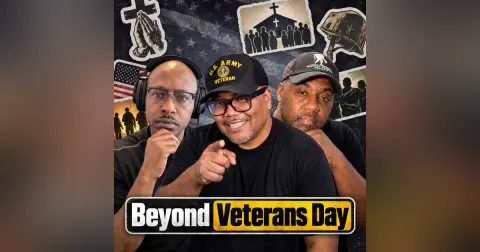


A Veterans Day shout-out can feel good and still leave a veteran unseen. We wrestle with the gap between a church that has a lot of veterans and a church that is truly veteran-friendly, especially for Christian veterans of color who carry layered pressures from race, faith, and military culture. If the only “support” is a yearly recognition, what happens when a veteran walks in carrying hypervigilance, anger, isolation, or the exhaustion of trying to look normal?
We dig into what “friendly” actually means. Should churches offer veteran-specific support the way hospitals offer specialists, or is a general welcome enough? Along the way, we talk about discipline and structure that veterans bring into civilian life, why well-meaning church habits can unintentionally trigger stress responses, and how subtle microiniquities can slowly push people to either assimilate or leave. We also share how many veterans want to serve, but the desire to avoid certain situations can quietly win out unless the environment makes room for them to belong as they are.
We close by teeing up a deeper subject for next time: moral injury, the spiritual and moral conflict many veterans carry when war collides with faith. If the VA stays clinical and home feels unsafe, the church can be the place where healing finally becomes possible, but only if we build ministries and leaders who understand the veteran experience. If this conversation helps you rethink church culture and care, subscribe, share with a friend, and leave a review so more veterans can find a place at the table.
00:08 - Welcome Back And The Big Question
02:10 - Recognition Versus Real Support
05:44 - Friendly Church Or Veteran Ready Church
13:07 - Are Veterans Unique And Why
20:54 - The Hospital Analogy And Specialists
25:45 - When No One Can Relate
29:58 - Shrinking To Fit And Microiniquities
46:08 - Serving While Managing Triggers
01:00:32 - Building Better Veteran Support Ministries
01:02:40 - Moral Injury And Where Healing Happens
Welcome Back And The Big Question
SPEAKER_00Gentlemen, it is so good to have you back. Um, are you guys ready?
SPEAKER_01We are ready.
SPEAKER_00Alright, well, let's let's jump in.
SPEAKER_02Urban Christian veterans provide a safe place for Christian veterans of color to discuss the challenges you face in your daily lives. Being a person of color has its challenges. Being a Christian has its challenges. Being a veteran has its challenges. All of those factors being combined makes for a unique and sometimes difficult life experience that is seldom talked about in public forums. Thank you. for tuning in to the Urban Christian Veterans Podcast. Here's your host, Dee Allen Rose.
SPEAKER_00Thank you, Aaron, for that wonderful introduction. This is the Ellen Rose, and you are listening to the Urban Christian Veterans Podcast. So last time we were together, um, I asked you whether your churches were veteran-friendly. Both of you said yes. And when I asked why, you talked about the number of veterans that attend, um, recognition during Veterans Day, and I guess um Memorial Day, I assume. Um, and then I think one of you mentioned that there were veterans in leadership positions. Now, I don't disagree that those are good things, right? I don't disagree. But I promised you I was gonna push back a little bit. So here's my question. If a church has a hundred veterans attending and recognizes them every Veterans Day, but doesn't really understand their experiences or help them become more involved in the life of the church, is that church veteran friendly or is it simply a church that has a lot of veterans?
Recognition Versus Real Support
SPEAKER_00You guys think
SPEAKER_01when you when you when you uh said that at the end of the last podcast,
SPEAKER_00I
SPEAKER_01started to think, even before I picked up your book, and I said, is recognition really support? Because they recognize people, say, for instance, it's the month of November, they'll have everybody stand up, you know, who has a birthday in November, or they might recognize people for this or for that.
SPEAKER_00Right.
SPEAKER_01But if there's no uh support, for instance, if you're in a veterans group for PTSD, or if you're in AA for alcohol or any other substance abuse, and you have that constant support uh and discussions with people who may be going through the same thing, then really there is no follow-through on that support. So I I see where you were coming from, and then I started to go through that chapter on veterans, and I I understand there it needs to be a little bit more.
SPEAKER_03Well, it's just a church that has veterans, if if that's all they do, uh just recognize them on them two days. Um that's what I believe. But I agree, you you need to be understanding the plight, asking the questions. Um uh you know, if they haven't gone through it or they don't have a relative that's gone through some of the traumatic things that we have witnessed, uh asking, you know, what asking people to expound and and how you feel and all of that. And we have a lot of testimony uh services, uh, when they do, and and of course the people, you know, tell everybody what they went through, and so they can empathize. Um but yeah, I definitely uh believe empathizing more with the veterans will help that church also, and our church definitely does that. We have, like I said, we have also veterans in the leadership position. So it is, and they ask questions of us, uh kids and adults and all that kind of stuff. But my church right now has the largest over 70 year olds in our little town, a small little town, but we have the largest percentage of I'm gonna say seasoned senior citizens. Because technically we're we're considered senior citizens, but 70 plus year old, we have probably the most well whoa,
SPEAKER_01whoa, whoa, whoa, whoa.
SPEAKER_03Technically,
SPEAKER_01right, you
SPEAKER_03can get ARP, uh US U con US citizen. Anyway, anyway.
SPEAKER_01Just getting it for the benefits, man.
SPEAKER_03But so with so many over 70 people they have were around during all those wars, and and if they probably most of them were touched by them one way or the other. So our church is kind of unique in that in that aspect. So yeah.
SPEAKER_00Okay. So let's so given what you or how you answered the last time we were together, has your answer changed?
Friendly Church Or Veteran Ready Church
SPEAKER_00Are your yeah are your particular churches what you consider to be veteran friendly?
SPEAKER_01I I would say a better way to say it is are are churches willing to expound on support for veterans from a mental aspect. Because when you say friendly, yeah, if you if you come into a space and people are cordial to you and are welcoming to you, then that's friendly. But if you're uh experiencing some deep root rooted issues and you need counseling, yeah, a pastor could sit down with you and he could talk to you from a biblical standpoint and he could give you guidance from his experience and from the word of God. But we have certain things, such as a veteran who's experienced things during the time of war or seen things during the time of war, you might need a little bit more uh from the counseling standpoint to support that veteran or veterans within your space. So
SPEAKER_03I I think we offer
SPEAKER_01Yeah, our church is friendly towards
SPEAKER_03our church,
SPEAKER_01yeah. I'm sorry,
SPEAKER_03we guide, we would guide someone to another veteran if they uh came in and had an issue. And having so many over different occupations, uh, if we can reach out and touch that, we can touch that person, empathize with that person, uh no matter where they are in their uh in their age group group or whatever, or or length of time in service. Most of those um Vietnam vets, if they got drafted, they only did about four years at the most. Um we're we are we are that new age of the military who retired or or whatever. Most of them vets only did about four years, especially if they got drafted. Um so having an older vet talk to somebody that's having an issue, if they would even open up about it. Uh, I think our church excels at that personally.
SPEAKER_00Okay. Okay, so so if I took away um your church's say Veterans Day celebration and I didn't tell you how many veterans attended, what would you point to as evidence that your church is veteran friendly? And and you know what, let me let me back up. I don't want it to be like I'm I'm pressing against your church. Any church, right? Just any church. If you took away those those veterans recognition days of the of the year and you just you know and and I knew how many veterans were going there, but they didn't. Right. What evidence would you have that a church is veterans friendly? Veteran friendly. Now um to your point, Greg, you you mentioned that maybe a better way of saying it, um 'cause you said that you know, coming in the door, greeting you a certain way or whatever, that's friendly. Um and I guess my my response to that would be uh you know, that being the case, your church is friendly, cordial to everyone who walks through the door. That being the case, or or given the fact that you you brought that up, are you saying then that as long as someone comes through the door, your church is friendly to everybody, and there's no there's no distinction between a veteran and non-vet because of the fact that they're friendly to everybody?
SPEAKER_01Yes, I would say so. I I think we're you're probably trying to dig with that example that you just gave. If so if you didn't have those recognition days, then there should be something maybe on the church website that might uh specify that out. You know, this is who we are as a church, these are our beliefs, these are some of the programs uh like we have uh schooling from a biblical standpoint that they do at the church. And there's certain things that are lined out at the church, and maybe that's something that should be lined out to show a veteran. But outside of that, if you didn't see those recognitions or if uh you you didn't have something posted during those special times, you then you wouldn't see anything. And I'm sure if if I said more than likely that's probably the case in
SPEAKER_03a
SPEAKER_01good majority of churches, then uh I think I'll be right. Yeah.
SPEAKER_00Okay.
SPEAKER_01But so there's a lot, but there's a lot of things that are not posted where you might have where you might have a need for support. I I I think when when you look at a church as a whole, uh anything from a a family or a family unit or personal unit, uh, marriage, whatever the case is, you could make any make the assumption that you can go to the pastor or a deacon to get some type of guidance, or they can point you in that direction that you need to go.
SPEAKER_03I've witnessed a lot of churches over the years who if a family comes in, they kind of link them up with families. Or if it's a single person, they'll have these programs or link them up with single Christians or you know, stuff like that, or professionals. I I've I've I'm an observer, so I've been observing that over these years, going to all the churches that I've gone through, all my duty stations. And I think that's very good. Um doing that, it makes you and then of course, all church, like like you were saying, Greg, all our churches, you know, we have a uh hospitality committee at the door greeting you, um, making you feel giving you that visitor's card, and we contact you again. Hey, great seeing you, all of that. We have whole committees for that. But I think um what I have noticed is the church as they evolve uh are starting to link up people like my, you know, like group. If it's a family, they have another family, hey, kind of take them under their wing and stuff like that. I I think that's a a a great thing that churches I've noticed doing. And and and with with that, the question can be asked, hey, are you you know, if you'll be asked, you'll be talking, you may you might be a veteran. Uh you never know, but the cup the community, the conversation can get started.
SPEAKER_00Okay.
Are Veterans Unique And Why
SPEAKER_00So I guess just to set the foundation, the question I would have for you guys is are veterans unique? Like do veterans, period, just without getting into specifics, you being veterans, you have you having served, do you feel that we are unique? Um we are a unique group of people.
SPEAKER_01Such
SPEAKER_00that so okay, so we're unique. We have specific needs, you would think. No,
SPEAKER_03I just one percent uh of the population joined the military, you know, and then or or a percentage. I don't know if it's one percent. I thought it was 10%, maybe 1%, but uh of the military, that makes us unique, the fact that we especially, especially the volunteer ones. Now, if you got drafted, that's different. But us who raised our hand and volunteered, we are definitely uh, at least I see myself, uh, as uh unique, one percent. And then within the military, all the individual things we've done, we've even we're even a smaller percentage. So that that that alone makes us makes us unique, I believe.
SPEAKER_00Here's where I am you know trying to make sense of it. Because if your church is friendly to everyone, then that means it is not recognizing the uniqueness of veterans. Or let me put it a different way saying that your church is friendly to everyone and you just happen to be a veteran walking through the door is similar to someone saying, Why are you saying black lives matter? All lives matter.
SPEAKER_01That that statement, yeah, it's when you say black lives matter, it's noted and it's uh understood that all lives matter. But if something is going on specifically to a group of people, that's why that's being echoed. The same thing is if you walk into a church, you should be friendly to everyone. There should be no difference on how you treat everyone who crossed those doors of a church. That's uh that's how a church should be.
SPEAKER_00Okay.
SPEAKER_01But I think where we're trying to go is if you have specific needs, such as a veteran, then I think where you're probably staring this too is maybe that church should have programs uh or people who are familiar with certain programs to assist a veteran with certain things that they may be going through. Just like if someone who comes through the church and may be an alcoholic. Maybe they might be programs that that church can establish and help you in that particular uh shortcoming that you may have.
SPEAKER_00Okay. So two churches side by side, one has an an alcoholic's ministry and one doesn't. Which one would you say is alcoholic friendly?
SPEAKER_01The one with the ministry. I would
SPEAKER_03say both. Both should be.
SPEAKER_01All right, let me ask you. Okay, one has a known alcoholic ministry, one does not.
SPEAKER_00The
SPEAKER_01one that does not, you you can't necessarily say that if you're an alcoholic, if you go to that church, you won't be able to get help.
SPEAKER_00I didn't say that. I was just saying, I just used the word friendly. Which one would you consider to be alcoholic friendly? Because by your earlier argument,
SPEAKER_01okay,
SPEAKER_00as long as you're friendly to everyone who walks through the door, then you're friendly, you know, you're cordial to them. You're friendly to everybody. But one has a ministry specifically for the needs of that particular group, the other one doesn't. But they're friendly to everybody. Right? They're friendly to everybody. They have the ushers who who greet them when they come through the door.
SPEAKER_01So so we know that second church does not have an alcoholic ministry. We just
SPEAKER_00Right. I'm saying if there's two, if there's two side by side,
SPEAKER_01okay,
SPEAKER_00which one would you consider to be alcoholic friendly? And you're saying that the one with the ministry that focuses on them
SPEAKER_03I say both
SPEAKER_00would be considered friendly. Whereas the other one would be I know both. Because why? Because they greeted you at the door or what's what we're
SPEAKER_03supposed to be as a church. It shouldn't matter what your what your doesn't it doesn't matter. No, it shouldn't matter. It doesn't matter what your thing is. Um our job mission is to bring you to the person that can fix your specific issue. That's that's our job. That's our mission. Bringing you in to that person, which is God, that can fix your problem, whatever it is. You even have to tell us. But we we just supposed to set up the uh we supposed to set up the uh invitation. Um yeah, we're supposed to set that up. So having having a church
SPEAKER_00that
SPEAKER_03has an alcoholic ministry just means to me that somebody established that that isn't something that we they need to do in that particular church. Uh have that ministry. Because there's some churches that have singles ministries, and there's some that don't, you know. But when it's one of those situations like that, like a detrimental situation, alcoholic drug, and that kind of thing, I I I really believe come as you are, gotta fix it if you if you let him, if you want him to.
SPEAKER_00Oh. Okay. You agree? You agree, Greg, with that?
SPEAKER_01I could agree with that.
SPEAKER_00Okay. So come as you are. Now we again I'm trying to keep up with all of the things we've said so far. We agreed that veterans are unique, but it doesn't matter what your thing is, come as you are. The church is supposed to bring you to God.
SPEAKER_03We're the hospital. We're the hospital. Lead
SPEAKER_00you to Jesus. No matter.
SPEAKER_03You don't go to you don't go, well, people. Well, people don't go to the hospital. Sick people go to the hospital.
SPEAKER_00Ah, wait a minute. We're
SPEAKER_03supposed to be like the hospital.
SPEAKER_00Wait a minute now. This brother just said we're the hospital. You go to the hospital. I'm pretty sure that there's specialties in that hospital.
The Hospital Analogy And Specialists
SPEAKER_00Well, we have
SPEAKER_03deacons, deaconesses.
SPEAKER_00But you're saying that
SPEAKER_03you got you got people, those are the specialties
SPEAKER_00in
SPEAKER_03the church.
SPEAKER_00Yeah. So ah, now we're getting somewhere. Now we're getting somewhere. So the title of deacon makes you a specialist in the alcoholic issue and the veterans' issues that we have.
SPEAKER_01If that deacon was a veteran with alcohol issues of his past. But no, the men got
SPEAKER_00a man got a deacon.
SPEAKER_01They got a deacon for counseling.
SPEAKER_03They got different doctors in hospitals. One doctor don't fix everything.
SPEAKER_00That's right. That's right. They they they are they have specialists, they have specialty departments. You got to get a referral to go to those departments. And the thing is, not all hospitals have those same specialties. Sometimes you got to go to a different hospital if you want to get, I guess, cured or treated.
SPEAKER_01That goes back to what Racher said. Because if if you come into the church, then say you link up with the pastor and you you're a veteran and you're having issues dealing with post-traumatic stress disorder. If that's not his specialty, then he can give you guidance toward maybe another pastor who may have that as a specialty, or someone in the church who is a counselor that can help you in that area. So uh
SPEAKER_00in the in the civilian world, have you ever worked at a job where there were no veterans?
SPEAKER_01No.
SPEAKER_00Okay. So then you wouldn't be able to then you wouldn't be able to relate to what it's like to be in an environment and there are no veterans who can relate to you. You're just they're friendly, they got a HR a department. We got HR. But there's no veterans, no one who can relate to you.
SPEAKER_01Yeah, that's a good question. Have I
SPEAKER_03agree?
SPEAKER_00Have you matter of fact, have you ever been in a church environment where there were no veterans? No. Not the current church that you're in, because you clearly said that they got veterans, but see, so so I guess I'm speaking to two individuals who have always had the luxury of being around veterans and people who can relate to you. But if you're in a group who they can't relate to you because they they never served, and here you come with all that autumn war stories. Don't nobody want to hear all that. You know what you what you doing here on time all the time. Man,
SPEAKER_03I think you'd be I think you'd be hard-pressed nowadays to find a church that don't have no veterans.
SPEAKER_00They're out there. But but but watch this. You're not gonna be hard-pressed to find a uh a church that that don't have veterans, a workplace that doesn't have veterans, and furthermore, the there's you're not hard-pressed to find churches that can't relate to the veteran experience. Now, now, Greg, when we when you talk about it, the conversation seems to gravitate towards PTSD, but sometimes it's not even about that. It's about the culture that you have, the the esprit de corps. It's about the you know, the standards that you have, right? And, you know, there are situations where you as a veteran may be at a work, well, you've not experienced it, but if you may be at a workplace and may be in a leadership position, a managerial position of people who have never served, especially youngsters, younger, straight out of college. Maybe they don't have the same discipline you have. Maybe they don't have the same attention to detail that you have. Yet you're responsible for them. Right? You're responsible for getting certain things done. But these jokers is like, I get there when I get there, man. Why are you sweating me? So my point is you're unique because you have these things that have been ingrained in you from your
When No One Can Relate
SPEAKER_00military experience, and then you get around people who don't have your same experiences. Don't have your same drive, right? Don't have the same discipline you have. But you said, come as you are. They were friendly to you when you walked in the door. You're saying that they're gonna lead you to whoever it is that you need to deal with whatever you're dealing with, but how are they gonna know? Because they don't even have your experience, they have no clue. They can't even relate to you. What are you talking about? Why are you stressing? Why are you what if you have undiagnosed PTSD? The band start playing and you jump. What's wrong with him? Like what? They're not even trained to recognize that you were a veteran and perhaps you have this situation going on with you. It's undiagnosed. But here's here's here's the other thing. Regardless of what they got going on, if you ever find yourself in a situation, and here's I'm not saying that this is what's going on here with us, with the two of you. If it is, you would never recognize it. But here's the situation I'm talking about. A lot of times we as veterans, especially veterans of color, are have been conditioned especially from our military experience. We have been conditioned to show up to places and be behave less than to make other people comfortable. Now, maybe you've not experienced that, right? But but if you're in the minority, you might even be the only one, and you have all these things going on with you, in order to make them comfortable,
SPEAKER_03you
SPEAKER_00have to shrink yourself and be less than. And a lot of times that happens in the church because you want to be involved, you want to be a part of it, but you gotta, you gotta conform, you gotta be, you know, and and you learn how to do that in the military as well. You learn camouflage well, right? Um, especially when it's when you're coming up the ranks and you're doing all these things and you're you're in in rooms with those who may have more rank than you, and whatever their cultural biases may be, you learn how to assimilate to some. Well, uh yeah, I wasn't gonna go there, but yeah, maybe, maybe cold switch, whatever the case may be, right? I mean, this man was a first sergeant, so I know there was a whole bunch of switching going on up in there. So he learned how to do that, and then you get out, and now you want to be a part of something, and now we have to modify ourselves, suppress whatever we have going on in order to make other people comfortable, right? Because there's a negative stigma attached to you know, some veteran experiences. And sometimes we suppress that in order to make others comfortable because we don't want to be labeled as that dude, that strange one in the corner. Right? Why he always sitting, you know what I'm saying? He can't have his back to the door and all that, right? That ain't necessarily PTSD. That's just is what it is, right?
SPEAKER_01That's DV growing up there. We
SPEAKER_03are
SPEAKER_00well there, well, whatever the case may be.
SPEAKER_03uniquely uh different as people of color. Uh we probably had PTSD going into the military, depending on where you live. But uh
SPEAKER_00so so my
Shrinking To Fit And Microiniquities
SPEAKER_00point is the church, right? The church, you know, I get passionate about this and why I wrote a book about it. And I think I might have even mentioned it in the book where I went to the the VA.
SPEAKER_01Get your copy bookstores near
SPEAKER_00you.
SPEAKER_01Amazon.
SPEAKER_00Right off. So I went to the VA as part of a program, and I'm in there, and it just so happened that I happened to go to this particular session after I had recently heard a sermon at church. There's somebody in this program dealing with a situation. We're all sharing, we're going around a room, we're sharing. They're sharing a situation that they're going through. And I'm like, man, I just heard about that at church, and I felt like I knew the answer. You know how you be in class, I got it. Ooh, ooh, ooh, I got it. But then what I realized was the counselor, the program, the whole VA, when it comes to, because my answer would have been spiritual. The VA has a tendency to be neutral when it comes to that. They want to be clinical. Right? And so I saw it, I recognized it. Again, I recognized the situation. I knew how to assimilate, I kept it to myself. And so then I realized, I was like, you know what? If we, and it so happened that it was a veteran of color, and the counselor was not. And the answer he kept giving the dude was more was more on maybe you need to rethink how you feel about that situation. And those of us in the room who were of color was were like, nah, that's how it, you know what I mean? That's how it is. That's
SPEAKER_01how it feels. Right.
SPEAKER_00Exactly. And so it was like, well, if a veteran can't go to the VA to get the assistance he needs, I'm in the VA. I'm in the program that you're talking about, that's where you need to go, that the church would connect you with. I'm there already. The church is going to connect you to a clinician. He didn't need a clinician, in my opinion. Right? He needed spiritual guide. I promise you, I was like, man, I just heard a sermon on this, and I bet you this will help him. But he can't go to the VA and get that. Where else is he supposed to go? He can't get, he obviously can't get it at home because there's not the expertise there. Maybe he can't even share that with family or whatever. Isn't he supposed to go to church? And that's what Reggie said. We we the hospital. We got we got specialists called deacons and come see the deacons or whatever. But if the deacon doesn't even have the experience or can't even relate to you, it brings me all the way back to the original question. Veteran-friendly church. Is that a veteran-friendly church? And again, I'm trying to phrase it such that I don't want, when you're a church member, you're going to defend your church. And that's not what I'm trying to do with y'all. I don't want you defending your church. That's not, that's not what we're doing. I'm not, I'm not, you know, picking at your church, right? I'm just saying to recognize what a veteran-friendly church is, because last week the original topic was going to be um our churches in our community, veteran-friendly, our community, veteran friendly. And when you dig into the topic and you realize that, yeah, there may be, I guess, a a large population of veterans at a particular church. Is the church veteran friendly though? Again, PTSD aside, just a place where the veteran can feel welcome and belong and be his authentic self and not have to shrink in order to make everybody else feel comfortable around. That's where I'm coming from. Does that make sense?
SPEAKER_01It does. Let me ask you this.
SPEAKER_00Yeah.
SPEAKER_01Does the military have an obligation to ensure that veterans dealing with certain issues are connected with programs in their area? You think? For instance, I from what I understand compared to when we got out or when I got out in 1996, the military seems to be doing a better job of ensuring that you establish your VA benefits, get that paperwork in prior to exiting more than they have done in the past. So if they're doing that, and say something is recognized in your record prior to exiting the service, could part of that be connecting the veteran with programs in whatever area they're going to to help with that transition?
SPEAKER_03Definitely. They're doing uh I've been out 10 years now, so it's it's probably even better now. When I was got out getting out, they have a thing they started called benefits upon discharge. So I was able to get my 100% from the VA out the gate. I didn't have to wait because I got to go through all of my appointments on active duty. And and I had to go to a psychiatrist, psychologist before I got out. And I had to do so many weeks or until the person said, You good, after I got out. And I am I'm so glad uh I did the and then right before I got out, they really hankered down on um toxic leadership um and mental health. They started a whole branch of uh mental health, even deployed. Um if you were, you know, somebody was wigging out or or couldn't take it, they had a place to send you downrange. And they took your weapon, you couldn't wear civilian. I mean, you couldn't wear military clothes. It's like a closed-off TV. You you worked out, they did breathing, all that stuff. Um, and they they they just instead of sending you back, they kind of gave you a respite and and worked on you there. So the military is definitely uh doing um a lot better at identifying once you get identified. I had to go through a group session for for so long. Um and and but it helped me. Plus, they started doing it right before you deployed, right before you redeployed. And then once you got back, you still had to go talk to chaplains and and all kinds of stuff. So the military has definitely come a long way with mental health, and they're getting rid of the stigma of going to seeking help as something weak. They're actually saying that it makes you a stronger person when you can recognize that you have a situation that you need help. So they they they slowly flip the script. I was very impressed um that they started uh getting more mental health aware uh right as you're about to get out. Because you everybody knows how to deploy, we know how to be in the army, we know how to soldier, but what we don't have practice of doing is getting out. I don't care how who a whoa you were, you have no practice or of getting out. And that's where people were getting in trouble and having issues when they got out. You leave this regiment, regimental situation, and everything is scheduled, and then you come out and you're on your own. You know, that's what people, but having that counseling before I got out to help me understand these are the emotions because I had them. I I was angry, uh carrying guns all the time, uh uh super hyper-vigilant. Uh yeah, yeah,
SPEAKER_01still
SPEAKER_03didn't, but that's for a different reason. Uh hyper-vigilant, all of that thing. But I got that counseling before I got out to say, hey, this is what you're gonna be going through, this is what that is. And I was like, oh, okay. And it really did uh uh help me out, help me personally tremendously, tremendously. And I try to uh pass that on uh uh as much as I can.
SPEAKER_01And I know I segued that, you know, you could bring it back to the church with all that said, maybe a veteran in the church or someone else, or maybe the pastor can have the insight to recognize that veterans are unique because of the amount of veterans in this church and establish those programs. Just like I how I said maybe the military should establish programs. Maybe uh churches might want to establish programs that can cater to veteran needs. And the shut in. So they can't have another ministry to cater to the needs of a veteran.
SPEAKER_00Um you don't say so I think I think we you know when you when you ask the question as to whether or not the military was obligated I think that uh the military from my experience is only obligated to do whatever the law says. Right? And if the law doesn't say it now, it's it's great that they've moved in a uh a direction where they are trying to change the culture so that going to sit call is encouraged if needed. Because I remember plenty of days at 598 when we would get be in formation, getting ready to do PT, and them cats that stood in the back who had them profiles as we marched off to start, you know, information. There were plenty of days, bro, that I marched off limping because I played basketball and twisted my ankle, but I didn't want to be over there with them because boy, you didn't you just didn't want to be one of them
SPEAKER_03cats.
SPEAKER_00And I was limping in order to, you know, prevent myself from from or you know, avoid the ridicule that you would get from being one of them cats. They had a name for them, and I'm not gonna go there. But the point is, I didn't want to be one of them. It was it had to do with being broken. It was broke, broken. I won't get into
SPEAKER_01that.
SPEAKER_00Roger
SPEAKER_01that.
SPEAKER_00Right, right.
SPEAKER_01Roger, Roger That. Right, I
SPEAKER_00won't get into that. But but the point is, I didn't want to be one of those. And I mean, the same thing happened to me in Korea.
SPEAKER_03Oh, yeah,
SPEAKER_00you know, and yes, I still have lingering injuries from that today that I never I never went to sit call for because I was like, I just, you know, at that at that age too, I was young and I was like, I'm I'm gonna try and, you know, again, assimilate, fit in, be on the good side of things. And so now here we, you know, I guarantee you that you, the, the the three of us could share stories about stuff we experienced, all the way from comical to horrifying while we were in the military, and then that is all part of you. It's a package deal. You go to a church, and if no one can relate to you, no one can relate to you, one of two things has to happen. They can be friendly to you, you either have to accept the friendliness, the cordialness, and say, that's it. That is the highest level of acceptance I'm gonna get. And then you have to assimilate, or that church is gonna take two steps towards you and say, We get it. We understand. No need to explain unless you want to, right? And no one's gonna push you to do certain things. Let me give you a let me give an example. Whether it be church or you might have even been in this situation during uh at work and during a training or something, you ever had somebody to say, Don't sit in the back, come on up here. Y'all fill in these rows right here. Right? And for what, you know, it's like that hits different with us, I think. I can't speak for you, but that hits different. For me. And the fact that I go up there when you say that, now I'm shrinking myself to accommodate you so you feel better. Does that make sense?
SPEAKER_01Yeah.
SPEAKER_00And so that's the it's it's little things like that. There's a word for it. It's called microiniquities. Right? It's like I'm going to, there's these little, it's like death by a thousand cuts. It's not a big deal. I'm just going to cut you a little bit. Next Sunday, I'm going to cut you a couple more times. And next Sunday, I'm going to cut you a couple more times. Little bitty cuts. Eventually you're bleeding up in there, and one of the two things is going to happen. You're going to put a band-aid on and keep it moving, or you're going to leave and go somewhere where you feel comfortable. That is what I'm talking about in terms of veteran-friendly, right? A veteran-friendly trial, what I'm saying is it's a it could be a simple gesture like if you sit in the back, I'm not pressing you. I'm not pressing you to come up front so I could feel better. Right? Cool. Sit where you feel comfortable. And and that's just one small example. It could be a fellowship hall. Maybe there's a meal being served or whatever. And if you're sitting back there in the corner, whatever, everybody else is fellowshipping or whatever, and you sit back there, I'm not pressing you. Hey man, come sit, you know, come sit squeeze in between these two dudes. There's a chair right there. Why do you know I would go in there like, oh Lord, you know? I don't want to squeeze in there right now. I don't, I don't want to, but I'm going to shrink myself to make you feel better. And then I'm going to eventually accept it. I have to be less than every Sunday in order to fit in around here. And one, you know, again, you if I'm less than, you're not going to get the best out of me. I'm not going, perhaps I'm not going to serve on a whole bunch of stuff. Maybe,
Serving While Managing Triggers
SPEAKER_00you know, you get these cats who show up right when the pastor starts talking and leave before he's done. So you ain't got to get all off into the fellowshipping and all that, you know.
SPEAKER_01Yeah.
SPEAKER_00Sometimes people don't understand that's where the veteran's coming from. It's not that he's antisocial, it's just some things happen. And if you're veteran friendly, you do things to make the veteran want to stay. But again, that's where I'm coming from, man. It's not, it's not, again, it's not a it's not a dig at either of your churches because, you know, I go to church too. And it's it could be more friendly, in my opinion, to veterans, right? But we're trying to change that. We're actually making an effort to do it, though. Right? It's it's a it's a thing. And I just so happen, shameless plugged, to be servant leader over the veterans ministry. It's called Valor, right? So we actually have a veterans ministry now.
SPEAKER_01Correct.
SPEAKER_00And so, and I talk about it in the book if you read it. But anyway. Um
SPEAKER_01and that book is From the Battlefield to Belong by Dr. Dennis A. Rose Jr.
SPEAKER_00Right off.
SPEAKER_01Get your copy right here.
SPEAKER_00Right off. So, so yeah, there's a chapter in there that talks about how to start valor at your own at your church. You know, like it's a it's a brief, you know, a few steps. Here's how you do it, kind of thing. But but that's my point. That that is where I was going, you know, with this whole topic. Like veteran-friendly churches, and I get what you guys are saying. Trust me, I do. You know, um, you our job is, you know, come as you are, and and all these other things. But I'm hoping that you understand the examples I gave you. Because unless you're focused on those types of things, your your yeah, your your your upbringing, your culture that you grew up in, one where everybody sat up front, you know that that that exercise they do when you go to a training, they say, All right, now sit by somebody you don't
SPEAKER_03know.
SPEAKER_00You know, get up and get your stuff and move over here and sit with somebody, you know. Ah, You know,
SPEAKER_01been there, done that.
SPEAKER_00Right. And and to take it a step further, I'm a minister at church. I'm a minister. So I have to sit up front a lot of times. I have to be up there. You know, on occasion, I do the call to worship. So I'm on stage and I'm doing these things. And I've shared with a few people there in small settings that there are times where, like I'll I'll sit on the second row because the ministers sit up front in the middle and we we take up two rows. I spend most of my time on the second row. One, the music is loud, there's a speaker right there. It's, you know, it's it's like so. The second row is what you're gonna get out of me. But every now and then, some somebody will say, you know, come up here, come up front. Like, I let me let me go on up here. And
SPEAKER_01I'm gonna minister. Well, push back.
SPEAKER_00No, no, you know, again,
SPEAKER_01right,
SPEAKER_00I get it, but sometimes when when when a church elder says, Hey, would you, you know, would you come up here out of respect, shrink to make the person feel, you know, and I go up there. But I've shared with them in this small setting how there have been times where I will get physically ill. I am more comfortable on the stage looking out where I can see everything. But you're asking me to be up front where I can't hear nothing. There's stuff going on behind me, there's all kinds of, and then I hear, you know, I get I have gotten physically ill, and I can't explain it to anybody. Like you don't, you know, I, you know, I could I could just tell you what the symptom is. Here's what the end result is, but I can't explain it to you unless you've gone through this. And, you know, so so my point is that we're trying to change the culture such that veterans feel more friendly. A lot of veterans don't participate in certain things because you might call me to be up front and do something. Or you might, you know, and so that's what I'm saying. And so, so that's why, you know, and I'm gonna stop rambling, but the point is, I'm hoping you guys understand where I'm coming from when it comes to veteran-friendly versus all live matter. You know, it's there's a little bit of a difference.
SPEAKER_01Yeah, so I think uh one example that you gave is going to a hospital. And you might be going to that hospital and you might have something specific that a general physician cannot address, and you need to go to that specialist for that. So I think that was a great example.
SPEAKER_00Yeah, and and when it comes to the church, you find yourself in this trick bag because you have the desire to serve. A lot of veterans have the desire to serve, want to do more, even feel called to do certain things. But the desire to serve is not as strong as the desire to avoid certain situations.
SPEAKER_01Yes.
SPEAKER_00You know what I mean? And so therefore, they don't. I'm not going up there, I'm not dealing with that, I'm not doing that. In fact, you keep pushing me, I won't be there next Sunday. Right? And so
SPEAKER_01strong possibility.
SPEAKER_00Right, right. And so me, I feel like I'm I've been called to do what I'm doing and I push through. Some Sundays, it doesn't work. There have been some Sundays where I've had to go out and sit in the truck. Right. And if anybody from the church is listening to this, now you know why. Right? There have been some Sundays where where's Minister Rose? Oh, he's out in the truck. He's out, he's out in the parking lot. Is he okay? Phone blowing up. Yeah, I'm good. Thank you. Thank you for checking. You know what I'm like? I just needed a minute to just, you know.
SPEAKER_01Readjust.
SPEAKER_00Yeah, just just get right. And um, but yeah, that that has happened to me. And so, but I keep pushing. I I'm not, you know, so many days I've I've questioned, man, is this even for me? Should I really be doing this? Because I look at the other ministers and it seemed like they just float on into that thing and they do, they're able to just handle it. And me, man, you know, for a lot of times, a lot of times for a veteran, it takes more energy for us to just be normal.
SPEAKER_03Definitely.
SPEAKER_00Right? It takes energy to be normal, whereas for others, being normal is just being normal. So, you know, again, I'm I'm I'm on the soapbox and I'm rambling, man. Let me let me back up off it. So, but I hope y'all understand where I'm coming from. That's that's where
SPEAKER_01we understand. Because we're veterans.
SPEAKER_03You feel like you just want to smack somebody, yeah. Yeah.
SPEAKER_00Oh, well, yeah. I'm
SPEAKER_03out of here. Yeah. Yes.
SPEAKER_00Yeah. Uh maybe it just gotta
SPEAKER_03hold
SPEAKER_01it.
SPEAKER_03That's why you gotta go uh move by yourself for a minute. Yeah.
SPEAKER_01Yeah, I ain't gonna get into specifics, but somebody in Costco almost caught it for me. God be the glory that my son was there to de-escalate the situation because I had already flipped into that.
SPEAKER_00Yeah, yeah, I I think it's that that happens. That happens in
SPEAKER_01quick for me. I had
SPEAKER_03to go to the chiropractor one time because of hyper being hyper-vigilant. So if something is flickering over here in the peripheral, and you, you know, so I was trying to stop myself from doing that, from that flinching, and the I don't know what I was doing to try to stop myself from doing it. I hurt myself, and I was like, oh,
SPEAKER_00right,
SPEAKER_03okay, I had to go to the chiropractor because I'm I was trying to do it myself. Okay. This piece of paper, especially when I look and see, oh, it's a piece of paper flapping in the wind. But it when it happens again, I was getting triggered. There was some some now I'm in the in the in the garage practicing and lifting my shirt up.
SPEAKER_00No, let's see. Let me tell you, it's it's funny because you know, I can't explain to people, like I am more comfortable. The times that I've had to get up and preach, I'm more comfortable doing that. I can see everything that's going on, but I am less comfortable when you tell me we want you to go up there and do what they call the call to worship. Bring the, you know, the begin the service. I am less comfortable doing that than I am actually preaching because if I preach, you can settle in over time. You're gonna be up there a minute and you can just settle in. Call to worship, it's it's different. It's like, okay.
SPEAKER_01Yeah, preaching is more structured. You've had time to prepare your sermon on what you're gonna say, your points. Call to worship is more ad-libbing. You're gonna go with what's you have a you have a a flow, but it's more ad-lib than doing a sermon.
SPEAKER_00Yeah, definitely. And well, and and and the thing that adds to that is it's not the moment of of call to worship necessarily, but it's the mental gymnastics that you got to go through knowing that later in the service you're gonna be doing announcements too. And and a lot of times these announcements come ad hoc. You be you have them, but then sometimes some of you'll get a you'll be sitting up there and somebody say, Check your phone. So there's a text message that you gotta add to the announcements. You know, all this, it's like, man, I just
SPEAKER_01go it's going back to that structure you talked about before.
SPEAKER_00Bingo, bingo, joke.
SPEAKER_01The structure.
SPEAKER_00Bingo. And and and and see, but because it's ministry, you try to be accommodating, right? And you you're like, okay, I understand, you know, and look, Reggie said, come as you are. Well, that's how that person came. And so I gotta I gotta try to accommodate. But again, what's what's in me, I have to shrink myself and be less than in order to make others feel more comfortable. And no one understands that. I gotta just eat it, go home with it, and just deal with it. Whereas the environment doesn't accommodate the stuff I got going on.
SPEAKER_01True.
SPEAKER_00And so, you know, boy, this felt like a therapy session for me. I got I need to put my feet up and talk, you know.
SPEAKER_01But
SPEAKER_00but yeah, man. So again, uh, it was like last week when we were we were talking about that, and and I asked the question, and you guys were like, Yeah, we got a whole bunch of veterans there, and that was triggering for me. I was like, What? That's it? Because y'all do a veteran's day, sir, you know.
SPEAKER_01Yeah, I could feel it. I said, okay, hold on. Let me let me sit back and ponder, my brother. What are you saying here? And I started perusing the book. I said, okay, I see where he's coming from. Okay, okay. That's why, from the battlefield to belonging, any source now. Make sure you get your copy and read it.
SPEAKER_00Well, and see, Reggie, I think it lends itself to support what you said about our job as a church. Come as you are, right? And I just want if you're gonna come as you are, especially as a veteran, you got to come as you are into an environment that's welcoming you and understands you, and it's not gonna make you have to shrink in order to make everybody else feel comfortable. That's where I'm coming from. So
SPEAKER_03hopefully
SPEAKER_00that made sense. Um, hopefully that, you know, uh I'm so so glad you guys attend veteran-friendly churches. Uh so can't wait to
SPEAKER_01maybe need to expand.
SPEAKER_03Yeah, I think uh we definitely
SPEAKER_01they're friendly.
SPEAKER_03We definitely can uh uh improve.
Building Better Veteran Support Ministries
SPEAKER_00Well, if um I I know we're we're about to wrap up, but um I got a question. If if you were going to improve or have suggestions for improving, what would you what would you suggest to the leadership of the church
SPEAKER_03for on how to improve? More veteran friendly?
SPEAKER_00Yeah,
SPEAKER_03um having uh like you've started or like your uh veteran ministry or having uh something or someone available for the veterans for their specific situations or whatever they or just have somebody talk to. Um like that.
SPEAKER_00Okay.
SPEAKER_03I think I'm the youngest I think I'm the youngest veteran who was actually still at the church. We had a a young lady, she's active guard and she's uh gone Kentucky or somewhere. Uh that's her duty station, she got stationed there.
SPEAKER_00Wow. Okay.
SPEAKER_03Right. Well
SPEAKER_00you didn't say active guard, but I thought
SPEAKER_03that's what I'm saying. She's like one of three people that are active at the guards, you know. That's their job every day. Everybody else coming in on the one weekend a month, type still.
SPEAKER_00Right, right, right.
SPEAKER_03I tried to get she's the warrant officer too, so I was like, you need to go, you need to go active. People are gonna drive you crazy. She's trying.
SPEAKER_00Okay. Well, you know, the the I don't know if we'll we'll get into this next time, but there are specific things, um, again, that I talk about in the book, but there are specific things like um you know, the the the whole idea of moral injury.
Moral Injury And Where Healing Happens
SPEAKER_00I would love to I think we we've talked about that in the past. Um and with this new understanding, um I'd like to get you guys' take on how you would assist a veteran who is suffering from a moral injury who may walk through those doors and um a moral injury that perhaps never got reconciled. Now, uh before we go, do y'all understand what that is? Sure, sure. All right, say uh perfect example, Reg, you're you're a first sergeant, right, in the army, and um you're a first sergeant in the army, and there is a a soldier under your care, um who uh who you had to give an order because you got the order from above where that person had to maybe had to carry it out, and the result is someone lost their life, right? On the other side, right? So that or that that soldier carries out the order, they do what they do, the enemy is gone, or whatever soldier comes to you and says, But doesn't the Bible say thou shalt not kill? Right?
SPEAKER_03Why
SPEAKER_00did you give me that order? Why did you give me that order knowing that that was gonna happen? I trusted you, right, to take care of me. You're my first sergeant. Um and that's what the Bible says. They didn't ask you what the regulations say, they didn't ask you about training, they didn't ask you about none of that. They
SPEAKER_03went
SPEAKER_00to their morals. So now there's this moral, there's a chance for you, for them to not be morally injured, depending on how you respond to that. Long story short, not asking how you would handle it. I'm saying the end result is that soldier now comes home and is looking to join a church. But that it has never been reconciled in their mind how they took a life when the Bible says not to, yet they're up in church trying to praise, feeling guilty about what they did. And that's just one example of a moral injury. Morally, I was injured because I was told to do it. So, on the one hand, I was following orders. On the other hand, that's not what God said do. How do I reconcile that? And it never got reconciled.
SPEAKER_01The 10,000 that David Slow Have you not heard of me by insime and
SPEAKER_00Yeah. Well and see ki here here's the thing about that. You gotta be careful about giving scriptures when someone is is is injured.
SPEAKER_01Right. Then they they could take it to another. Or if they haven't
SPEAKER_03or if they haven't read.
SPEAKER_00That or they
SPEAKER_03don't know what no
SPEAKER_00Yeah, you know, and and and again I won't get into that there's no you know, we won't get into it now, but the point is um there could be moral injuries that just never got resolved, and you're asked to do something that goes against your morals, or you witness something. Maybe you got morally injured by giving the order, right? You got morally injured because you know that's not what you believe. Maybe you have some intel from being on the ground and seeing the situation, but the order came from someone thousands of miles away, but you gotta do it. You witness it, you carry it out, and it never gets reconciled in your mind as to how this is okay. Right? That's a moral injury that you carry with you. Where do you go to get that fixed? You can't go to the VA to get the moral injury fixed. Well, maybe you can. I don't know. I I've not seen any evidence of that. Right?
SPEAKER_01Knowledge will vary, it just depends on where you are, what counselor you get. Some are better than others, such as the physicians. You'll depends on who you get. Yeah, I think that's uh that's that's a deep topic.
SPEAKER_00Yeah, it's a very and and and I think it it also lends itself back to being veteran friendly because there are chances are just about every veteran who's gone through a a combat situation, or at least been in theater, may have some sort of moral injury, or just been in during a campaign, didn't even have to be there, but just watched the news and saw what happened. Or maybe they were in garrison, part of their unit went, not all of them came back. You know, all that kind of stuff, right?
SPEAKER_01Yeah.
SPEAKER_00And and but yet you're you're in church and that never got resolved. That never nobody ever sat down and said, you know, let's talk about it. Let it out. All right, now let's dissect it. And you know, usually at the end of those conversations, you're left with that person having to make a decision as to whether or not they want to accept a situation or they're just gonna say, No, I'm just injured, and that's just what it is. But but there's a way to get there. And um, but anyway, let's let's talk about it next time. Let's talk about it next time.
SPEAKER_03Sure.
SPEAKER_00So um any uh any final thoughts before we're gonna book
SPEAKER_03up again. I'm gonna book up again.
SPEAKER_01From the battlefield to belonging by Dr. Dennis Jr. Make sure you get your copy. Look at that.
SPEAKER_00Yay, yay!
SPEAKER_01That's what I'm talking about. DMV in the house. Doctor. Same with your chest.
SPEAKER_03Well,
SPEAKER_00I appreciate that. Any other final thoughts other than the book?
SPEAKER_01Good discussion. I think this definitely causes us to think a little deeper. Again, I'll go back to your hospital uh example where you can be going to a hospital, but maybe the general physician cannot address your problem in totality, and you're gonna need to go to a specialist. So yeah,
SPEAKER_03very
SPEAKER_01good discussion. And it'll cause us to it'll cause me to think, you know, of being in church, you know. Not and maybe not just veterans. I know this is what this platform is, but maybe other uh things that might need to be addressed in the church that may not be getting addressed as well. But yeah, great discussion.
SPEAKER_00Okay. Any other thoughts? We good
SPEAKER_03until next time.
SPEAKER_01I'm good.
SPEAKER_00All right, yeah, yeah. And you know, if I if if I was gonna put a bow on it, I just I want everybody who hears this to understand that I'm not looking to put veterans on a pedestal. And that's not what I'm trying to do. They don't need to be on a pedestal, but they do need a place at the table. Right? And and and that's all I'm saying. And usually, um, if you're gonna invite someone and give them a place at the table, you know, we gotta get out of the mindset that you can come sit at my table as long as you behave a certain way. And that goes against come as you are.
SPEAKER_03Yeah,
SPEAKER_00does that make sense? Okay, all right, gentlemen, thank you so much. That was definitely an awesome uh therapy session for me. I appreciate you. Uh,
SPEAKER_01you're welcome. sir.
SPEAKER_03I'll just send you my bill.
SPEAKER_00Right over. I appreciate it, and um, I look forward to the next conversation uh real soon where we'll get into some moral injuries type stuff. Cool.
SPEAKER_01Yes. Thank you
SPEAKER_00so much.