
Is It PTSD or a Wounded Soul? Why the Distinction Matters for Your Recovery
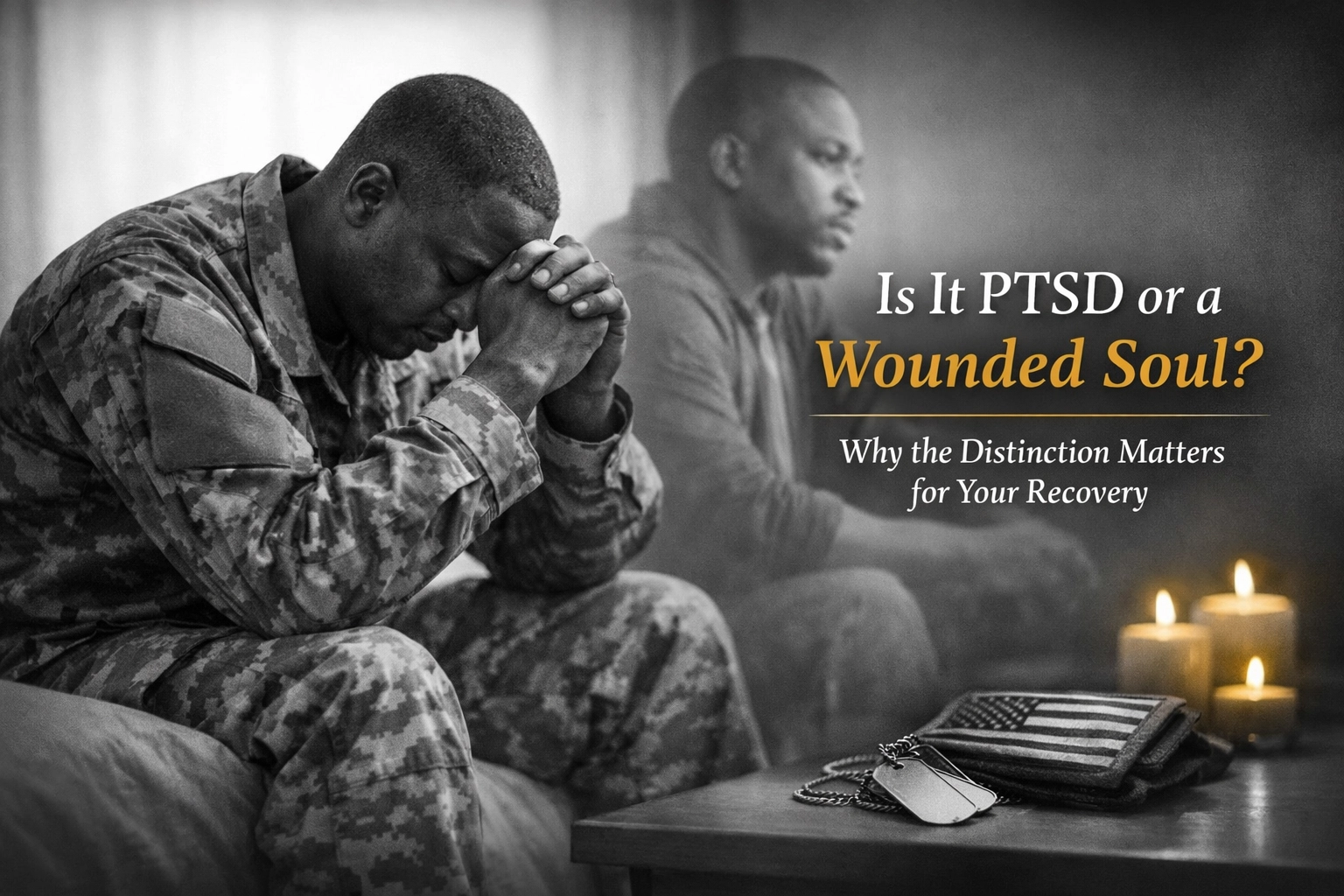
You have been told that your nightmares, your isolation, and your sudden bursts of anger are merely the biological symptoms of a disordered brain. For decades, the clinical establishment has funneled every veteran’s struggle into the narrow funnel of Post-Traumatic Stress Disorder (PTSD), suggesting that your primary issue is a malfunctioning fear response. This assumption is often fundamentally incorrect. While your body may indeed be trapped in a state of hypervigilance, your deepest agony might not stem from what was done to you, but from a profound violation of who you are.
For the Christian Veteran of Color, the struggle is rarely a mono-tonal experience of fear. It is a complex, multi-layered "soul wound" that transcends the diagnostic criteria of the DSM-5. When we misdiagnose a spiritual or moral crisis as a purely neurological one, we offer clinical bandaids for a hemorrhaging spirit. Understanding the distinction between PTSD and Moral Injury is not just an academic exercise; it is a prerequisite for your restoration.
The Biology of Fear vs. The Anatomy of the Soul
Post-Traumatic Stress Disorder is, at its core, a psychosomatic response to life-threatening danger. It is the amygdala: the brain’s alarm system: becoming stuck in the "on" position after surviving an event that threatened your physical survival. The symptoms are physiological: the racing heart, the exaggerated startle response, and the desperate need to scan every room for exits. PTSD is about the instinct to survive.
Moral Injury is different. It does not require a threat to your life; it requires a threat to your light. Moral injury occurs when you witness or participate in acts that transgress your deeply held moral beliefs and expectations. It is the "sacred wound" that opens when the mission requires you to violate the very "thou shalt nots" that your faith and your family built into your foundation.

Description: A grayscale, soft-focus photograph of an African American veteran in civilian clothes, looking reflectively out of a window with subtle gold accents highlighting the light on his face.
The body remembers fear, but the soul remembers betrayal.
While PTSD is characterized by a loss of safety, Moral Injury is characterized by a loss of trust and a crushing weight of guilt and shame. For the veteran, this often manifests as a feeling that you are no longer the person your mother raised or that God called you to be. It is a cultural disconnect that occurs when the values of the battlefield collide violently with the values of the Cross.
The Unique Burden of the Christian Veteran of Color
For Veterans of Color, these wounds are often compounded by systemic factors that the standard VA intake form fails to capture. We serve a country that has not always served us. When a Black or Brown veteran experiences Moral Injury, it is frequently tied to a sense of "double betrayal." You may feel the weight of participating in a system that you now realize does not always value the lives of people who look like you, either abroad or at home.
This creates a unique spiritual tension. In the urban context, where faith is often the bedrock of the community, the struggle to reconcile one's service with one's identity as a follower of Christ can feel like an impossible tightrope walk. You may feel like a "stranger in a strange land," unable to explain to your civilian church peers why the "peace that passes all understanding" feels so far away.
The soul cannot be medicated into submission.
In our discussions on Urban Neo-tribalism, we recognize that healing happens within the tribe. However, if the tribe: your church, your family, or your community: does not understand the specific nature of a soul wound, they may inadvertently deepen the injury by offering platitudes instead of presence.
Why the Distinction Dictates the Cure
If you are treating a Moral Injury with PTSD protocols, you are essentially trying to fix a software glitch with hardware tools. Cognitive Behavioral Therapy (CBT) can help you manage the fear response of PTSD, but it cannot absolve you of the shame associated with a Moral Injury.
Healing a wounded soul requires a theological and communal framework. It requires ritual, confession, and what we call "moral repair." In the military, we are trained to prioritize the mission above all else, often at the expense of our own moral compass. Recovery involves reclaiming that compass and acknowledging that the "mission" does not define your standing before God.
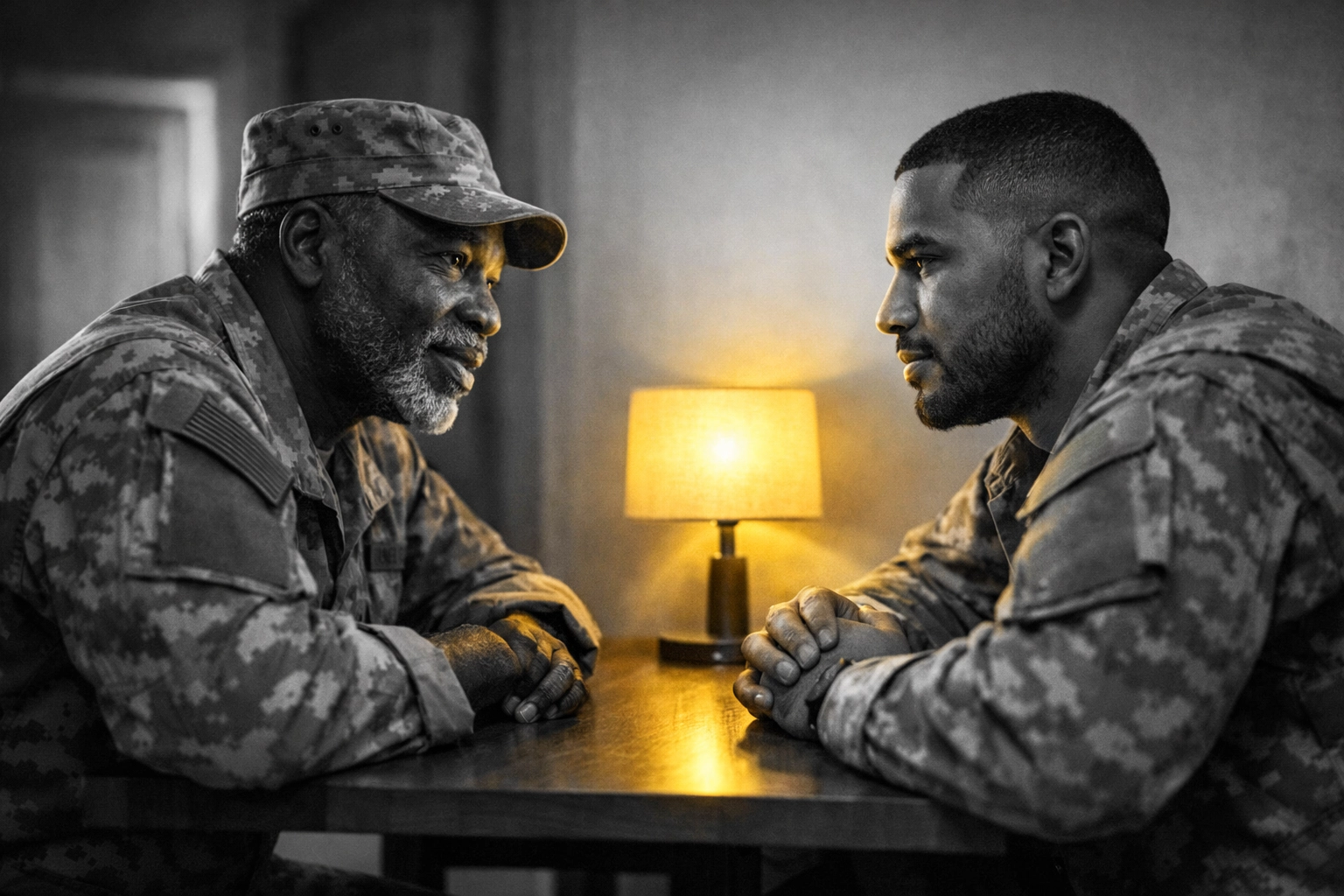
Description: A modern photographic style image of two veterans of color in a serious, dignified conversation in an urban setting, grayscale with gold highlights on the environment.
We must move from "What is wrong with you?" to "What happened to your soul?"
This shift in perspective is vital. If you believe your problem is purely medical, you may feel like a broken machine. If you recognize it as a moral or spiritual injury, you can begin the work of a "warrior-penitent." You can seek the "thou art the man" moment of accountability and move toward the "grace is sufficient" moment of restoration.
As we have explored in our conversations with leaders like 1st Sgt. (Ret.) LeRound Mitchell, the path of the veteran is often marked by the scars of both racism and service. Recognizing the "soul weight" of these combined experiences allows for a more honest dialogue with the Creator.
From Analysis to Action: Reclaiming Your Honor
If you find yourself identifying more with the language of shame and betrayal than the language of fear, you are likely dealing with Moral Injury. This is not a sign of weakness; it is a sign that your conscience is still alive. A person without a soul cannot suffer a soul wound. The fact that you feel the weight of your actions: or the actions of others: proves that your moral core remains intact.
Your recovery must be as multi-faceted as your service.
- Seek Spiritual Counsel, Not Just Clinical Therapy: Find a chaplain or a mentor who understands the specific weight of combat and the complexities of being a Person of Color in the military. You need someone who can speak the language of atonement and grace.
- Engage in "Lament": In the biblical tradition, lament is a formal way of crying out to God about injustice and pain. Do not hide your anger or your shame from the Lord. He already knows the details of your service; He is waiting for you to bring them to the Table.
- Find Your Neo-Tribe: You cannot heal in isolation. Connect with other veterans who share your faith and your cultural background. There is a specific healing that occurs when you realize you are not the only one carrying a "heavy ruck" of guilt. As heard in our roundtable discussions, hearing others' stories validates your own.
Description: A clean, modern image of a Bible and a folded flag on a wooden table, soft focus, grayscale with a yellow glow emanating from the side.
The Call to Wisdom
There is a pervasive lie in the veteran community that seeking help is a forfeiture of one's honor. We have been conditioned to "drive on" and "suck it up." But in the Kingdom of God, the opposite is true. True honor is found in the pursuit of truth and the courage to face one's own shadows.
Seeking help for a wounded soul is not an admission of defeat; it is a tactical maneuver to ensure you can continue to serve your family and your community with a clear heart. It is the ultimate act of inclusive leadership: leading yourself back to the light so that you can lead others.
Healing is your next mission.
The distinction between a traumatized brain and a wounded soul is the difference between surviving and truly living. Do not settle for a life of managed symptoms when you are called to a life of redeemed purpose. Your service ended at the transition point, but your journey toward wholeness is just beginning.
Are you carrying a weight that clinical terms can’t describe? You don’t have to carry it alone. Join the conversation with other Christian Veterans of Color who understand the intersection of faith, service, and the soul.
Visit us at urbanchristianvets.com to listen to the podcast, share your story, and find your tribe. Healing is a collective effort( let’s start the work together.)
The Hidden Battle: Navigating Microaggressions and Bias in the Civilian Workplace
 Apple Podcasts
 Spotify
 Castro
 RSS Feed
