
When Your Spirit is Wounded: Why Prayer Alone Doesn't Always Heal Moral Injury
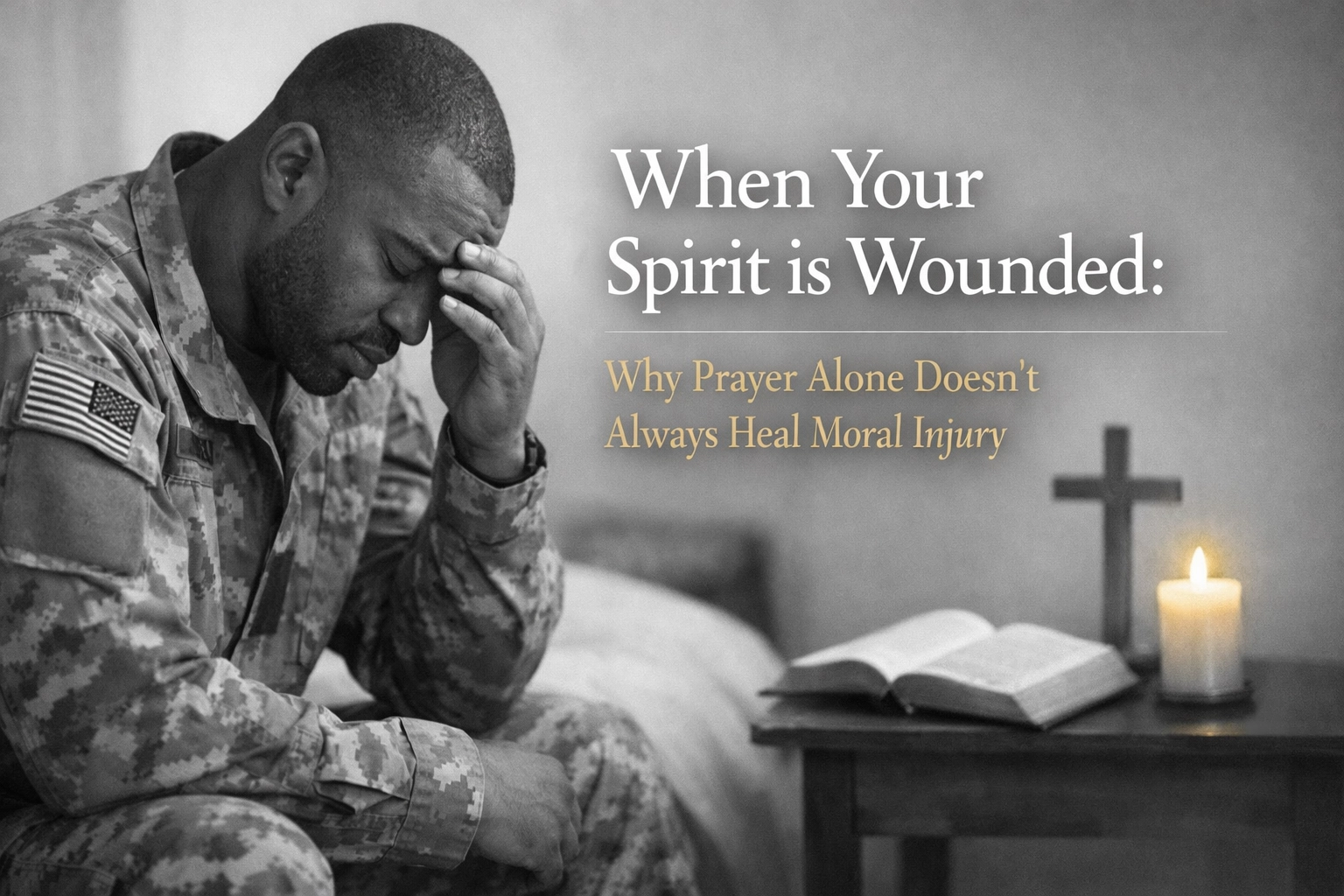
You were told that if you just prayed harder, the weight on your chest would lift. You were told that if you stayed on your knees long enough, the images from that deployment or the "moral compromises" you had to make in the name of duty would wash away. But here you are, years after the uniform came off, still feeling like a ghost in your own life. You love God, you go to church, and you’ve prayed until your voice went dry: yet the hole in your soul hasn't closed.
The hard truth we don't talk about enough in our communities is this: you aren't failing at faith. You are likely suffering from a wound that prayer alone wasn't designed to fix. It’s called Moral Injury, and for the Christian Veteran of Color, it is a unique, heavy burden that requires more than just a Sunday sermon to heal.
The Difference Between a Shaking Body and a Breaking Soul
In the veteran community, we talk a lot about PTSD. We’ve been trained to recognize it: the hyper-vigilance, the night sweats, the way we jump when a car backfires on a city street. PTSD is a psychosomatic response: a survival mechanism where your body and brain stay stuck in "fight or flight" mode long after the danger has passed.
But Moral Injury is different. It’s not about fear; it’s about a violation of what you believe to be right and good.
If PTSD is a wound to the nervous system, Moral Injury is a wound to the spirit. It happens when you see or do things that go against your core values. It’s the crushing weight of guilt, the burning sting of shame, and the feeling that you’ve betrayed your own soul: or been betrayed by the leaders you trusted. For those of us in Urban Christian Veterans, this often looks like a deep "cultural disconnect." We served a country that hasn't always valued our lives, and we did it while trying to maintain the high moral standards of our faith. When those two worlds collided in a combat zone or even in the daily grind of military bureaucracy, something inside us broke.
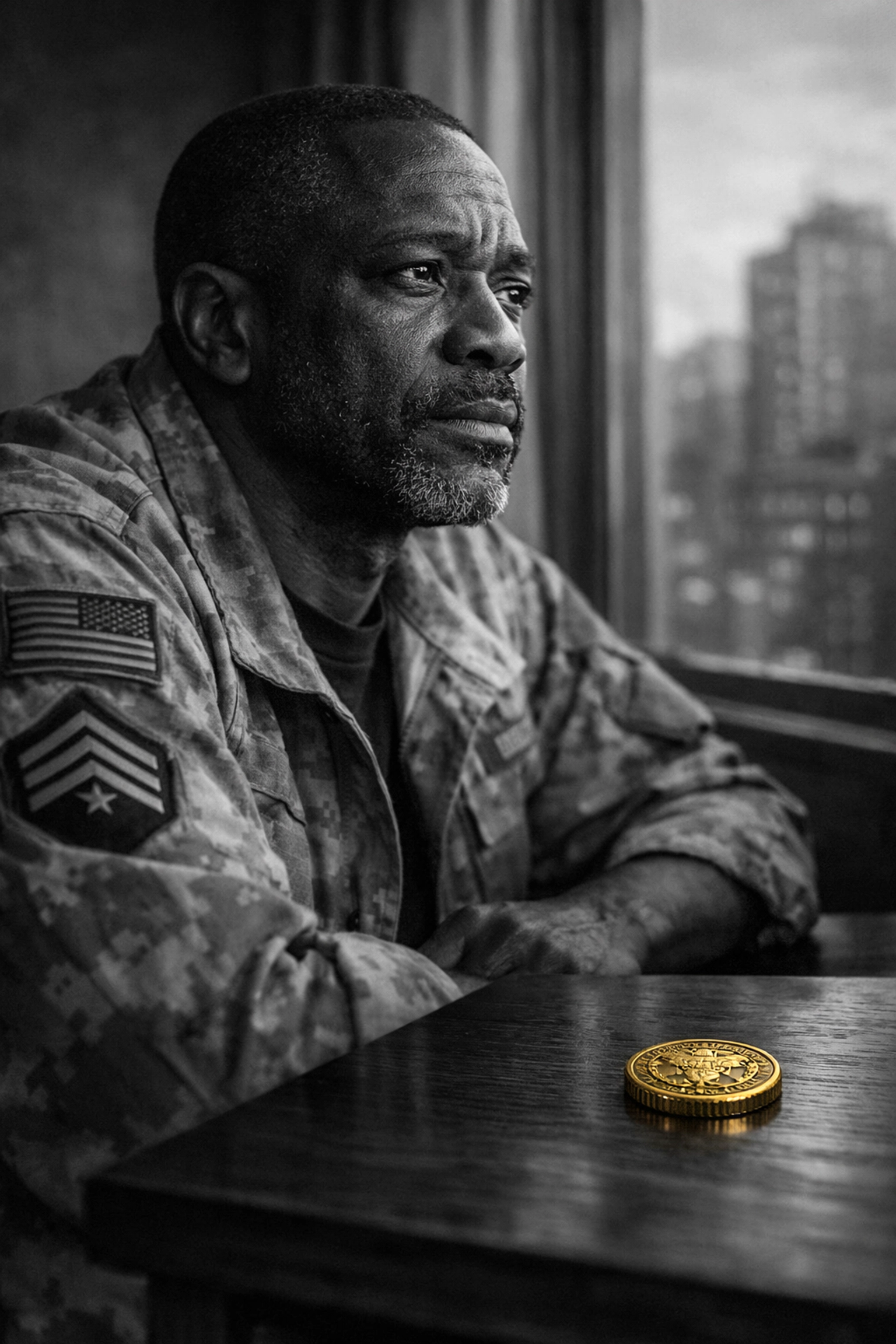
Why "Just Praying" Isn't the Full Solution
In many of our Black and Brown neighborhoods, the church is the hospital. It’s where we go for everything. But sometimes, well-meaning pastors and elders give us a "spiritual Band-Aid" for a surgical wound. They tell us to "take it to the Lord in prayer" and leave it there.
Prayer is powerful. It is our lifeline. But let’s be honest: God also gave us community, doctors, and the ability to speak our truth to one another. Spiritual wounding requires a multi-layered approach. When you have a moral injury, your relationship with God might feel strained because you feel "unworthy" to talk to Him. You might feel like a hypocrite sitting in the pews.
Research shows that moral injury involves feelings of being "damaged" or "unworthy." If you believe you are fundamentally broken, you might subconsciously avoid the very grace you’re praying for. This is why standard prayer often feels like it's bouncing off the ceiling. The injury isn't just between you and God; it’s between you and your sense of humanity. To heal that, you need to be seen and heard by people who understand the specific path you’ve walked.
The Intersection of Race, Faith, and Service
For Veterans of Color, the "moral" part of moral injury is often tied to our identity. We often find ourselves navigating what I call "urban neo-tribalism": finding our modern "tribe" within the city, built around our shared history of service and our cultural roots.
When we go through moral injury, we aren't just processing the "war." We are processing the fact that we fought for a system that often treats our brothers and sisters at home with suspicion. We are processing the "betrayal" that occurs when we realize the institutions we dedicated our lives to don't always hold the same moral compass we were raised with in our Christian homes.
In a conversation with 1st Sgt. (Ret.) Lereound Mitchell, we explored how service, racism, and belief all intersect. These aren't separate buckets; they are all part of the same wounded spirit. If you try to heal the "veteran" part of yourself without acknowledging the "Black or Brown" part of yourself, or the "Christian" part of yourself, you’ll never get to the root of the pain.
The Power of the Honest Conversation
If prayer alone doesn't heal moral injury, what does? The answer lies in the "tribe."
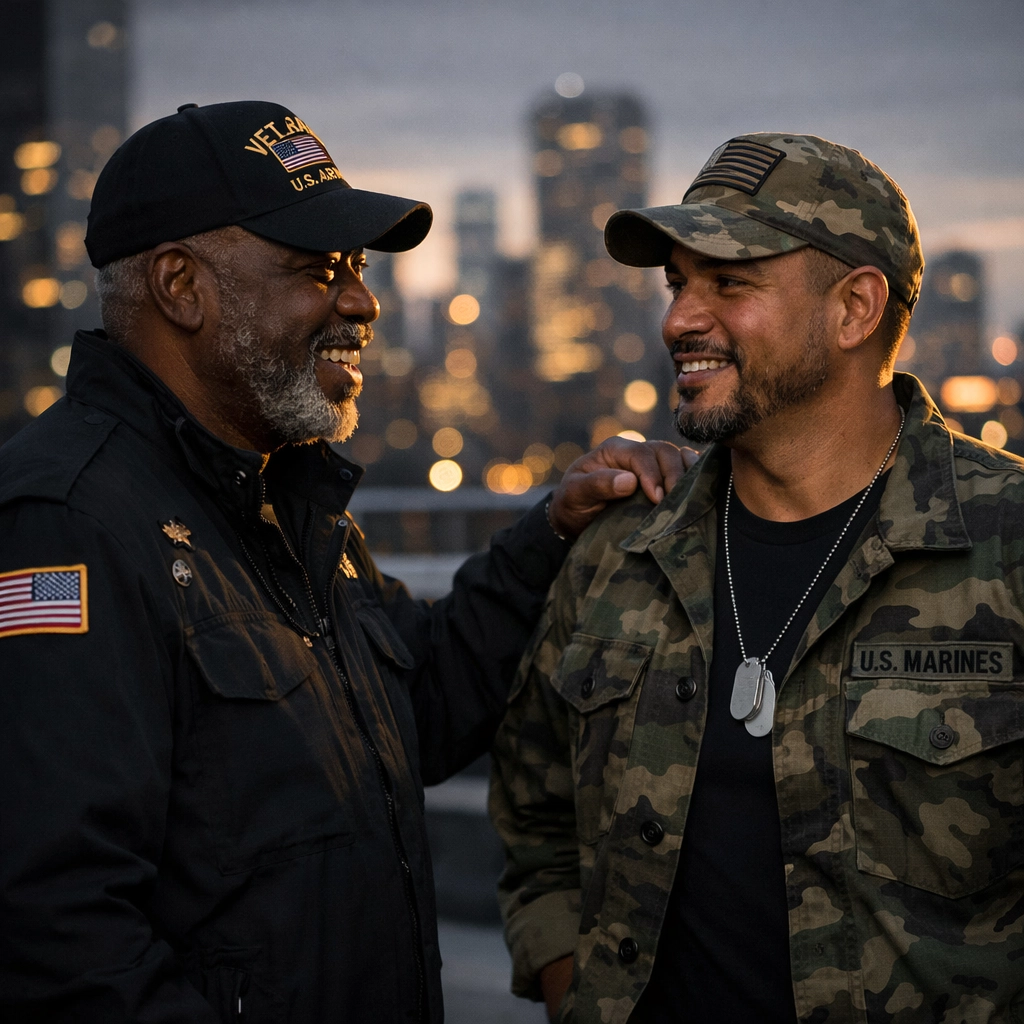
Healing requires coming out of the shadows of shame. It requires "honest conversation": the kind where you don't have to clean up your language or pretend you have it all together. It’s about finding a space where you can say, "I did something I regret," or "I saw something that made me question God’s goodness," and instead of being met with judgment, you are met with "Me too."
This is why we focus so much on the community aspect at Urban Christian Veterans. Whether it’s listening to Gregory Henry discuss navigating faith and identity or hearing Sgt. Maj. Roy Lewis talk about the legacy of strength, the goal is the same: to show you that you are not alone in your struggle.
Community acts as a mirror. When you see your own struggle reflected in another veteran of color, the shame starts to lose its power. You realize that your "injury" isn't a sign of a weak character, but a sign of a functioning conscience. You feel bad because you are a good person who was put in an impossible situation.
Moving Toward Wisdom and Peace
Healing a wounded spirit is a display of strength, not weakness. It takes more courage to face your moral wounds than it did to put on the rucksack.
If you are struggling today, I want you to consider a few practical steps that go beyond the prayer closet:
- Acknowledge the Wound: Stop calling it "just stress" or "a lack of faith." Call it what it is: a moral injury.
- Seek Specialized Support: Look for therapists or groups that understand the difference between PTSD and Moral Injury. You need someone who can help you process guilt and self-forgiveness.
- Find Your Tribe: Engage with other Christian veterans who look like you and understand the urban experience. Listen to their stories: like the roundtable discussion with Sonia Vaird and Anthony Burton: to remind yourself that your voice matters.
- Redefine Your Service: Your service didn't end when you hung up the uniform. Your service now is to your own healing and to the brothers and sisters coming up behind you.
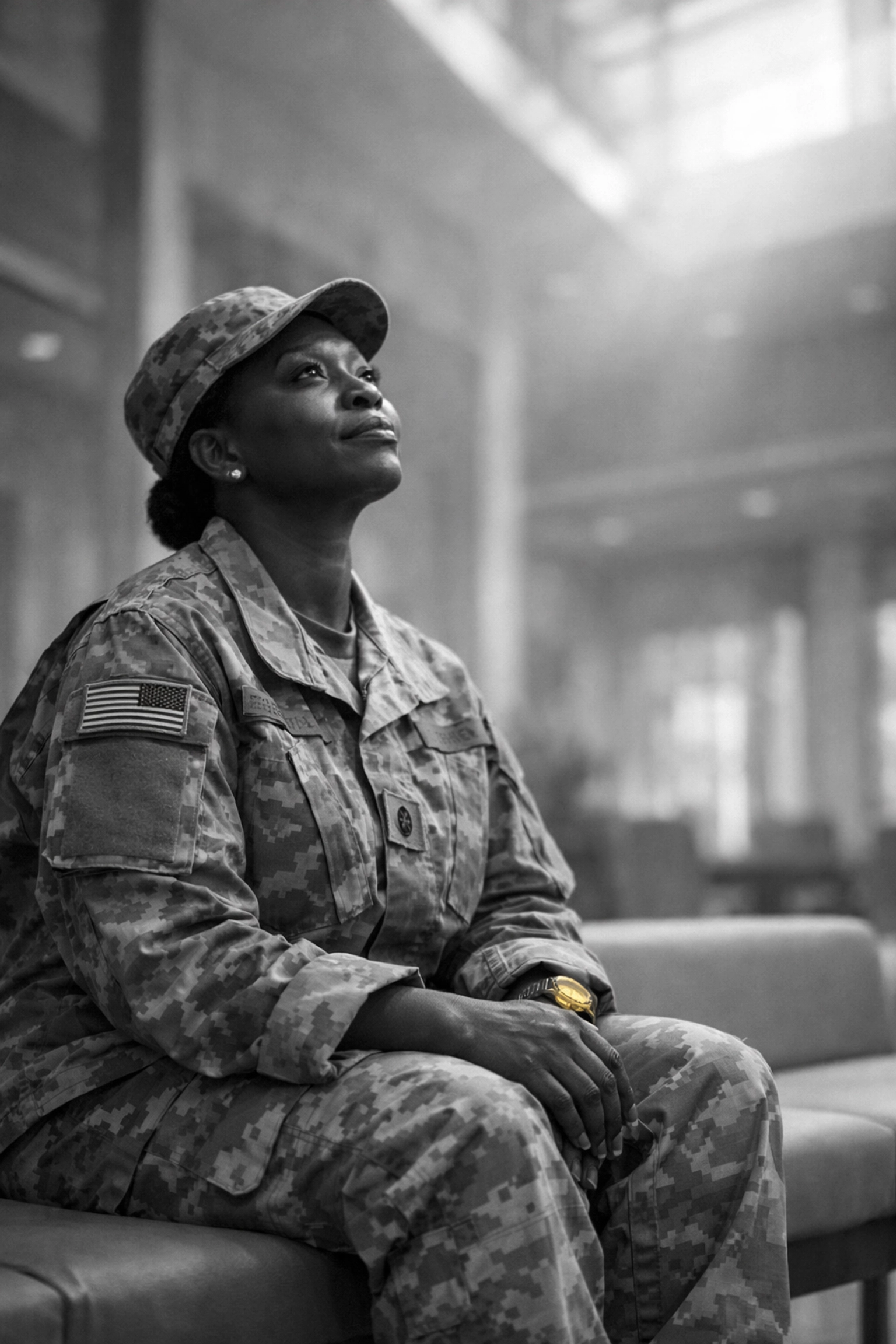
The narrative that we have to be "super-soldiers" who never break is a lie that keeps us isolated. The truth is that even the greatest warriors in the Bible, men like David, had spirits that were crushed by their actions and the things they witnessed. They didn't just pray in a vacuum; they wrote psalms of lament, they sat in community, and they were honest about their "bones wasting away" from the weight of their silence.
You don't have to be silent anymore. Your faith is a foundation, but your community is the structure that will help you stand back up. Let’s stop trying to fix spiritual surgery with a quick prayer and start doing the real work of honest, communal healing.
Seeking help is an act of honor. It’s a way to reclaim the peace that was stolen from you. You’ve fought for everyone else; it’s time to fight for your own soul.
Join the conversation at urbanchristianvets.com.
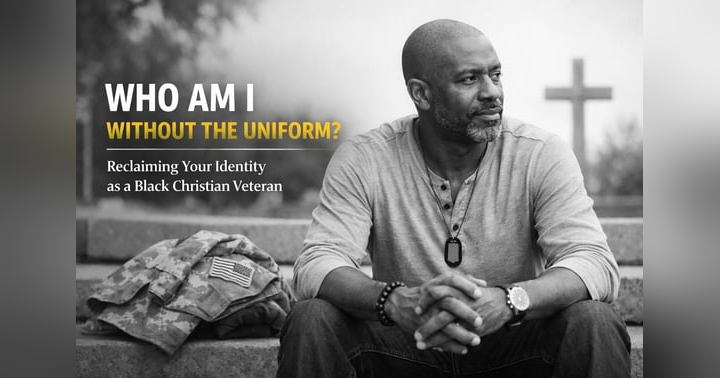
Who Am I Without the Uniform? Reclaiming Your Identity as a Black Christian Veteran
 Apple Podcasts
 Spotify
 Castro
 RSS Feed
