
Why Older Black Veterans Must Guide Youth

 Apple Podcasts
 Spotify
 Castro
 RSS Feed
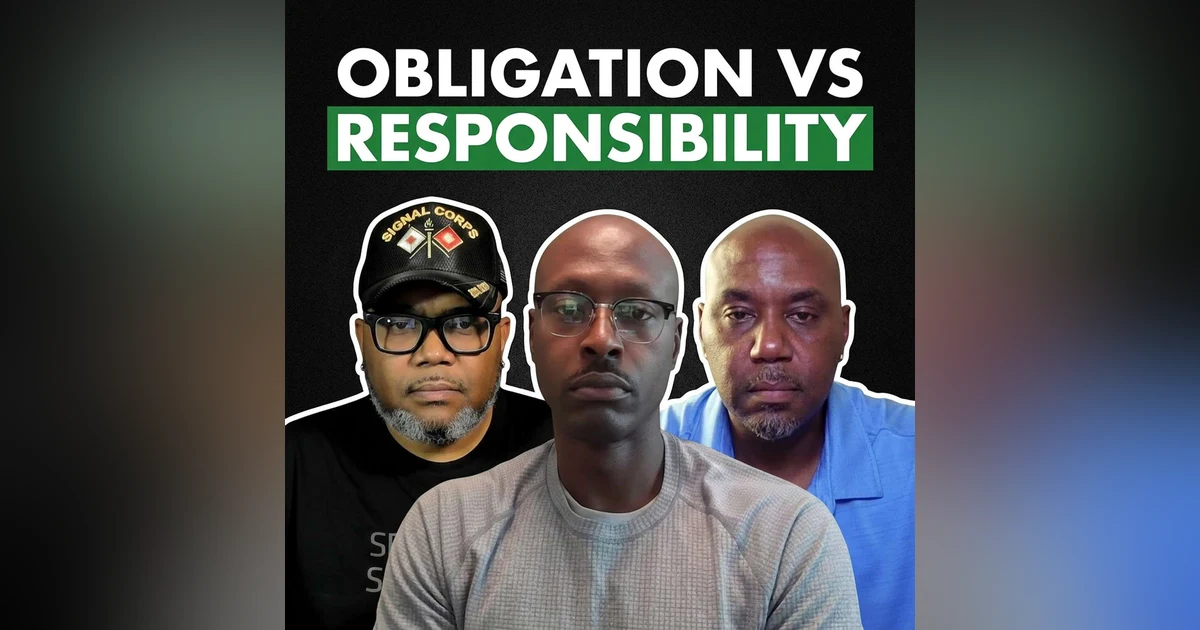
 A kid looks you in the eye and says he is only in school to eat. That single sentence forces a different kind of leadership, the kind that starts with survival and still refuses to give up on purpose. We sit down as Urban Christian Veterans and ask a question that can make people uncomfortable: do older Black veterans have a real obligation to advise younger generations, or is it simply a personal choice?
We talk through what mentorship looks like when you are dealing with hunger, trauma, and low expectations, not just bad attitudes. We share stories from school outreach, alternative programs, and military life to show how guidance has to fit the moment. That means addressing needs first, using exposure to expand a young person’s imagination, and passing down tools many of us never got early like investing basics, ETFs, and how generational planning can change a family’s future.
We also break down practical leadership frameworks, including “Be Do Have,” and the importance of setting the tone in workplaces and community spaces with clear standards and disciplined language. Faith is not an accessory here; we wrestle with the idea that our experiences are meant to be shared and that obedience sometimes looks like stepping into hard rooms with patience and humility.
If you care about #Black_mentorship, #Christian_leadership, #veterans’ voices, and #Black_youth_development that is honest about the minefields, press play. Subscribe, share this with someone who mentors, and leave a review if it helps you. What is one lesson you wish an older vet had told you sooner?
00:00 - Welcome And The Core Question
01:16 - Obligation Versus Responsibility To Mentor
02:22 - Shock Value Advice And Proactive Living
04:28 - The Straight Path And Trusted Guides
13:09 - When A Kid Says Im Here To Eat
31:44 - Exposure Removes Excuses For Good
35:49 - Alternative School Reality Check
38:31 - Military Bumps Bruises And Calling
46:28 - Be Do Have Leadership Roadmap
01:02:33 - Setting The Tone At Work
01:06:58 - Language Discipline And Presence
01:12:48 - Final Takeaways And Closing Thoughts
Welcome And The Core Question
SPEAKER_02All right, gentlemen, Mr. Henry, Mr. Adams, welcome back. Hello, guys. Ready? Are you ready? Are you ready? Are you ready? Ready, ready, ready. Ready to ready to go. All right. Well, let's just get into it.
SPEAKER_00Urban Christian veterans provide a safe place for Christian veterans of color to discuss the challenges you face in your daily lives. Being a person of color has its challenges. Being a Christian has its challenges. Being a veteran has its challenges. All of those factors being combined makes for a unique and sometimes difficult life experience that is seldom talked about in public forums. Thank you for tuning in to the Urban Christian Veterans Podcast. Here's your host, D'Allen Rose.
SPEAKER_01Thank you, Andy, for that wonderful introduction. This is D'Allen Rose, and you are listening to the Urban Christian Veterans Podcast.
Obligation Versus Responsibility To Mentor
SPEAKER_02So again, thank you guys. As always, I really appreciate you uh coming back and sitting down with me. Question for you. Do we, as older black veterans, have an obligation to advise younger generations in our community? Do we have an obligation? Talk to me.
Shock Value Advice And Proactive Living
SPEAKER_03I do it uh as often as I possibly can because simply because it wasn't done for me. Okay and I have a uh I have a a mantra, a motto, if you would, that I when I'm um talking to young, especially young black boys, that you won't ever be able to say, nobody told me that. So I I make it my business to all the things that I failed at in the beginning. And I tell everybody, if you just do the opposite of what I did, you'll be successful out the gate. You won't have to wait till you're 100, like I am, um to see success. So I'm most definitely making my business. Hey, come here, sit down. We're talking about everything from condom usage and where to have them. You know, I'm also, hey, if you stay ready, you ain't gotta get ready.
SPEAKER_02Okay.
SPEAKER_03You carry a backpack, you need to have condoms in your backpack, in your nightstand, in your glove box, in your armrest, in your car, uh, in your dresser drawer. Um, because we don't, as teenagers, as young men, we never planned to be with women. We we didn't plan, and and I I try to, you plant not just to be women, but planning in your life. As young, you don't plan stuff, we we're reactive, and I'm trying to teach them to be proactive or counsel them to be proactive and purposefully proactive in everything. Well, I I I do the condom thing because that gets their attention right away. And then I um move them to um religion or or whatever we're talking about.
SPEAKER_02I'm glad you clarified that, brother, because I was like, he's focusing a lot on some things.
SPEAKER_03Yeah, I do that because I said it's the shock value. And then they're paying now they're paying attention. Yeah. Then I move into um, now that I got them, other topics. Then I move into, hey, this is where you need to be at. Joe Oldstein is not gonna eulogize you. Uh, neither is T.D. Jakes.
SPEAKER_06Yeah.
SPEAKER_03Um, so you need to be, you know, then I get with the church, you know, and I hit him with that, but that's what I do. I definitely think it's it's an obligation, it's a responsibility for us.
SPEAKER_02Yeah, I would say obligation or responsibility, because they're two different things.
SPEAKER_03I'm gonna say responsibility.
SPEAKER_02Responsibility. So we're not obligated. They have parents. In your in your opinion, we're not obligated, but it's we're responsible.
SPEAKER_03Yes.
SPEAKER_02Okay. All right. What say you, brother?
The Straight Path And Trusted Guides
SPEAKER_04Yeah, I agree with Retrie. Those sayings were C one, B one, see somebody, be somebody. I'll look at this example. I'll give you two. My boys are going to be 25 and 27 this year.
SPEAKER_06Okay.
SPEAKER_04The only presidents they've seen are Barack Obama, Donald Trump, and Joe Biden. Now, when we were coming up to say a black man or black woman or woman would be president, you we would laugh it off. We would laugh it off. But by them seeing this articulate brother up there as president, now the mindset changes. It's just like if they see a doctor, they see a lawyer, not just an athlete, they see all these other people of industry out there. Now the the train of thought changes. I gave uh a talk when I was out there, you know, still coaching and doing basketball camps. I was helping a friend out, and he wanted me to speak to the campers when we had our break. And I gave this example. I I set up two cones, one close to me, one further away. And I said, I asked this question, I started the conversation by asking, what is the shortest distance between two points? You know, happened to be my son, raised his hand. I I pointed to him and he said, a straight line. I said, a straight line. I said, what we're gonna do, we're gonna, this cone right here that's closest to me is the start of life. That furthest cone is the end of life. I said, now in life, what we want to do is try to walk this pathway as straight as possible. I said, some of you are going to start here at the closest cone and you're gonna veer off. By God's will, you're gonna come back onto the pathway. I said, unfortunately, some of you may start here, but you're gonna venture off to the pathway and you're not gonna come back on the straight and narrow. I said, there's a way that you can stay on the straight and narrow, and that's by a few people in your life. And who may know who those people are? I asked that question and they raised their hand. They said, your parents. I said, your parents. I said, somebody said, teachers. I said, teachers, I said, coaches. All these people are placing your life to help you stay on this straight and narrow path. I said, by show of hands, who believes that their parents love them? Well, obviously, they all raise their hand. I said, then why do you think your parents will purposely lead you down the wrong path and dare in the headlights look? Okay. I say this, say, I was telling them, as a parent, as a coach, as a teacher, we can give you information. We know where all the minefields are out there when you walk in this pathway of life. I've I've told my sons, as a man, more than likely, everything you're gonna go through, I've already experienced it. So it's up to me. I'm gonna give you the information because this is one time, this test, where it's not bad to give you the answers. And when I give you that information, it's not try to try to badger you or be overbearing on you. It's to try to ease your walk down this path of life. Now, you could take the advice, and I I your pathway more than likely it's gonna be easy. Or you can refuse that information, and you're gonna walk that minefield of life, and you will get blown up. Now, we will be here, your mother and I, to help you pick up the pieces, but why sometimes you don't have to go through all that heartache? So I say all that to say, yeah, I I think we have a responsibility to uh give information and try to steer the people the young men and women in our community in the right direction. But we I think in our community, we also may be obligated to do do it as well. Um, because we don't we didn't have the head start as some other ethnic groups might have had. Okay. Uh I think um by growing up, we really didn't know about the stock market, mutual funds, and ETFs. We didn't know about uh the power of using life insurance policies to help the next generation to come up. All that information we have now. So now obligated and responsible to giving that information to the next generation so that now they have that information, they have an earlier start, and they can do the same for who's coming up after them.
SPEAKER_02Yes. Okay. Okay, right on. You know, so years ago, uh I was a very different dude. Let me just say it that way. And uh I also was uh I was I was a calling it an executive, if you will, a manager, however you want to call it, a higher level manager at the airport. And we would just as a matter of community outreach go and speak at at schools. So we go to this joint, I shouldn't call it that. It was a high school called there's there's two. One was called um it's it's South Atlanta High School, right? I why I say it's this joint is because the warnings that I got before I got there, oh, you going to South Atlanta. You know, like it was it was that type of place, right? I mean, to the extent where we would all, each of us, it was a big group of us who went. Um uh a big group of men who went, airport executives speaking to these individuals, these kids, and they would go up on each of us would go up on stage, say a little something, and and while we were waiting our turn, we would be sitting in the audience, and I remember some commotion behind me in the audience, these kids, and some of them got put out, you know, for something going on back there. It was like that, you know, like, oh man, you know. So we all said our piece, and then we broke out into, you know, little breakout sessions where we had individual time with small groups of the young men. And here's what I want to ask you. I I hear what you're saying about advising and all this, right? So this young man, he uh he I could tell he was he was the smallest of the bunch, but he was like one of the coolest of the bunch. Like they all all other kids seem to gravitate towards this kid. And uh, you know, the the cliche stuff, you know. And first of all, these these men, these young men, they were called the gents. It was the gents program. So they all had on collar shirts, white, white collar shirts. Some of them had on ties, some of them had their tires in their pockets, you know, it was like whatever.
SPEAKER_06Yeah.
When A Kid Says Im Here To Eat
SPEAKER_02Um, but clearly they were from rough neighborhoods. And so, you know, you in there with the cliche stuff, man. Education, go to school so you can die. And so this young brother says, uh, he he listened to a lot of what all these men on stage said, but his biggest question was like, you know, why? Because y'all are up there, we're here. I hadn't heard anything that's gonna get me from where I am to where you are, you know, blah, blah, blah. And he had a point. Everybody was talking about what they did, their achievements, all this other, and he was like, you know, whatever, you know, like what that got to do with me. So I asked this brother, and I wanna ask, I wanna, I want you, based on what you said, I want to hear what you how you would respond to him. I said, brother, well, you know, help me out. Like I was getting ready to go down this path. I first asked the question, well, why do you, why are you in school? And what do you said to me threw me all the way off. He said, I'm here to eat.
SPEAKER_04Yes.
SPEAKER_02You know what I mean? Like, yeah, I'm here to eat. Yeah. You know, that it it I was thinking he was gonna say he was trying to work on some path, he was trying to get somewhere. My brother said, I'm hungry.
SPEAKER_04Yeah.
SPEAKER_05Like the only reason I'm here is to for a meal.
SPEAKER_04A lot of them don't want to go on summer break because that was their meal. I found that out when my boys' high school. A lot of these kids are coming there. The only meal that they're going to receive is at school. Period. And a lot of people, they don't have any idea about that, especially if you're if you're living outside of co- my neighborhood, your neighborhood. Most people live in a nice house. They have minimum two cars in the driveway. You go to their fridge, there's food in the fridge. They're not thinking about that. You know, my boys, my boys, they they grew up, if they want something to eat, they just go to the fridge. They don't know nothing about syrup sandwiches. That's syrupy Kool-Aid. They don't know anything about that. Syrupy Kool-Aid. I hear you. You know, uh, yeah, that is real. I hear you to the water. Yeah. Yeah, that is very real. And I didn't find that up until my boys went to high school and they told me about that. A lot of these kids, that's their only meal.
SPEAKER_02There's no food in the house. That young brother said that to me. Now, so I ask you, in that same situation, right? Do you feel that same obligation to try and tell this young man something? How do you handle that? Because I'll tell you how I did, but I want to hear how would you handle that?
SPEAKER_03First, we need to, his need needs to be addressed. And that's what I would do first. Um, one good thing I like about my little small hometown is the school offers meals during the summer. They have a summer meal program. The parents can drive up at a certain time and they give them this bag, uh, lunch or whatever. They do it, it's like all year round because of that same thing. They knew these kids, it was some teachers. This is, we are predominantly black, but it is um, it's, I would say, well, my neighborhood, definitely predominantly black. But anyway, um, it was addressed, and it was like, hey, these kids, the smart kid, um, always getting in trouble or always being a problem. And my grandmother always told me, all you gotta do is keep a child a fed and they'll be happy. So once those teachers addressed that need, that kid excelled. And then they know, okay, he care about me because they're they're trying to fulfill this need that I have. Now I don't have to focus on it. Uh, my my wife is a teacher, was a teacher, and she had a kid that fell asleep all the time. So she ended up making a pallet on the floor, letting the little kid sleep. He woke up at the in the afternoon, caught up all his work, and it was correct, and moved on. So she saw that people kept moving him to another class, and that was, he was sleepy. You know, and then just like that child, that kid was hungry. So I would, I would definitely address the need, find out how I can assist the either that kid or the kids, address that need, because they're not hearing nothing, just like you say, they're not hearing nothing you're saying, because that ain't what they're there for. Once you address that need uh or that thing, uh they they'll be more susceptible to hear what you have to say then.
SPEAKER_04Yeah, I I agree with Reggie. Trying to come up with uh staff on addressing the need, which is a lot of them, is hunger. And then once that need is uh addressed, then you you try to help them use that as motivation so they won't be hungry again. Uh for instance, I had a very emotional um conversation with my cousin who's passed on suicide thing. And one of the questions he asked me, we we uh went to another cousin's wedding and we got back about midnight. We talked till four in the morning. A lot of emotion, a lot of crying. And one thing he asked me, he said, Greg, you know, we had a house, we had this, we had that. He said, How did you get out of the situation where you are to get to where you are in life? I said, I wanted what you had. I wanted that house. I wanted to have a car in the driveway and not have to ride the metro and you know, wait out there in the cold. I wanted what you had. And I think if you could somehow take a child's uh dilemma or shortcoming and use it as motivation, it serves well. How many times have you watched an athlete come up and talk and you you hear his background and what he had to deal with? Shannon Sharp, you you just mentioned Shannon Sharp, how he grew up with his his his grandparents and the living conditions they came from. They use it as motivation.
SPEAKER_02So yeah, I so here's the thing, man. At first, when he said that to me, it shook me because I wasn't expecting that answer. Remember why we're there, remember, you know, it's the school created this image of the kids, to have them in these white button downs with ties on, that wasn't the image, or that wasn't the thing I expected to come out of his mouth, you know, based on how he was looking. So then I had to switch gears. And so I was like, you know, you know, I'm I'm sitting in front of him like, wow. Okay, I hear you. And then when I got myself together, I was like, let me ask you something. Are you hungry now? Did you eat this morning? Oh yeah, we, you know, we we and it's it's him and it's like I think three others. Yeah, yeah, we ate or whatever. Okay. Um, but something that you said, you know, I need you to speak more on that. Um you said that you didn't hear anything that helped you to help you get from where you are to what you saw on stage today. You know, why do you say that? You know, and then he went on to explain, man, oh, you know, y'all, y'all this, y'all that, y'all these big wigs, blah, blah, blah, at the airport, you know, blah, blah. Airport got all this money, and I said, okay. Um and the long story short of it was we started backing into it. I was like, you know, the thing that I tried to leave him with was, you know, you can get there too, but you need to decide how. The question is, do you want it? And then we started backing into it. Imagine, you ain't got to do what I did, but what if I told you, and then I started saying, you know, I started talking about the syrup sandwiches. I started talking about the, you know, the the mayo and tomato sandwiches and all of that. And and and heaven forbid, you know, peanut butter, no jelly, all of that, right? So we started going through that, and I was like, yeah, can you imagine? Yeah, that's how, how I was living. You know, my mom was doing the best she could, and sometimes uh ends wasn't meeting, you know, or whatever. But the long story short, here I am, that means it's possible, right? And so again, I'm walking these kids through. Tell me, what next? What next? What next? Like, if you did this, then what? What does it look like in your head? What next? What next? And so I had him thinking about the steps that he would try and take to make it to whatever. And I never pushed any of them. Now here's what you need to do. You know, I never did that, right? But I was you know, the thing is what I left him with, and I hope it stuck, is. You gotta want it because the same way you didn't hear a pathway to where we are, I didn't hear from you that you even want it. What I heard from you was I want something to eat. And then I heard from you that you ate today. But I didn't hear, I'm trying to go get this next. Now that I've eaten, here's the thing I'm trying to do. Here's the thing I'm trying to do, whatever. And it's day by day, step by step. Right? Did you knock out your homework today? Did you knock out are you, you know, you got a test coming up in a couple days? That type of stuff. And so all of that took place, you know, the groups had to rotate. And so he's he sat in front of me. He wasn't even my first group. You know, another group got up, he sat down, and I think I might have had 12 minutes with him. And then in those 12 minutes, I had to build something in his mind. And he had to be the one to construct it. I shouldn't even say I built it. All I had to do was ask the questions and make him build it in his mind. And he was like, all right, all right. So now that you've built it, you see the end result. You see the people on the stage, you see us and the possibilities of where you can be, but you can't look for us to give you the step-by-step because each and every one of us have a different story and a different path and a different way we got there. Right? But you build it, but you gotta want it.
SPEAKER_04Yeah.
SPEAKER_02And so, but the bottom line is I I say that because when I was shook, I was like, whoa, you know, had that same issue came up years prior, I'd have been like, man, that's messed up. All right, y'all. You know, like, I wouldn't have I wouldn't have I wouldn't have been equipped. And and and furthermore, now that I'm older, I don't, I can't say that I would have said the same thing now. Right? It's because we live in a different world now, and stuff that's happening today, it's not the same. Now you got different challenges, right? Go vote. Huh? Well, I don't know. You know, like like can you while you can. You know what I mean? Like, right. It's vote while you can, because your joke is trying to take it, you know, that kind of thing. Yeah. So, but it brings me back to the original question. Obligated, or is there a responsibility? Because they are two different things. Are we obligated to speak to or advise younger generation of people in our community? Or do we just have a responsibility? Two different things. What do you guys think?
SPEAKER_03I do think it's both. It can be both. Um, I think we are obligated to be available for it, and we're responsible for our immediate circle or sphere of influence. We can't just be going out grabbing people off the street, but so we have to start smaller, working our way out. Um shy of my I'm big on exposure. A lot of kids don't have the don't drink can't don't dream because they don't think outside of their, they can't, uh outside of their radius, their situation. So that's why you make that about the about the president, uh G, um when uh people, when kids give me excuses and single mothers or uh I can't uh uh can't get to church, you know, but I was like, oh, but you can get to the club.
SPEAKER_02See. So and then first, you're meddling now.
SPEAKER_03The first person, the first time we, somebody that looked like us did a thing, that took, that takes your excuse away. That's what I tell them. So if there were never any black doctors, and you said, Oh, I want to be a doctor, but I don't, but I take, so I take excuses away. I did it reversed, I guess reverse how you did with him. I take the all the, because I act, they tell me I can't do this because of, hey, the first time somebody done done that already, your excuse is thrown out the window. Now what? So what what happened what aren't you doing?
SPEAKER_04Yeah, going on.
SPEAKER_03And now we're part of a uh, we have an organization that we are exposing these kids to different, they we're gonna do a college trip and and and stuff like that. And these kids are, you know, we put a pilot in front of them, a black pilot, you know, and and and all that. So that kind of, and I'm the military, you know, they always ask me, hey, you you killed anybody, so I got a different aspect, jumping out of airplanes, you know, all those things, but I I take those excuses away and and get down to the nitty-gritty, meet the need, and then they always leave me. Like I said, you won't be able to say, I didn't know that. Nobody told me that. That was my thing. I came back, when I came back from basic, I was pissed. Because AIT, you know, all they said was, um, don't go combat arms. That's all the other black Vietnam vets, you know, uh people had done the military. I got a couple of uncles, and they say, whatever you do, don't go. They they told me what not to do, but they tell me what to do. You know, and now I tell people, pick a job where you have to do it in the AC. Yeah, I tell them, hey, there are jobs in the military where you can't do it unless you're in the air conditioning. I wish somebody would have told me that. You know, supply, 10% off the top, you know what I'm saying? Uh uh I tell them, I tell them that.
SPEAKER_04Hey, yeah, when people ask me about the military, uh, one of the first questions I ask a young person, what do you want to do? Do you want to do the hoo-hoo combat stuff, or you want to be more business-like, corporate, what do you want to do? If they say the hoo-hoo stuff, 11 Bravo, Ranger, Airborne, Marine Corps, combat on. If you want the more corporate thing, Air Force. Without a doubt. Go to the Air Force. You want to travel, Navy. You know, uh, so it just depends on, or depending on the career field, I might know there might be certain uh military branches where, like, say an engineer, I might steer you to instead. Okay, but it just depends on what they want to do. And uh just uh to add to what that young man was saying, something came up on my feed today in my social media. I hope I saved it. And it's about a young man who started out with in a bad situation with his parents, drug use, the whole nine yards. Problem in school, uh young parent ended up still staying with the young lady, marrying her. Make a long story short, the gentleman ended up going to Johns Hopkins and becoming a doctor. Looking at his start. So when I see things like that, even in my life as an adult, I can't use an excuse because there's always gonna be someone who's in a worse situation than you are. And you have to look at those people in those situations who have overcome, and again, try to use it as an example. I pulled up the difference between obligation and responsibility. Obligation in the states is a binding action duty or responsibility that a person is legally or morally forced to fulfill. Right. While it says responsibility is the state of being accountable, dependable, or in charge of duties, tasks, and consequences of one's action. So different, but they kind of, you know, yeah, they're so together.
Exposure Removes Excuses For Good
SPEAKER_02Yeah. There's some overlap, but I think uh either way you look at it, right? Um when the question comes about, because no matter if you don't know the definition, yeah, uh when you when you look at I look at each of you. You've you've had these experiences and I'm sure that your life is a sum total of those experiences, and you would I think agree that you wouldn't be who you are if it weren't for the things you went through and you know some stuff. Yes. And what sense does it make for you to take it with you and not impart that, right? Now, whenever I get into a quorum and and these these tough questions come up for me, yeah, my my initial instinct is to try to work it out in my brain. But then I always, not always, more more often than not, I look to the Bible and I say, you know, is there a responsibility? Is there an obligation? Am I obligated to do this, that, the other, whatever? And yes, there are many Bible verses that say we're supposed to. We are obligated, you are directed to. Um and, you know, I don't memorize them or what have you, but there are Bible verses if you look them up that say we're supposed to.
SPEAKER_06Yeah.
SPEAKER_02Yeah. Okay. Whatever, whatever the case may be. You know, we we it it's so, but I think when you're out there in life, day to day, in the world, that that that's just one example of how we don't necessarily like we we'll go by our instincts and our feelings and our own moral codes, but we don't necessarily lean on what the Bible says as we should. Yeah. Because there would be no question, if you read it, you'd be like, oh, yeah, I I have no choice. In fact, if I when I mentioned a minute ago that I don't know that I would say the same thing, same thing to that young man. I didn't go into the situation with an understanding, within, you know, being armed with the word. I went into it thinking, here I am, Mr. Exec. You want to hear what I got to say. Nah, partner, you know, that that kid let me know right off. You wasn't saying nothing I was trying to hear. I was waiting on the lunch bell.
SPEAKER_06Yeah.
SPEAKER_02You know? And so, so, you know, I think that now that we, you know, once you get to the point where or understanding that you know that it is a biblical obligation, you have to go. You have to do that. In fact, look at it like you were blessed and allowed to experience what you did so that you could be a blessing to someone else. Right? That changes things for me. You know, that changes things for me. And so every opportunity I get, I try to be obedient. I hear you, God. Yes, Lord. Your word says this. If the opportunity comes about, I'm definitely gonna take that opportunity um to uh to share. Now, you can't go injecting yourself and inserting yourself. These young jokers.
SPEAKER_04No.
SPEAKER_02These young jokers, if you're not, if they're not trying to hear it, you're you know what I mean? That's just not. In fact, you know, you guys were talking about um with that young man fulfilling the need. You understand that the parent, not parents, the the administrators, the school administrators who actually work in the trenches, they know and they're trying.
unknownRight?
Alternative School Reality Check
SPEAKER_02They're trying to fulfill those needs. They know the needs of the community, those kids, what have you. You know, because another school I went to was an alternative school. And I remember we had to go, and there's some things we had for the alternative school, we had to go through this whole process of signing some papers and and all that before the actual event to go speak to them. So I go up there to do my part, sign the papers or whatever, and I'm talking to the school administrator, and it was after what I thought was after school, for them, it was the beginning of the day because it was alternative. It was like a night school. So I went after work thinking, let me catch them before they leave. Nah, they just getting started. And so I get there late in the afternoon, and this young, this, this, this young lady, I don't know. I won't, she she was, she was younger than me, but you know, she she had an old soul. Let me just say it that way.
SPEAKER_06Okay.
SPEAKER_02And we're going through talking or whatever, and she was almost like reading me up and down, and to make sure she that I'm somebody she even wants talking to these kids. And I'm like, okay, you know, I I was feeling the energy. And as we're talking, no joke, I hear some, you know, some talking out in the hall or whatever. And and we were talking in the in the library, and I hear some footsteps coming in, you know, or whatever, and they're behind me. And she says, excuse me, Mr. Rose. Hold on, hold on one second. And she said, Hey, baby, and I'm thinking as one of the students, it was a toddler, little bitty toddler, walked up, and she gave her a hug or whatever, and then the mother came in, and then the father, young people, high school age. Yeah, yeah. The alternative school had a daycare so that the parents could attend classes at night. And this is a different school, right? She is like a mother to the students in here. So she's checking to make sure whoever comes and talks to them understands the situation. You're not talking to normal high school kids. These are kids with responsibilities. My man just got out of work. Baby needs pampas, you know, all of that. And I was like, again. Yeah. Like, whoa, what you know, this is different. And uh, this is reality.
SPEAKER_04This this is America.
unknownYeah.
SPEAKER_04Right.
SPEAKER_02That was so different to me that it just changed my whole outlook on things. And I will say, it made me better because it better prepared me to you know what, you know how you hear some things, you you absorb them. Hey, that's some good stuff, or what have you, and you just have them. But it made me pull things out of myself that I heard that would fit the situation. Because now I knew the focus was different.
SPEAKER_06Yeah.
Military Bumps Bruises And Calling
SPEAKER_02So that that to me is that it falls into that obligation category. You go do these things because these situations will pull out of you your experiences and your information when you least expect it. And that was so helpful to me, man. Uh, that was just different, man. A different different experience, man.
SPEAKER_03Yeah. When I accepted the fact that I had to go through some stuff in order to go up to level up, that helped me get promoted in the military. It helped me my mindset. I was I was upset. I I mean, I don't drink, I don't smoke, I never did drug, I never did none of that, and didn't get in trouble. You know, I was I met all the evolutionary wrongs on the military ladder, and I was like, you know, I was getting frustrated because my my friends were skyrocketing. And as I as my walk with with the Lord got, I got closer with the Lord, like, like you said, um, it's in the Bible. And I when I stopped, when I just surrendered, and I was like, all right, all right, God, this this is this is it, this is how it's gonna be. I gotta teach. So my pathway was I did the job first. This is military. Yeah, I did the job first, and then I made the month, or I got promoted. I did, I had to do the job first. So I was the motor sergeant without being an E7, and then I was a platoon sergeant without being an E6, and I was allowed to do all the bumps and bruises because they knew I didn't know. Got the Hawaii brand new E5, they made me the platoon sergeant. One of my soldiers' wife died. She drank herself to death. That was my first experience as a platoon sergeant. You know, so my my feet got put to the fire, and I'm like, Lord, you know, um, next thing you know, I get to brag, get back to brag for the third time. You know, they got an E6 walk up to me. He's the first sergeant. I'm like, what is going on? And it was like, he was like, oh my God, I'm so glad you're here. Wow. And I was passed the buttons.
SPEAKER_05That's it.
SPEAKER_03And I was like, man, I had told my wife at the time, I said, you know what, I think I'm about to, I'm about to retire because I'm not feeling appreciated. You know, I was on my hot horse, I'm not feeling appreciated because people are getting DUIs and all this stuff and getting promoted. Here I am being the good, the good son, uh, and nothing was happening. But when I calmed down and just surrendered and said, all right, God, this is what it is. As soon as I did that, then I looked back and I realized I was able to go through the bumps and bruises without getting in trouble. Because had I been uh E7 in an E7s position, they would have expected me to know how to do all of that stuff. And then my, you know, my SEO YRs would have been raggedy. But because I was fledgling, they come on, they put their arm around me and say, all right, next time try this. Next time, try that. Then when I got the actual rank, I ain't had no problems. And same with the first time. My first time gonna leave, or hey man, I got a class. Can you take the formation? Yeah. Hey man, I got, I got, I'm gonna be gone for like three days. You can get the company? Yeah. So I was able to, all the bumps, I got all of those bumps and bruises before I pinned the diamond. And then that's when it clicked. I was like, oh, that's what, oh, okay, God, I see what you was doing. That's what you was doing. Because when I pinned the diamond being black, they they wasn't cut 82nd, and and I was the 18th Airborne Corps, you know, they don't cut no slack.
SPEAKER_02Right.
SPEAKER_03When they look at you, you walk in that door, and that guy sees that diamond on your chest, he expects you to know. He's not expecting you to be trying to learn, you're supposed to know, but I was able to absorb and get the bumps and bruises without getting in trouble. So they was in a teaching mode with me. And as soon as I surrendered, and I realized, okay, I've I've been allowed to go through all of what I've gone through so I can teach. And when I accepted it, I got promoted, and my pay was the pay for an E8 with 20 is way more than an E, you know what I'm saying? Than a somebody who was an E8. My pay, I skyrocketed past, and that was my reward. That's what I saw the reward. So yeah, I I was held back, and all my friends was jumping, jumping, jumping, jumping, jumping, jumping, jumping. But when I got it, I I towered past them in pay. And I was like, okay. And that's when I, that's when I accepted it. I was like, this is what I'm, that was my purpose. So that's when I accepted my purpose. I'm I've been through, like I said, the credit cards and the baby mama dramas and all this stuff. I've gone through all of that and endured it so I can teach the that's my responsibility.
SPEAKER_05Okay.
SPEAKER_03Hey, don't do this. Like you said, G, hey, we got this path in front of you. I've done all the wrong and went all the off the trail. Just do the opposite of what I did.
SPEAKER_05You'll be successful.
SPEAKER_03But thank God you came back.
SPEAKER_04You came back on that pathway. And it's so funny you mentioned 18th Airborne Corps because I was headed there, and I probably would have met you because I was on my way to the Sinai. I would have probably didn't. They're a year over there and I was coming right back to Bragg. Yep. But I ended up getting out.
SPEAKER_06Yeah.
SPEAKER_03So I was the uh HHC uh first sergeant, which was interesting.
SPEAKER_02But uh Well, you know, I think that uh, you know, I that that that to me helps with I guess uh you know how when in school you do some problems and they be like, show your work.
SPEAKER_06Yeah right?
Be Do Have Leadership Roadmap
SPEAKER_02How did you get here? Right. That to me is an example of a way to check. Like I told you, I learned some things, and the more of these schools I went to, and the more of these kids I encountered that had issues prepared me, like you said. Um, I got an opportunity to speak to a young adults group. Um they were called at-risk. And they were out of high school. Um, they were college age, but they weren't in college. And it was an at-risk group that was uh put in place at Clark Atlanta University. So I go and they asked me to do a workshop. And I think it was like a week-long workshop. Not well, not even a week. It might have been three days, three days. It was it was multiple days. So I had to put together a workshop, a leadership workshop. Boy, when I tell you, you talking about these are beyond high school now, right? And so they're at risk. They've all had some brushes with the law. Some were currently going through legal stuff. One of those, they're going through this program because it makes them look better. It helps their case, kind of situations. And so you got a bunch of older young adults sitting in there, about to fall asleep. They like, man, I'm just here to get the credit, you know, or whatever. So it's like, can you imagine I got three days of this? So I'm doing what I I'm trying to, you know, trying to keep it together, whatever. But here's what happened. And and what what you said, I think is a is a way to check the work, right? And you'll see what I'm talking about. So I introduced them to the concept of be do have. Right? This was day one. And the way it works is I'm like, okay, everybody got something to write with. Got your paper, your pen. All right. I need you to draw three columns, vertical columns on your paper. This is day one. I want you to write day one up at the top. To your far right, at the top of that column, write half. Middle column, write do. Write B in the beginning column, the left column. So we're gonna start with have. Tell me all the things you want to have in life. Describe your life, whatever. Just write it all out. Bruh, that have column was full. Everybody was filling it out. I want to have. Yeah, you know what I mean? I was like, okay, let's go to the do column. What do you have to do to have those things? They writing, but it's starting to get a little shorter. Like, you know what I mean? I was like, okay, now go to the B column. What kind of person you gotta be in order to do the things you need to do, in order to have the things you want to have? That B column was scarce, right? Now that's day one. So then we go through all of the exercises or whatever throughout the day. Day two, pull out your, all right, day two, clean slate. Start it out. Be do have. Tell me what you want to have. Those haves started to change a little bit. The do's started to see a little bit more writing. The bees started to, you know, okay. Now you see what kind of person you gotta be in order to do the things that you gotta do, in order to have the things that you want to have. By the third day, write it out, let's go. Now the haves had substance. Right? It just wasn't, yo, I want this caddy, right? It was like, I want a car that's gonna get me from A to B, you know, like, you know, that kind of stuff. I want to have the life that's gonna be, I want to be financially independent, blah, blah, blah, blah, blah. The things that I have to do, started seeing school, education. You know, you started seeing these things.
SPEAKER_06Yeah.
SPEAKER_02But the key was the type of person you gotta be in order to do the things you say you have to do in order to have what you want to have. That's where the light bulb went off. I gotta really be different than what I am. Be different than all those things, all of these. What type of person do you feel like you gotta be? And then that was their project, and that was what their takeaway at the end of this three-day journey. That's yours to keep. That's your role.
SPEAKER_03This was a leadership? This was leadership.
SPEAKER_02Yeah, I did a yeah, I did a leadership. Um, I had to Yeah, I had to uh I had to create the whole curriculum and do it for three days. And it was half days. It was like um like four-hour sessions for three days, you know.
SPEAKER_06Okay.
SPEAKER_02And so the thing is they were able to walk away with a roadmap that they create. Remember, I told you they created it. I didn't create it.
SPEAKER_06Yeah.
SPEAKER_02But when you make people think, okay, you want to have that, what do you got to do to get it? Okay, what kind of people, what kind of, what kind of person you gotta be to be able to do those things? Now, if you're the robbing and killing kind of person, and you say, okay, well, I got to rob and kill harder to do that. Hope not. Yeah, you know what I mean? Like, some people, yeah, some people feel like that's the only way.
unknownYeah.
SPEAKER_02But the hope is that you go through three days of making it make sense, and they're like, yeah, the likelihood of, you know, the likelihood of you being a top dog having that, having that type of lifestyle is the same as making it to the NBA. You know what I mean? It's like ain't a whole lot of top dogs that's still out here free and alive doing that type of stuff and having it, right? Ain't a whole lot of NBA players, right? So people started getting real with themselves and saying, okay, this is what I have to do, this is what I have to be. And then you start to see the changes. So, what I was saying, Reg, show your work. I'll bet you if you filled out your sheet, I know what I want to have. Here's what I had to do, and this is the type of person I had to be in order to get them things. You know what I mean? Yeah, that's right. That's how you show your work. I love that.
SPEAKER_03I wish I would have took your class. I wish I would have had you uh Yeah, yeah.
unknownYeah.
SPEAKER_03I was so thankful. I was a I was an easier first target because of it. One of the examples that I tell my told my junior leaders was when I first got to Bragg, I was a floater. I was my my replacement, I mean, I was replacing this guy, but he still had like four months before he was leaving. So they really didn't have nothing for me to do. So I I float, I literally floated around. I hung out with different sections. Oh, this is what, oh man, this is what we hang out at, you know, when we want to not be found. I was an E4 mafia. I was sham God. I got it.
SPEAKER_02Man. Right.
SPEAKER_03And what they didn't know, what God had in store for me was they were gonna make me the first sergeant with orders. So when you're you know, when you're E7 and you you're not pinned, you get you have to have orders because you have all the responsibilities of a first sergeant without basically it's fraught. Without, I was frocked, but I I couldn't be fracked because I wasn't the E8 yet.
SPEAKER_02Right.
SPEAKER_03But I was the, I was the actual first sergeant with orders. So what happened was when it was time for something to, I need a details for some people. I'm calling these sections, they're like, oh, we ain't got nobody. Oh, really? Because they forgot for two months I was with them shaming somewhere. Right. I say, so what about uh Brown and Smith? Oh, uh, yeah. Either you send them over here or you come over here. I don't care which one.
SPEAKER_05Right.
SPEAKER_03Uh the detail gonna get done. It could be he ain't on the detail, it'll be e three on the detail. Right. So yeah, that's that was perfect. That was that dude learning it before you you do it. So they they was messed up because I knew all the hiding spots, I knew who was where, because I was with him. I was going down to play bingo, you know, and all kinds of stuff on duty and stuff like that. So yeah, that was yeah, that was my example. I was I was thankful, but I wish I would have had a class like yours. That would have that would have saved me a lot of less pain. Yeah, send me the outline to that.
SPEAKER_02I mean, it's it's real simple. Send me the outline. I just send, look, I send you the a piece of paper with B doing half at the top. Yeah, that's nice. I like that. No, but but see, that's the thing. It was one of those things that was taught to me. I didn't make that up. Yeah, right? It was something I went through. And when someone taught me, it was something I had to pull. But like I was saying, when you go through these situations that force you to like, man, how can I get through to these folks, man? Because when I tell you, man, when you're dealing with at-risk individuals, they are at risk of being lost in society, like being incarcerated, and some other things could could go wrong.
SPEAKER_06Yeah.
SPEAKER_02And you have to have the heart to want to help, right? I wasn't there to try and make money. I was there to try and help. Right? I had a, you know, uh a pretty prominent position at the time, and and I was like, I'm I'm trying to give back. And, you know, God has a way to, oh, you ready? You ready to give back? All right, come here. I got some people who need some. And then and when I'm calling myself giving back, I'm like, whoa, I I didn't know I was, you know, I'm talking about when people warn you before you step into a building, I just want to tell you, I just want to warn you. You know, like, and then the uh the lady who uh who was running the program, um, she again, you know, the day before or a few days before, what have you, gave me the the rundown. Here's here's what you're dealing with, here's here's what's gonna happen. And I I'm thankful for it because I think, again, it's one of those ways to try and weed out. If it ain't for you, you might want to think about it now, because this could go sideways. And I'm like, really? You know, like, oh, it's like that. We gotta, I gotta come in here ready to, you know, like, do I even want that? Do I want that energy?
SPEAKER_04You know. You gotta deal with it, and you have to have that patience to deal with it.
SPEAKER_02Well, I wasn't coming in there thinking that I might get dusty up in here. We might have to, you know what I mean, like move some furniture. But but they could feel that energy too. But after she spoke to me, I did have that energy. And here's the thing. It's like you said, Reggie. Just coming up from, you know, Greg, PG County, you know. I I was like, bet, okay, I just needed to change the channel. I wasn't on that channel at first, right? I just needed to change the frequency. Now that I'm just I'm it's a blessing that I have that frequency.
SPEAKER_06Yeah.
SPEAKER_02You know what I mean? I can turn to that channel if I need to. Oh, oh, it's that. Okay. Cool.
SPEAKER_03You know, so now the switch. We call it the switch. Right.
SPEAKER_02So so I have that frequent. Now I'm there, and day one, you know, I ain't coming there like, you know, all right, you you know, I it wasn't like that. I wasn't all puffed. But the minute I felt the energy like somebody trying me, you know, you could be into whatever. I could be writing on the board, I could be doing whatever. And then you just get that, hold up. You know, like that, that heap right here. Like, oh, oh, is that? Oh, look, it could be whatever. You know what I mean? Like, I take the suit jacket off, what? Take the badge off. What, you know what I mean? It could be whatever, you know, because You're about to experience that old man's strength. Whatever. You know what I mean? And then it's like, but let me remind you, I am here for you. I'm not here for me. I'm trying to share something with you. Remember, you the one got the case. You the one that need the credit. You the one that need all these things.
SPEAKER_06Yeah.
SPEAKER_02And it's 11 other people in here that need this.
SPEAKER_06Yeah.
SPEAKER_02You know what I mean? So it's whatever. We good, we good.
SPEAKER_03I bet. You know what I mean? And then we move on. In that situation, those kids are adults. Adults. They'll try. They want to try. They'll try you.
SPEAKER_04Yeah, they just say if you get that respect. If you can garner that respect, because if you would have been like respect.
SPEAKER_03If you've been a lesser lesser man or hadn't gone through the things you've gone through, you wouldn't know how to, hey, hey, hey. You know, this ain't what you want. And that's and then once they feel that, they they calm back down.
SPEAKER_04Yeah, and that's why you you'll have uh a lot of times where youth coming from our community, people don't know how to deal with them. Uh and and that's unfortunate. Uh because, you know, we might have the background, we we understand some of the circumstances at home more than others. Not saying other ethnic groups don't have that, but culturally, we're different. We're set apart. We are set apart, and I think sometimes we need people who have that background to come in and can really talk and deal with the youth.
SPEAKER_02Well, you know, and tell me if you you gotta tell me if I'm wrong. Uh well, it's not a right or wrong. It's just I'm just gonna share my feelings on that because I've shared in the past that coming up in the neighborhoods I grew up in, I was not top of the food chain, you know. Um, I was not that dude. No. Neither was I. But I was exposed to enough to know just know some things. And it built a it just put put a feeling in me. Let me just put it that way. But but tell me if I'm wrong. Is am I wrong in saying that it takes a lot of energy not to go straight there? You know what I mean? Like, like once it's almost like it takes more energy for me to be to act normal. Is that a word? Am I saying it right? There's so many things. Now you couple, you couple military experience on top of all of that. And then you get around civilians. You got upbringing, you got military experience, you got all these things. In order to just to relax, certain things would just come out. But to to to hold certain things back, that takes energy. And when somebody wants to flip the release valve, it's like, oh, bad. You know, like, oh, oh, that's that's where we okay, cool. Let's get it. You know what I mean? Like, yeah. So that's what I'm saying, man. It's I don't know, maybe it's me. That's how it feels sometimes.
SPEAKER_03No. You sometimes you gotta let them know. You can get some hands laid on you without the oil, you know. Yeah. Yeah, yeah. We sometimes you gotta, and it and and it doesn't always have to be in what you say, it's the look. Because just like you, we all should have that ability to look at our kids a certain way when they're acting a fool, and then they get it, you can do that with people too. And people instantly, you could be like you in the suit and tie. But when the dude's like, uh, you didn't have to say nothing, he he they'll get it. It's like, okay, yeah, yeah, he he knows.
SPEAKER_02Well, but you know, Greg, when you said we're still government employees, right? I I'm assuming, I don't know. I'm gonna assume that you have the same experience as I do, where you deal with people in the office or whatever, that's like, oh, this is all you've ever experienced? This is this is it? And then they want to step to you sideways, you'd be like, oh, yeah.
Setting The Tone At Work
SPEAKER_04I I I I that was checked uh a while back. That was that was checked a while back. And I think what you have to do, you just have to let me let me set this up. Uh for the longest time at my data center, I was the only black full-time employee, FTE government employee. There were a few contractors there, but I was for the longest time the only one. So and you would hear conversations, and I took it upon myself to set a standard that there was certain jokes I didn't partake in, no matter who it who it was about, uh certain topics I didn't delve into because I didn't want you to feel comfortable to where you thought that you could say certain things in my presence. Yeah, I don't care what you said outside of my presence, but once I stepped in a room or a location, I think it it would the tone was set. I don't play in those areas. And I had a situation I remember when uh the good brother uh Brock Obama was elected. And my one of our texts, he was a contractor in the office, you know, sent me an email, uh, Mr. Henry, we need to do something on your system, some update or something.
SPEAKER_05Right, right.
SPEAKER_04So I I I was bringing in my laptop. Well, he had something on his screen, a screensaver as it relates to uh our newly elected president. Now, regardless of where your political affiliations were, I didn't care. But what was on that screen, I didn't like. And basically all I did was this no words. I looked at the screen, I looked at him. I looked one more time at the screen, I looked at him. Emailed me when, well, not email me, but notify me when uh my system is ready. Yes, sir. I walked away when I came back to get that system, what was on that screensaver, it was gone. Message received. I'd have picked up the phone. Here's the situation. This is inappropriate. I think someone needs to leave this contract.
SPEAKER_03Okay. I found that setting the tone in the beginning worked for me. Yeah. Um, so there would be no questions. None. No questions. And um we call it setting the tone. Well, my my godmother, God rest her, um, I have a I had this, I didn't know what this was, but when I walk in the room, it's stuff changed. Stuff stopped, stuff changed um because of how I kept, because of my light. And she told me, she was a minister, she told me, but that's the call the anointed.
SPEAKER_06Yeah.
SPEAKER_03Okay. We call it a tone because I stopped cussing. Uh we got actually I got a beat out of me in Fort Bennington at uh 598. Uh, because we played a game called Cuss Word. Every time you cuss, you got to get hit. So we got a beat out of us. So um, but my son, they used to tell me, wow, you know, you you really made me feel this big, and you didn't say a cuss word. So then, because of how I am, I said, no, don't get me wrong now, I could cuss like the best of them. I can kick over the garbage cans and I could do all of that. But is it affected? But because of how I carried myself, when I walked into the room, people say, Oh, I'm sorry, I'm sorry. I didn't know what that was. Um, but she she had to tell me what that was. When you walk into a room and you change the atmosphere, yeah, they straighten up, they they do better, like you said, G, you change, you didn't have to say a word.
SPEAKER_06Yeah.
SPEAKER_03You he saw it it went before you, you didn't have to say a word. Yeah, that it's the anointing. That's what it is.
Language Discipline And Presence
SPEAKER_04The anointing is yeah, yeah. So it's fun, funny you mention that you don't curse, and it's on the same topic we're talking about. I was, I think, maybe 22, and my friend, who's there in Atlanta, took us to these older gentlemen, and uh they mentored somebody singing, somebody sang it.
SPEAKER_02Yeah. Oh, my bad.
SPEAKER_04Yeah, it's all good. It's all good. No, no, you're good. And uh they mentored younger black men. Okay. So when we were there, they were talking to us. We had just finished talking about investing. Okay. And you know, we were just, you know, hanging out and each other. I said something all color. I don't even remember what I said, but I cursed. And he called you know, called me over a young brother. And what I could remember from that conversation is like from what he said to me initially, I took it as, oh man, what? Trying to say I'm stupid? Because you know, I still had that uh energy.
SPEAKER_02Right.
SPEAKER_04He said, No, young brother, what I'm trying to do is to get you to think before you speak. And I'm 56, that was like when I was 22. And I said, message received, I got you. I stopped cussing.
SPEAKER_03The Malcolm X movie did it, that's what really opened my eyes. You remember he was in jail, and that brother came to him, it was like, why, you know, he made him write everything in the dictionary and everything like that. And he said, because Malcolm was cussing, and he said it was like a lack of intelligence.
SPEAKER_05Right.
SPEAKER_03Yeah, because you can't, you can't put a word, so you put it, you replace it with a curse word.
SPEAKER_06Yeah, right.
SPEAKER_03And that hit me hard. And I was like, wow, that's wow. So I would say stuff like, get your goat smelling carcass over here, you know, it has the same effect. Yeah, you know, move out and draw roaches. And no, I had all kinds of sayings that I would say that had the same effect as cuss words, but I didn't have to use profanity. And um, but that Michael Makes movie, it it really, just like that old gentleman did for you, it did the same thing for me. Plus, I tried to get my chest beat in. Um we we recognize that we cuss too much. You know, as in this is our first duty station, me and uh me and me and Doc. So we we made up a game, it was called Cuss Word. If you said a cuss word, the people who were playing got to hit you hard as they wanted to until you said the the password was cuss word. So if you said a cuss word, it started hitting you, to get them to stop hitting you, you had to say the word cuss word.
SPEAKER_04Yeah, well then I went through B-Nok, and anytime anybody cursed, there was a money jar. You had to put it in a quarter. Now, a quarter sounds like a little bit, but let me tell you. That bad boy filled up very quickly. Yeah. Very quickly. So going back to what you say, we do curse a lot. Oh yeah. Yep. Oh, you heard what ch ching ching ching ching.
SPEAKER_03Yeah.
SPEAKER_06Yeah.
SPEAKER_03But but setting the tone before you come into a place, um then I never had to do it again. That's right. Because so when when I when I set the tone, hey, this is what I'm going to do if you do X, Y, and Z. So you won't be shocked that I'm doing it. You know, and then after I set that tone, uh that one example was you, D UI, I'm a I'm recommending the Max. B2Y, I'm recommending the Max. Don't call me to be a character witness for you. I don't care how good, how good you were. I'm recommending the Max. So once that ground rule was set, I didn't have to uh flex again. I wasn't that type of leader and kick the door in and and establish my dominance. And I didn't have, I just let you know what what I will and won't accept. I I never was mad, somebody got counsel. Did you do this? You did it? You knew, okay, sign right here. I have a good day. I was never, I I changed my whole, it's it changed me. Changed my whole perspective. Yeah, what's it? Yeah.
SPEAKER_04Yeah, what's the saying? Your reputation proceeds.
SPEAKER_05That's right.
SPEAKER_04You when you establish it, your reputation precedes you. So now there's no guesswork.
SPEAKER_03And in in your job, Greg, you had, I guarantee you, you had other people advocating for you, just like me. Uh they was like, hey man, he don't play that. Hey man, don't, don't, don't say that around him. And I had the same thing. People would uh stop them from doing whatever when I was around, or because I didn't drink, my my peers, I didn't have to. Somebody else said, Hey, man, you want something to drink? They would say, No, man, he don't drink. Yeah. So that's how you know your reputation precedes you when you have other people advocating your standards.
SPEAKER_05That's right.
SPEAKER_03And I guarantee you, Greg, people knew how you were or how you are. When a new person came in, they was like, hey man, he don't play that. Hey, man, don't do that. Yeah. That he ain't the one, you know. Or whatever they used, but they were advocating because you you have standards that you stick with. You don't flounder, you know, and and that's how that's how I was.
unknownYeah.
SPEAKER_03That's how I am, actually. That's how I am.
SPEAKER_04He's not that, mmm.
Final Takeaways And Closing Thoughts
SPEAKER_02So so can we then to wrap this up? Are we saying then that we do have an obligation? I think so. To advise younger generations. Yeah.
SPEAKER_03We have that obligation.
SPEAKER_02And I think all three of us we do. I think we do. All right. Well, gentlemen, there you have it. Uh we have obligations to advise this younger generation in our community, anyway. And uh so I guess we we take that and move forward. Any any closing thoughts before we get up out of here? Hey.
SPEAKER_04That's right. That's right. And just uh uh C1 reach one.
SPEAKER_02Okay, C one reach one. Yeah, and I'll just say be do have, right? Uh like that. Understand the type of person you have to be in order to do the things you need to do, in order to have the things you want to have. Amen. All right, gentlemen, thank you so much. Thank you so much. I'm hoping we can do this again very soon.
SPEAKER_03Oh, yeah.
SPEAKER_02And uh I wish you guys well, and I'll see you next time.


