
Should Military Service Be Required For Every Citizen?

 Apple Podcasts
 Spotify
 Castro
 RSS Feed
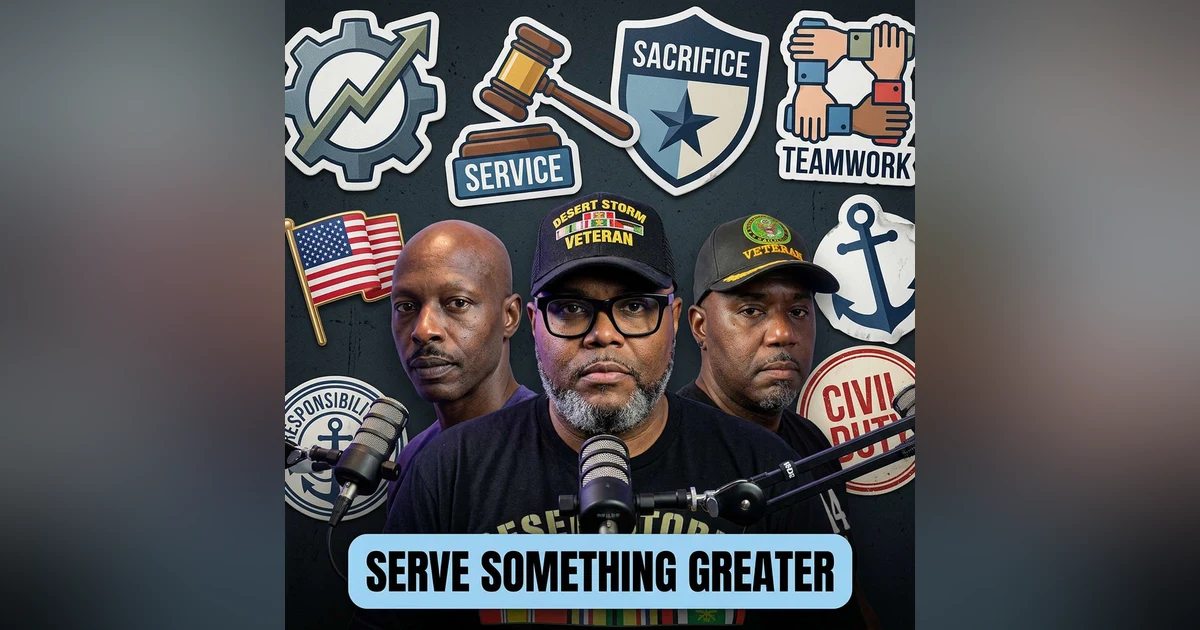
 “Should everyone have to do a stint in the military?” sounds like a simple yes-or-no question until you start naming what you really want society to produce: disciplined adults, resilient kids, stronger communities, and citizens who understand the cost of freedom beyond slogans. We start with strong pro-mandate arguments, including the idea that a required term of service would make sacrifice tangible and turn “thank you for your service” into something people actually comprehend.
Then we pressure-test it. We ask whether discipline, leadership, and responsibility can be built through college, employment, apprenticeships, community service, or just better parenting. We talk about the decline of programs that used to teach practical teamwork in schools, from shop class and home economics to meaningful physical education, and how the loss of the “village” pushes character-building onto institutions that were never meant to raise kids. We also face the hard truth that not everyone is built for military life, which opens the door to national service options such as Peace Corps-style work, Job Corps pathways, or a broader civil service requirement.
Finally, we get honest about what service can cost: injuries, mental health strain, compensation realities, and the way politics can distort patriotism and trust. We close on a big question worth sitting with: if we don’t mandate military service, what shared American experience could still unite us around duty, sacrifice, and purpose? Subscribe, share this with a friend who will argue with you, and leave a review with where you land.
00:00 - Welcome And The Service Question
02:09 - Discipline, Authority, And Raising Kids
05:17 - Teamwork, Diversity, And Social Division
07:34 - Can Civilian Paths Teach The Same?
11:31 - Who Belongs In The Military?
17:02 - Preparing Youth And Paying The Costs
27:15 - Schools, Deindustrialization, And Lost Skills
35:00 - Risk, Injury, And The Real Price
39:22 - Service, Freedom, And Personal Calling
52:30 - Patriotism, Politics, And Trust Issues
59:57 - Closing Thought On National Unity
Welcome And The Service Question
SPEAKER_05All right, gentlemen, glad to see you back.
SPEAKER_07Glad to see you. Yeah, man. Good to be seen. Good to be seen.
SPEAKER_05Right, right.
SPEAKER_07All right.
SPEAKER_05Now viewed. Well, yeah, I agree. Um, viewed, carried, all that good stuff. Um, so topic for today. Should everyone have to do a stint in the military? Should everyone have to do a stint in the military? What are your thoughts on that?
SPEAKER_03Short answer, yes.
unknownOoh.
SPEAKER_05I agree. Oh, I agree. Yes. Ooh, watch out now. Okay, cool. Say more.
SPEAKER_08And I could take it, let's say you would have to do, and I'm just throwing a number out there. Let's say three years.
SPEAKER_04Okay.
SPEAKER_08Your first year, you have to go combat arms. The reason why I say that is because you might have people with access and privilege who might try to fulfill that requirement and get an office job so they don't have to hit that mud.
SPEAKER_05Okay.
SPEAKER_08Uh that's why I say that. Uh otherwise, if if you don't want to do that, as I said stated previously, short answer, yes, I believe you should have to do a military stint, then I think people will have a better understanding, especially when we look back at the last 25 years of people having to do multiple deployments and people losing families, people losing or people having serious injuries, and they can really understand the full brunt of what that is. The the things that you have to deal with when you come back. So when you say thank you for your service, which seems to be from my point of view, now more cliche-ish, not saying that everybody doesn't mean it, but it seems to be more cliche. When they say thank you for your service, you real you will really know what that means.
Discipline, Authority, And Raising Kids
SPEAKER_02Yeah.
SPEAKER_07I believe with the exodus of discipline that has happened in our society, um, like you can't discipline your kids and and in public, you know how we used to be, how how we were done. Uh our parents would be in jail if they if they were if we were kids now, our parents would be in jail. But because they've been so laxadaisical on the discipline, mandatory time, like the like in Korea where they do the the katusas, you usually have to do military, you either have to do the military or the police, or you have to go to school if you got the money. Um, so I that help that definitely will reinforce discipline. I always tell people if you don't discipline your kids, there's somebody out here, law enforcement, that'll show discipline them for you. Um what they say, the unruly child becomes an unruly adult. I just think we definitely should make them, it should be mandatory. I agree. Because these kids today, I I couldn't be a school teacher today. It's great. How they you see all this stuff and it they fighting the teachers and stuff. I first day I'd be in jail. Um uh but uh yeah, it's definitely just because it seems like we there's no more discipline, and you see these kids who they always have something where the the police are uh harassing or arresting teenagers at a party. That's we use that as an example. And then in handcuffs, the kids are super defiant and and get your hands off, you know, that whole thing, and they seen that somewhere. That's a that's a learned response to authority. Um they they it's talk. They saw their parents, their uncles, somebody doing that. And now you're 14 talking about I know my rights, and you you can barely, you don't even shave. And um, and and and that's because the discipline is it's gone. Point blank. So definitely put them in some place where the discipline is mandatory, and then you have to teamwork, team build, um, common goal, and all that kind of stuff. Because this every this sports now, with everybody's a winner, and everybody gets a trophy, you know, or I got little grandkids of two and they play soccer, they don't keep score. And I was like, and all us other older parents, older grandparents be out there, we'd just be shaking our heads. So just a bunch of kids running around kicking the ball, playing soccer. And I was like, your children need to learn how to handle not winning and and rejection. They need to do be done, that needs to be done at heart, home, having a broken heart. You know, you don't want them to be an adult, preteen, and then have to that that's why you get what we get today. That's what I believe.
Teamwork, Diversity, And Social Division
SPEAKER_08And just to add on to what Reginald said with the teamwork and people coming together, because if you go back to basic training, your your tech training, you're coming together from people from all walks of life, from all over the country, from different ethnicities, rich, poor, it doesn't make a difference, but you're coming together. And just think back to basic when you had to come together with all these different people, all these different personalities, and you had to be together to say get the barracks cleaned up so you could be out in formation in a timely manner. And that took a lot of cooperation. And regardless of your background, your ethnicity, your financial status, you had to play your part within that role. So I I think when you look at what's happening in society today, there's a serious discourse and divisiveness within our society in Sagittarian United States, you see it across the world. And when you have to come together and you have to work with people who don't look like you or have the skin same skin tone as you, then I think you might that will help you understand uh different perspectives. And I think the military was good for that. Even though you might not have rocked with a lot of people, there's there were times where you had to work with those individuals and you had to put aside your differences. Because if you get on a uh if you're on a guard point or something and you you you're about to engage, you're not worrying about where that guy's from. You're not worrying about a skin color. If you got the left, you you're hoping he has your right. And that that's the bottom line. And at that point, once you're put in those type of situations, then when you get out, hopefully you will hold true to some of those things that you learned while you were in service, and then you could take it forth going forward in your life.
SPEAKER_05Mm-hmm. Mm-hmm. Wow, y'all said a lot. I didn't know you was gonna jump out there like that. Yes, it should be mandatory. Okay. Well,
Can Civilian Paths Teach The Same?
SPEAKER_05let me let me play devil's advocate. Okay. Um so all of the qualities that you mentioned that people may gain, whether it be discipline, you know, sense of responsibility, so on and so forth. Uh do you not think that these qualities can be developed other places outside of the military? Right? Whether it be college, employment, community service, apprenticeships.
SPEAKER_07It used to be uh from home.
SPEAKER_05Right. So so good point. Good point. Here's the thing. So you want the military to do what home didn't.
SPEAKER_08Okay, un unfortunately, uh everyone's home background is not the same. Unfortunately, when you had situations that would put you in the environment to build those type of disciplines or or character values, some of those things have been removed from the school system. For instance, I'll give you a perfect example. When I was coming through high school, there was shop. Part of the shop process, everyone had to build a mini house. It almost looked like a doll a doll house, but it was just a framework. Just like if you see a house being built, when they come to that point where all you see is the frame, that's what you had to do. Everyone had in your group had to build a wall, somebody had to do the top, whatever. And at the end, you would bring all the pieces together and make the house, and then you would vote at the end who would get to take it home.
SPEAKER_04Okay.
SPEAKER_08With that exercise, everyone had to ensure that their section that they were building was exact. Otherwise, when you brought it together, it wouldn't work.
SPEAKER_04Right.
SPEAKER_08And you would have to make adjustments. So things like that, that's not in the school system. Unless you're playing a sport where you have to have that commandri, what else is there? Home economics. I remember being in home economics. Uh I remember when the time when you had to cook, everyone had to come together and you had to cook a meal. Cause I remember at my school in in uh Prince George County, Maryland, especially when we were baking, teenagers, right after, you know, early afternoon, midday after lunch, you get the munchies. So everybody knew when the home people were baking cookies or something, and you would have a whole slew of people wandering the hallways on a bath pass. Hey, can I get a cookie? Can I get this? Can I get that?
SPEAKER_06Right.
SPEAKER_08You know, that type of stuff. We don't have those type of programs in the school system. They've been removed. So granted, yes, some of these things should be done at home, but you have a lot of single parent households, and even if both parents are there, both parents are working, and that uh time and effort that's put in, not all parents are doing that. So your mileage is going to vary. So uh it's not just being at home. There was a time where it was at home, it was the neighborhood. Right, the village. You had the village that could raise you up, and that concept, for the most part, has has gone by the wayside. Unless you have a really close-knit family, those type of values are not being instilled across the board. Uh fortunately for me, you know, my boys, they received that. Uh because we were very hands-on parents, but I I doubt if everyone's going to be as hands-on as we were.
SPEAKER_05You know?
Who Belongs In The Military?
SPEAKER_05Well, regarding the skills that you mentioned, let me say that um would you agree that everybody is just not suited for military life? Right? Let me and and and if you you put unwilling individuals into these critical roles, well, the military period, is it not possible that you could reduce military effectiveness? Because now you got somebody forced to be there. Um and and let me say it a different way. There's an old saying or an old question that says uh is it better to be a warrior in a garden or a gardener in a war? Right? And let's face it, some people are born gardeners, some people are born warriors, or at least has the propensity to be warriors, and the military takes you and is supposed to make you that. But I'm sure in the military I know I did, I know I we ran across a whole bunch of gardeners that like, okay, you go over there. You you know, you go, you you go do what you do over there. And then no no knock on them, but they're just not built for not everyone is built for that. Right.
SPEAKER_07So I would I would say, yeah, the military or some type of civil service. Peace Corps. So I know I meant that that too, but like I'm I'm only have that for an example is um Korea, but you either be the police, you know, or the military.
SPEAKER_00Now if they ain't set for the for the military, then they definitely shouldn't be going to the police force.
SPEAKER_07There that and I think we can cut it at maybe everybody should go to basic training. You know, say okay, everybody go to basic, yeah, and then you get to choose from there and dial basic, dial basic back in, uh, make it a little longer. Um, because they soften basic up too. They bringing the drill sergeants back to AIT. You know, they took the hat, they took the brown rounds away for a minute. Oh really? So it yes, that was that was horrible. Being someone who had to receive those kids, and then they just started passing, you know, basic was a filter, and then AIT, basic was a filter for your physical ability. You couldn't hack it physically, basic weeded you out. Uh, but AIT was your mental ability. You couldn't do your job, you couldn't catch catch it. Then they just started passing people and say, oh, you're a learned. I got soldiers who hadn't passed a PT test since they've been in the army, coming straight out of AIT. And it's all and it happened. What happened did it was uh 9-11. So so in the absence of doing a draft, they took the f I I told people that this they took the filter off the holes and they just let any and everything come in so they wouldn't have to do a draft. You had all these people, these patriotic people that soldiers came in just because of 9-11. And but they they what they didn't tell us and or them is you can't kick a soldier out before 180 days. And I'm like, what? So they they they didn't enforce it when we were in that much. They're like, you fail so many PT tests, it's like, okay, you failure to adapt. That's how they got you out of there. Or you couldn't pass all these. Um when you get an AIT, you couldn't pass all those tests, you're a cook. There's like, hey, we would have invested too much money into you, now you're gonna be a cook because you can just read off the card and follow directions. As long as you don't cut your finger off, you you're gonna be alright. So maybe the discipline part would be the mandatory part, I mean, would be hey, go to basics. You know, then you wouldn't have to worry about the gardener and the warrior and and all that. You just get the this, you just get that basic stuff, and then because some of them don't even have that. I call we had what I call the uh some of those kids had the clean clothes fairy. And it was like, I had to tell my junior leaders, I said, You got some kids who came home from school, took off their clothes, and dropped wherever they dropped it, and when they got home the next day or that evening, all their clothes was washed, clean, fold, and put away. And they grew up like that. And then they you put them in the army, and I'm going to the room, and it looks like a war zone. It's like, what in the I call the clean clothes fairy syndrome? They never had to be made to do that. And that is a failure on us parents because we want to give our kids the stuff we didn't have, we don't want them to struggle. But if you don't balance that with responsibility and discipline, you're just gonna get some spoiled little brats or princesses.
SPEAKER_02That's what I had to deal with. Okay.
Preparing Youth And Paying The Costs
SPEAKER_08What if there is a system where okay, everyone will do a stint in the military, that you're getting prepared for it as you grow up. And that's something that is just made known as a norm that you would go to the system. For instance, right now we have the World Cup going on, correct? Uh your European countries, and I'll just pick Germany, for instance, their feeder leagues at the young level is tremendous. They they will pick out kids from a young age and they'll get them into these programs. So before you know it, they're playing for the national team, and for the most part, they they dominate. So with that same thing in mind, why not have it uh set to start to prepare these kids for a life of initial service as they come up through elementary school, middle school, and high school and make it a norm and make it known that this is something that you will be doing. When we were growing up, you remember the presidential physical fitness patches that used to come out every year you had to do it? Right. Yeah. Or well, they they stopped that, maybe, you know, you know, pick up physical fitness and start preparing these kids for that stint that they will have to do in the military. But but and one more one last point. If we're not going to do the military, and you can't do the military, then have them do some other type of service for for a stint, whether it's the Peace Corps, whether it's uh there was a program that my sister-in-law was uh doing that it was under uh uh President Clinton to give these young folks an opportunity to do different work type of things uh across the nation. So if it's not the military, then have them do some type of service, go to some type of service entity to do that for a two-year stint and then move on to your what is it. Yeah, job core.
SPEAKER_03Yeah, something to that effect.
SPEAKER_05Well in regard to this preparation you know, throughout childhood to prepare you for service, the question I have is you know, one, it's gonna cost money, and two the value proposition. If you if you calculate the amount of money it's gonna be spent per child all the way through grade school, all the way up to now they're of age and now it's time to go serve. You mentioned the World Cup. The question is, okay, so is military service the World Cup for them? This is it. You've been prepared all this time to do what? A couple years in the military and you met your obligation? Right? I mean that is the is it gonna be worth the amount of money that is spent getting you ready for, you know, an obligation of two to three years of your life. One two as a parent, you know, perhaps, you know, being military parents, you might not think this way, but what if there were other things I could spend my money on to prepare my child for that weren't military related? And because the end goal I would think is success and prosperity after a certain age. You want them to fly. And some may see this, see this military stint as a delay. I gotta go do this before I can go do that. And if I gotta spend money prepping, which one would you rather prep for? So again, I don't just just a question, you know.
SPEAKER_07Yeah, I I but I do believe that like we were talking about in the beginning, that prepare would prepare them for dealing with multiple um nationalities of people, having to have dealt with them and worked uh with them, I think it would definitely enhance. Because if you have some kid, some parents who owns a business and now you're gonna put your child in in a leadership position and he has all these different people, you know. Working for them with them and everything. You haven't prepared them to deal with that. Um everybody knows bosses like that who the nepotism their kids get in there and they're horrible because they're not people per people and and all that. I do believe um some type of civil service prepares you to be a a more well-rounded adult because they're not teaching leadership like that in corporate America hardly. You you gotta be in a big company to go to a leadership school or or conference or something. Um it's almost you see your boss, you do what, you know. I was I was shocked when somebody told me, my cousin told me that. I was because I'm thinking we got A not, B NOT, you know, P O D C in the military prepping you to be a leader, and it's not always like that. They don't have that at McDonald's, you know, um stuff like that. You just you the you're the shift leader now, because you've been there the longest. You know, uh uh every time I go in those fast food restaurants, you see them white shirts, they work harder than the people in the back.
SPEAKER_05Can I say this? There is a case study that I know you're aware of. There was a case study of someone who did none of that and became president. Now what?
SPEAKER_02That's the world. Yeah, I was the world.
SPEAKER_07And we also have a president who was a C student, you know, so uh that's family and money and and and they have people around them and stuff like that. We uh unfortunately they don't always listen to the people around them.
SPEAKER_05But um a village, yeah, a village. A village got them to the president. I mean, you can't. I mean, now that that case study exists, it's hard to justify everything you just said.
SPEAKER_07Like, but you gotta have the money to do what the case study is doing. Um, everybody don't have that kind of money to to push push you to that those heights and stuff. So it used to be also it used to be a time where the average person would be like, oh, I couldn't do that, you know. But you're right. Now you can get a clown and a chimpanzee and anything, as long as you got the money. Apparently, you don't have to have the experience. Um, and unfortunately, I don't like what that president is setting either. Yeah. We need them, we need to pass some laws that say you have to be a city commissioner, councilman, or something before you rise up the ranks. You need to know how to do something. Just sit you in there because you're a good businessman.
SPEAKER_02Yeah.
SPEAKER_08Yeah. To follow up on what D-Ro said, the cost, I don't think there would be necessarily an added cost because for just the pathway through school, I think will prepare you. You might have to add a course here, course there, maybe increase physical training. Uh, I think physical education has gone by the wayside in the school system. So maybe that's something that needs to be looked at a little stronger if you're gonna fulfill the requirements to uh uh fill a military force. But typical reading and writing-based mathematics would prepare you for a lot of the jobs that are in the military. Uh I didn't have any particular training. The first time I shot a weapon was when I went through basic training, and I did pretty well. I had good training and I was able to shoot pretty well. So, but I was I was an athlete, I was very athletic, I was one of those kids that was always outside, and y'all know the deal. You've heard the stories. Parents say when you go out, be in before those street lights come in, you know, you're not don't let those street lights find you outside, that type of thing. So we and we all grew, we all grew up like that. So for me, going through basic training, whether it's my AIT course or or just regular basic in an airborne school, I didn't find any difficulty in it because the training was that they gave was sufficient. The manuals stepped you through everything, you know, from the Dash 3 van we worked on D-Rose and step by step by step by step. You just had to read. And that's going back to what I just said the basic fundamentals read, write arithmetic.
SPEAKER_05Can I just add, I still got mine around here, man. Stop it. I do, I still have it around here. I got uh I got the manual and it's a remember to thick mind. I still got it. I know what you're talking about. It's around here somewhere. I digress, I apologize, but when you said I got and when I found it a few years ago, like a few pages were stuck together. I had to, but I still got it, man. And I just gotta put my hands on it. But anyway, sorry for that.
Schools, Deindustrialization, And Lost Skills
SPEAKER_07Yeah, society definitely has changed. Uh yeah. And Dr. Umar Johnson has said something. I was listening to him, and he said the de-industrialization of the United States is what broke the families up. And I was like, oh, and then he he broke that down. He explained it, you know, when all the factories left, you couldn't make a like a lot of those factory workers, they had high school diplomas, but they were able to make a living wage to support a mom being at home to be the homemaker or whatever. But the deindustrialization put the wives in the workforce, and that took away from that nurturing. Then you put all that on the teachers who are underpaid. Um, also, I doing some of my own research, they I don't know which president it was, but they took away the national endowment for the arts. And that's when all of that stuff came out of the schools. So that's what paid for band and PE and home egg, and and it was it was that money was being perpetuated, you know, the national, the endowment for the arts. And when they took that out of school, then they made it optional. Do you want PE? Do you want home egg? Like it wasn't optional for when I was in medical school. We had a school, they had a block. You had a portion home ed, then you switched to sewing, then you switched to typing, then you uh sewing typing, home egg, and it was it was something else, but it was mandatory. Um that that at least gave you a brief overview of of what life is to come. And when they took that out of school, and now you have to go to a charter school or a private school to get to get all that kind of stuff. Now look at our kids, it they don't manage no PE mandatory uh and all that kind of stuff. These kids are in the food and all that kind of stuff. Food went changed, and with that taking away the endowment for the arts, that that hurt us as a as a society, I believe.
unknownYeah.
SPEAKER_07And I went to a Voltec school in Tampa, so I I had a shop. So I had a shop class. I had car I took carpentry. And unless you put your child in one of those, you know, it we we looking bad as a society. Because now, especially now we're going all of this AI, just smarter, weaker kids don't want to go outside, vitamin D deficient, no sun. They don't have to worry about the street lights coming on because they ain't go outside in the first place, they don't go outside in the first place.
SPEAKER_05Um, you know, my my problem with that is why you're bringing up some trauma now because yeah, I had, you know, just like y'all, I had the mandatory things, right? But the thing was, I remember coming from Maryland, I moved down here to uh Georgia my senior year. Can you imagine that? My senior year high school, we moved down. And a couple things. One, because I took typing one and two up in you know, up in Maryland, came down here, I had to take I look, I say it this way. I had to take data processing. That's what it was called back then. But I had an advantage because I could type real well, so I got in data processing, I loved it. I took one and two. IE, I go into you know, IT after that. But here's the thing gym class was mandatory, PE was mandatory, but culturally, the things we did in P.E down here, bruh, I almost failed P. E. Because there was a whole segment of square dancing in PE. And you should have seen me and everybody who looked like me over on the side. We didn't dress out, we was and they in the middle, you know what I mean, round and round, and all this, that, and the other. And we are we just sitting there looking at this. We we're not doing that.
SPEAKER_08I I I actually did square dancing, but we did it in elementary school. I I remember the lady, Miss Melanie. I still remember her. I remember her in Laney Park Elementary School, and we did that for like maybe two extent. And we participated in it. I remember that.
SPEAKER_05Almost failed. Now, here's the thing, though. When I where I'm going with it is because there's no national standard culturally, depending on where you live, yeah, you may have PE. And I guess the objective is physical education to get you moving.
unknownYeah.
SPEAKER_05But don't nobody want to move with some square dancing and whatnot. I mean, we used to love it when we come out there and they throw the ball out. Oh, basketball? Oh, we good. Yeah. Right? We good. But then we get out there. I mean, they caught us slipping, I think, the first day. Right? Because we know. We get out there and okay. You know, you you lock arms and you go, you go she goes. All right, y'all got me today. And then to know that that was gonna happen for three weeks, that's a failing grade. Yeah. Yeah. You know what I mean? I almost failed P E. Can you imagine? But that's that's what I'm saying. So you can say you want these things to be mandatory, but I think it's all about what you do, right? And then different parts of the country. All of these things have to, I think, they have to be an end goal. And if the end goal is to get kids moving in a way that is gonna be conducive to what they want to do anyway, to where it doesn't feel like work. Yeah. Then I think that has to be taken into consideration.
SPEAKER_02Yeah.
SPEAKER_05And I don't know whose idea it was who thought I was gonna want to square dance. Like, I don't know where that came from. Who who came up with that?
SPEAKER_07Y'all should have had options. You could either square dance or you could do this, but you gotta do something.
SPEAKER_05Bruh, I was it was to the point where I wouldn't like, you know, you had to you come into the gym to get to the locker room and you can see what you're gonna be doing for the day. And if it wasn't nothing out there, but I don't even know what them things were. If it the square dancing paraphernalia, I go right to the bleachers. I'm not dressing. I would much rather come in and see a volleyball net. Oh, I'd do that. But I'm not, you know what I mean?
SPEAKER_07I'm not yeah, it didn't give y'all enough options.
SPEAKER_05Right, right. Dodgeballs, if they come out, I'm good. We can do that. Kickballs, we can do that. But square dancing, I'm not, I ain't with that. So that's all I'm saying, man. You you know, we want to make things mandatory, you know, and and I just go back to to what is the end goal. One is to, you know, get get kids moving. Okay, physical. All right, cool. But if it's all gonna lead up to military service, because I think that's where we started, you guys said, yes, it should be mandatory. The you know, I think, Reg, what you said was the military service can pro can can prepare you for stuff anything. It could. But but can I say this?
Risk, Injury, And The Real Price
SPEAKER_05I know, without mentioning names, I know personally a handful of brothers who get a check right now because of just basic training.
SPEAKER_02Okay.
SPEAKER_08Uh let me be devil's advocate to that. Okay. I I I mentioned two points, excuse me. Um he hasn't started the process, but I know when he was in basic training, he had his appendix removed. Okay.
SPEAKER_04Okay.
SPEAKER_08And I was very skeptical on moving on my stuff because I saw the stories, I saw what people are going through. I was like, uh, I'm not dealing with that. I'll just deal with what I've got to deal with. And then this one guy online, he said something that was very profound. He said, I'll show you. If you see my finger, it's crooked. I I did that playing football. I was tackled and I went to put my hand down. When I came up, it was like that. If that would have happened in the military, I'm just using this example. If that would happen while I was in the military, then I should be compensated for that. And the thing he said by law, if you came in the military one way, you you everyone went through a physical things were annotated out. But then how many every year is down the road you you exited out without a change? Whether it was a a finger, PTSD, back issues, knee issues, whatever the case is, by law, you are to be compensated.
SPEAKER_04Okay.
SPEAKER_08All right. So if going through basic training, they have already signed on the documentation, they are in service. If, like my friend, appendix got removed or uh some heart issue or some other accident occurs why while in service that changes you, then by law you should be compensated.
SPEAKER_04Okay.
SPEAKER_08Okay, so that's what I have to say on that.
SPEAKER_05No so the the point I was making though is that there wasn't even any service that took place.
SPEAKER_03Okay.
SPEAKER_05The stuff that happened happened in basic training. And it it's, you know, I'll just say it's mental health related.
unknownOkay.
SPEAKER_07Yeah, my my ex my ex-wife got put out um of basic. Uh she was from St. Thomas. Um, literally fresh off the banana boat. Had no clue.
SPEAKER_08We don't want to say banana boat. Well, we don't want to say that.
SPEAKER_07You know what I'm saying? Anyway, uh, she getting basic, she couldn't understand why they were yelling at her. You know, why why are you yelling? I can hear you. You know, and I got in coincidentally, that got me a whole bunch of push-ups too, but I figured it out. And she didn't. So they put her out like three weeks, three weeks in for failure to adapt. And if that didn't happen for that individual you're talking about, that's that's a failure on the their part. Because as soon as that person starts to break down, they're supposed to be trained enough to say, okay, this first of all, this is a game. And if they can't, they're breaking down, they should have they should have got that person up out of there. Uh because you would be a liability. Um they didn't do it.
unknownYeah.
SPEAKER_05Yeah, there's a few. And uh I'll just say the the point I'm trying to make, or getting back to, is if the idea is that you're gonna go through all of this stuff to prepare, and then the military service is mandatory. I guess
Service, Freedom, And Personal Calling
SPEAKER_05the question, uh well, you've you've answered it already. You said why someone should go through these things, and you s you gave them all these cra characteristics that they would develop for having gone through two to three years of military service. And what I'm saying is that or I'm just asking the question. Again, it's it's the question is can someone develop these things without going to the military? And and quite frankly, I'm sure we all know some people who've never served are stand-up people.
SPEAKER_03Yes.
SPEAKER_05Highly, highly whether they be successful, productive members of society, don't have disciplinary issues, any of those things.
SPEAKER_07They had to be taught somewhere.
SPEAKER_05Well, true, maybe. Yeah, definitely. I I would agree with that. But I'm saying to to mandate military service when there are case studies that show that it's not necessary. Why mandate something that's not necessary is I guess is Yeah.
SPEAKER_07And it guess it I don't also will go back socioeconomics, um discipline, I mean the the home, because those people, all the people we know that are captains of industry and and upstanding people in in our society who never did the military, they they all will reflect back to somebody in their pa parenting mom, dad, grandma, somebody who instill those things in them. And so the the question or the answer would be we have to get back to basics with parenting. And it that's the root of everything. You you gotta parents who don't have time to put all that nourishing and back nur and back into their child, you get you get what we get. And then we end up passing the book on. That's what it seems like. We pass the book to the teachers, and I guess in retrospect, I'm saying pass the book to the drill sergeants, you know. But um it has to be it it has to be a base start, starting position. Now that needs to be um a baseline. Parents need to we need to come across the same um what's wrong is wrong and what's right is right, and don't let your child get away with this stuff. And then like I said, an unruly child becomes an unruly adult. That's why the police that's why we have the police um uh like we do. Uh because people are ignorant of laws and they're doing things socioeconomics has mandated them to have to do. They feel like they have to do this in order to survive, and some of that stuff is not legal. And then you get then you get those people to be parked behind an empty building, and the police come up to you and be like, what you doing back here with this scantly dressed woman in past seat, and you like, we just talking, you know. Yeah, come on.
SPEAKER_05This brother's mind be going to some places, man.
SPEAKER_07I'm just saying, that's just what happens. Yeah, that's just what happens. So it has to get back to the root call, the parents, parenting. Let's get back to parenting, good old-fashioned parenting. Um, how do we how do we do that? Is the question.
SPEAKER_08Yeah. Yeah. I I still stand on the the answer to the question that I think everyone should do a stand in the military. You are correct, D-Rose, that you can garner and gain some of those characteristics through other courses of life. If if we're not going to mandate the military, then mandate some type of service. And I think one of the things, yeah, or one of the things to mention was the Peace Corps or or Job Corps, something. But there should be some type of service that you have to do. For instance, uh, when my my boys were coming up to try to put in their applications for school, one of the things that a lot of admission officers would look at is community service. So, and we knew that, so they would go down to the food bank and volunteer or whatever other volunteer service that you could do. But uh I still stand on it, yeah, I believe you should do military service, but if not military, then some type of service entity.
SPEAKER_05Okay. Okay. Well so one of the things, you know, again, I was playing devil's advocate against. If I'm if I'm arguing for one of the things I did not hear you say is like everything I've heard the both of you say is the military service ought to be mandated because when someone goes through it, here are the things that happens to them. Here are the things that improves them as people. Okay. That's kind of what I heard. But what I didn't hear is what they do for the country. Right. In other words, freedom has a price. And I think the real question is whether or not every citizen should help pay it.
SPEAKER_02Yeah.
SPEAKER_05And that's not that that that's not the place that people's minds go through go to when you ask the question, should it be mandated? Um and and I'm still again, if I'm if I'm arguing for, that's the argument I'm gonna have. Right? So so even it along the lines of what you guys said, you know, maybe the debate isn't whether everyone should serve in the military, but whether everyone should be required to serve something greater than themselves. Whatever that means. Right. Because mandating military is like doing a draft almost. And here's the thing you know, Greg, you talked about how um uh how much of an athlete you you were or are I can draft your body, your physical presence, but I can't draft your conviction. Like I can't draft the feeling of esprit de corps, the feeling of wanting to serve your country, the the feeling of the sense of pride that you would get when you watch the Olympics and you see America doing, I don't care what sport it is, I'm looking to see where that American flag is and who's doing what. Right? It's just I can't draft that. I can draft your physical ability. And if it's just a game that we're gonna play because it's mandated and you're just gonna go through the motions. The question is, is that the the desired outcome that you served, or is the desired outcome that you not only served but you joined forces with a whole group of people who are all pushing towards that freedom? Yeah that's very different. Right? And so again, man, I'm just I I don't have I can go either way. I personally, you know, in being a minister, I'll just say, being a minister, um you meet all kinds of people from all walks of life going through things that um, you know, you're just like this particular person just flat out is not built for that, but they contribute a ton to society, right? They contribute a ton. And so I'm just simply saying that why not allow them to be who God intended them to be? I don't, you know, mandating something doesn't sound like God intended that for that person. That's that's just that's just what it feels like, right? So, you know, y'all can mandate it if you want and go against God's will if you want. You know, I'm just kidding. I'm just kidding. I'm just kidding.
SPEAKER_08Hey, hey, I I hey, I got active. He said all these folks need to be 11 Bravo. Okay, two years.
SPEAKER_06Do you think he didn't tell me that, but that's cool. You know, I didn't get that memo.
SPEAKER_05In church, but that's fine. That's fine. I'm just I'm just simply saying that, you know, if we're gonna take it there, he gives us gifts, um, he gives us calling, he gives us purpose. And mandating service is a man-made thing. Okay. Because nowhere in that would there be, you know, this is what God intended. That wouldn't, that wouldn't be there. That would be a man-made governmental thing. And so to make someone go through that, I would just hate for that to be in opposition of the gifts, the calling, and the purpose that someone has. That's all. That's all I'm saying.
SPEAKER_07One one one way that you can negate the mandate is if we um instill what you were saying, that everybody has to participate in a in the freedom pursuit. If we can instill that in kids at a very young age, then they might feel more opt to participate, you know, in that. Uh hey, freedom isn't free, you know, we give them the speeches, and and and but it I still believe that it all boils down to um what we're teaching them at home. You know, and and that could be the is the root of all the bad actors and and all these very successful good people is the root is uh like G was saying, the village, home and the village. Uh my street here, we had uh uh a grandmama on every corner looking out the window, so you couldn't get away with anything. And we have gotten away from that, but being taught right and wrong and and helping your fellow man and all that, that that's if it goes if we can get back to doing that at the home, we will we will release um better human beings into society. But when you when we got these spoiled rich uh entitled uh monsters that are being produced, um a friend of mine said we need to start, no, not a friend of mine, Plaz. Reverend Plaz said something that really shocked me. Yes, he said, parents, we need to stop trying to produce football and basketball stars, and we need to start producing some congressmen and senators and people that make change for our community. And I was like, wow, that's that was profound. That's why I still remember it because it came from him. Not saying that he don't have those, um, not saying that he he don't have these thoughts, but when I heard it, I was like, wow, that's profound. Especially with the percentage of kids who actually make it to the pros. Um, I was like, well, yeah. But that home base, and we can get this get back to the home base, and I think it's coming back. It's cyclical. I see it now. I see these younger parents um disciplining their kids, and you don't have you don't have all them crazy wild kids in Walmart no more, you know, and and all that. So uh I I see it coming back slowly, but I do see it coming back. Um the the home discipline at home. I do see it coming back. So that's a good thing. Well but two years ain't gonna kill them. Um they can still have purpose and drive and do whatever the Lord called them for, but two years it's not gonna kill them.
SPEAKER_05Oh man, but you know, you know, everything what you just said is is is great. Sounds sounds good, but when you look at what's happening, it's hard, man. It's
Patriotism, Politics, And Trust Issues
SPEAKER_05hard to talk about the cost of freedom in serving when this I'll just say it, there's there's there's a current administration who wants your service only when it's convenient. If you if you excel, you are now an inconvenience and you're forced to resign or you're held back. Right? Look at all of the the generals, the high-ranking officials of color that are getting stopped, forced to resign, all these things. Yeah, your service is is is great as long as you stay in your place. And that is so hard to reconcile with everything we've been talking about today, right? To because then would you as a parent want to send your child into that environment and say, be all that you can be? Except for when you hit a certain level and just know that when you get there, don't try to be all that you can be after that. You know, that's that is hard, man. That's hard.
SPEAKER_07So that's why we gotta vote. You think that's it? We gotta get we gotta get get get them people out of there.
SPEAKER_05Yeah, but I hear that, Reg. I you know and yes, don't get me wrong, that is that is an answer. That's that's one answer. The problem is that this current mindset brought a lot of people out of hiding that you wouldn't know wouldn't have known had these types of thoughts. That's true. Right? Brought them out of hiding. Like people that you used to just kick it with and thought you were cool with, never knowing that they harbored these types of thoughts about you. And you know, that's like, wow, okay, now which is cool. I I like it. And here's why. Because now it makes you step take a step back and say, I need to reevaluate some things. Right. And so now, head on a swivel, right? Okay, that that's where we are, cool.
SPEAKER_02But simply saying that, um I just don't know that I could consciously tell my child, yeah, yeah, go do that.
SPEAKER_05Knowing like if there's not a change at the highest levels, yeah, uh, I just I don't know. It's hard, it's hard. Yes, freedom is not free, but we'll get some a different way, because that right there is is just not it, right?
SPEAKER_08I'm just saying so Yeah, I I think I'm I'm tired of seeing the manufactured patriotism. You know, when I walk down the street and and that's fine. Some people they really believe in then you have an American flag up in your garage or you know, hanging off your porch. That's fine. But a lot of people would voice certain things and never serve. Had no plans on serving. So um I think between my family and my wife's family, we got somebody who served going back from World War II forward. World War II Korea, Vietnam, and the desert. So when I I just when I just come across people like that, I just uh when I know you didn't serve and you know, you got this what I call manufactured patriotism. I don't think you can even talk to somebody like me or someone in my family who served for this stench.
SPEAKER_07So you remember when they was talking about bringing the draft back? And I was wondering, would there be that I was like, there shouldn't be space in line. There should be a whole line of red hats uh down there. We we shouldn't be able to get in line because there's so many red hats uh in at the recruiting station, but I guarantee they wouldn't be. I guarantee they wouldn't be.
SPEAKER_05And like you said, that manufactured patriotism that well and you know I don't know if it's manufactured patriotism as much as it is not not in all cases.
SPEAKER_00Um well I know what you're talking about.
SPEAKER_05Yeah, I I get it. I I I understand the sentiment sentiment, but I think I think the word patriotism has been hijacked. And uh such it and and all of the symbolisms that go with it has been hijacked. You know, I think the word patriotism has been hijacked, I think the word evangelist or evangelism has been hijacked. Um because if I if if you're in a certain setting and you just hear the word, I don't know about y'all, but certain images pop into my mind.
SPEAKER_07Yeah, evangelical, yeah. Right. When they say that, yeah, it's been right.
SPEAKER_05And then two, if I'm riding down the street and I see an American flag, I know what it should mean to me.
SPEAKER_02But head on a swivel.
SPEAKER_03Because it's been hijacked.
SPEAKER_02Yeah.
SPEAKER_03You know what I mean?
SPEAKER_05And I feel for I shouldn't, I I you know, it's it's messed up that I even feel this way, but I'm concerned about, say, food delivery drivers who have to pull up in a yard and wonder what they're gonna deal with when they trying to deliver food to someone who's flying the flag that we should all be proud of because it's been hijacked. You just don't know. And there have been a couple of cases where things went sideways and on the news, American flag waving while they're locking dude up. Right? So just saying, man. So to mandate, to bring it back, just to mandate certain things, man. Um it it it's hard for me to right now to to feel comfortable with that, is all I'm saying. But you know, hey, I ain't got all the answers. You know, that's why I got the the smart folks on here with me, so that y'all can lay it all down and solve all the problems of the world.
SPEAKER_07But um civil service. Well, say, how about mandate civil service? How about we say that? And you get to choose which one you want to do, but you need to do something or choose something homecomek related. Something. You gotta do something where you sell like you like G was saying, where you serve other people. Yeah. All right, well, listen.
Closing Thought On National Unity
SPEAKER_07Homely shelter, something go down there and serve soup or something. I don't know. Yeah, all right.
SPEAKER_05Well, I think uh we'll go ahead and wrap this up. But I think I understand where you guys are coming from. Wasn't trying to convince you otherwise, but I understand where you are. You you feel like we should mandate this thing. Uh, and and let the little ones have to, you know, be prepared, go put in their time because freedom ain't free. That's right, right. That's right. All right, all right, I hear where you're coming from. So uh any any any closing thoughts before we wrap up.
SPEAKER_02Huh.
SPEAKER_05Good talk.
SPEAKER_07Family. Family. Okay, back to it. Teaching these teaching discipline at the household, so society don't have to teach a child discipline.
SPEAKER_02Okay. That's fine.
SPEAKER_03Yeah, good talk.
SPEAKER_02Okay. Okay.
SPEAKER_05Well, I guess my my what's on my mind right now, I guess, to close, is that if we didn't mandate, and if military service wasn't the answer, or isn't the answer, then what common experience could still unite Americans with the same sense of duty, sacrifice, and shared purpose? Does one even exist? Now that's just, you know, a thought. Maybe it's a topic that we can tackle at some other time, but I just put that out there because I feel you. I understand the sentiment regarding mandated military service. However, you know, I told you where I feel, where I where I land on that.
SPEAKER_07Um it's only been one one way to do that, and you're wearing it on your shirt. Uh when when that happens, we all we together. We we kumbayon it over here in America. Right. We have a common uh uh enemy. Uh yeah, that that's unfortunately. And I think we've been designed to be that way. Because as soon as one of these super tragedies happen, all everything goes out the window. I mean, I I was never so welcomed as I was after 9-11 by people who don't look like us. I was like, wow, okay.
SPEAKER_05But no, the problem with that, Reg, and this is probably what's gonna get me visited by a suit, um, is what happens when the enemy is already here. You know what I mean?
SPEAKER_07I'll just give you a I'll just give you what what could possibly bring us back.
SPEAKER_05I get it, but if but if the enemy is already on our soil, stay ready.
SPEAKER_03So you have to get ready.
SPEAKER_05Right, readiness is one thing, but in terms of bringing everyone together, um you know what I mean? I and again, hand on the swivel.
SPEAKER_06Yeah, right. That's what I'm saying.
SPEAKER_03Yeah, trust but verify.
SPEAKER_05That's it. Trust verify, and I don't need nobody visiting me with no dark suits on and shades.
SPEAKER_07I'm having that put on the back of a cell phone case. And God we trust all others we verify. Right, right.
SPEAKER_05Exactly. Yeah, I don't I don't need no visits, man. This is just we're just talking. Look, we're just talking.
SPEAKER_07I don't need you know um if you would have hit the live button instead of the record button, you might have you might have got a visitor, but you you got you all right.
SPEAKER_06Well, look, fellas, uh approach with caution, cut it out. We gonna we're gonna put it, we're gonna stop it right there because we're about to crank it back up. Yeah, we're gonna crank it back up.
SPEAKER_05All right, so listen, guys, I I appreciate it, man. I really appreciate it.
SPEAKER_07Um always a pleasure.
SPEAKER_05Yeah, we need to do this again because I think there's some unresolved issues that we we didn't get to the bottom of just then. I think y'all are being careful. But um, so with that, man, as always, man, I may God bless you. May God keep you. Appreciate you. Continue to be with you, man. I appreciate you.
SPEAKER_07You too as well. All right.

